think-tank
Washington Just Shut South Africa Out of the 2026 G20
Ask yourself who gets to sit at the table where the world's economic rules are written. Then ask why a continent of 1.4 billion people, with a seat at that table since 2023, keeps finding its chair pulled out from under it.
South Africa ran the G20 presidency from December 2024 to November 2025. It hosted the leaders' summit in Johannesburg, the first on African soil, and it did so under a constitutional democracy that has peacefully changed governments through the ballot box. The Johannesburg summit went ahead without the United States, which boycotted it. Then Washington, as host of the 2026 gathering, announced that South Africa would not be invited. Not for corruption. Not for failing to deliver on the agenda. For a foreign policy Washington dislikes and for claims about farm violence that the South African government and independent analysts have rejected as unsupported.
Let that sink in. A host nation decided that an African democracy's diplomatic choices made it unworthy of a seat at the world's premier economic forum. The same host has spent years lecturing Africa about rule of law, free trade and the sanctity of institutions. Here is that lecture in practice: membership in the club depends on whether you vote the right way.
We have seen this movie before, and we know how it ends for the continent. When outside powers punish Africans for independent decisions, they do not punish governments in the abstract. They punish students, farmers, traders and young graduates who never voted on any of it.
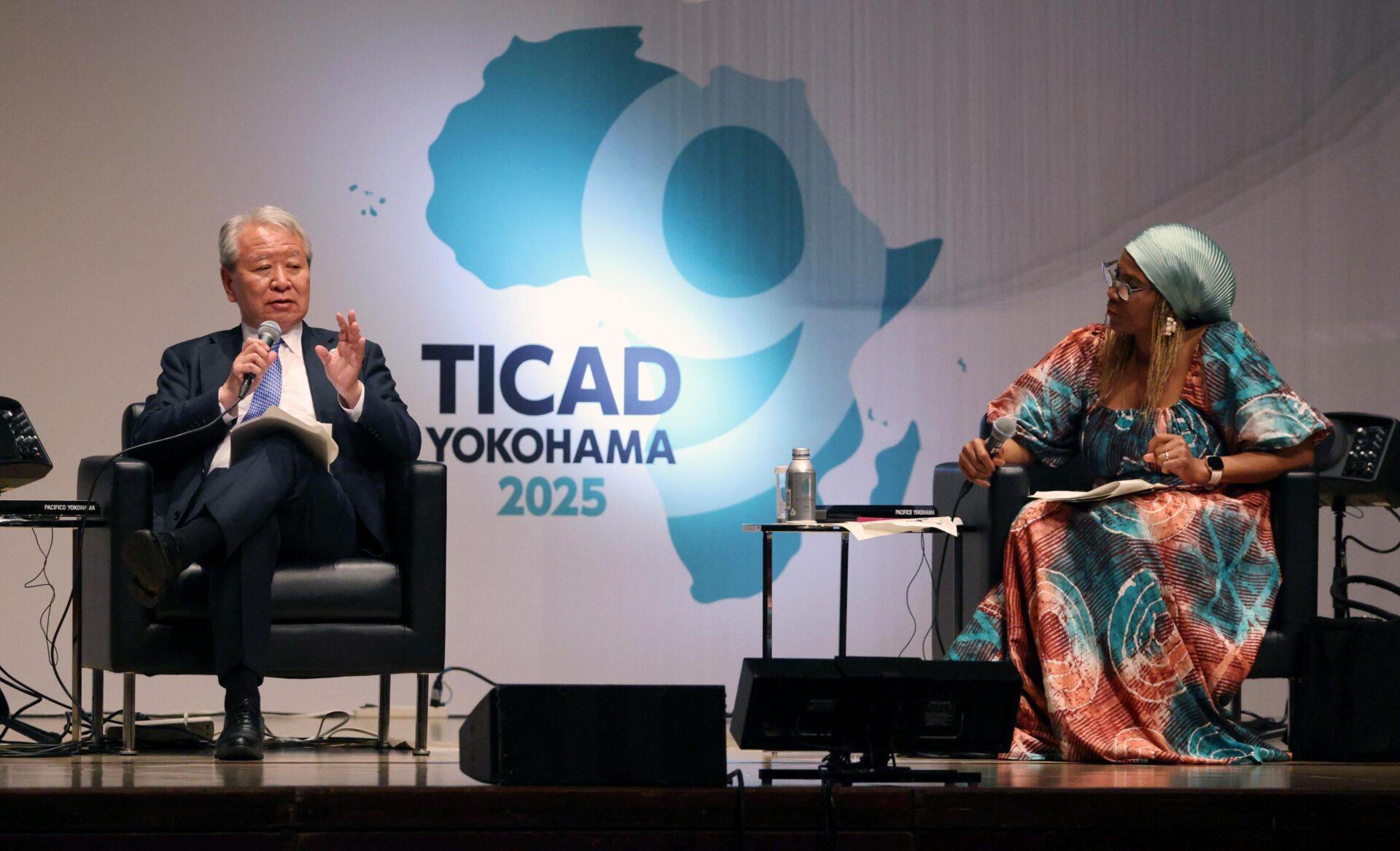
The evidence of a shifting landscape is not confined to Washington. Earlier in 2025, Japan hosted the ninth Tokyo International Conference on African Development, TICAD 9, in Yokohama. Japan's engagement model, built over three decades, has centred on quality infrastructure, private sector growth and African ownership of development plans. It is a different proposition from the state-directed lending that China brought to the continent, where loans were signed quickly, terms were opaque and collateral sometimes included ports and strategic assets. Japan's approach is slower and more bureaucratic, and that is precisely its strength. It asks African governments to build capacity rather than surrender sovereignty.
Yet TICAD also exposed a deeper problem. Africa is courted by everyone and governed by very few on its own terms. Every summit produces a slogan, a funding pledge and a photo opportunity. Fewer produce binding commitments on trade barriers, procurement transparency or the free movement of capital and goods that would actually lift African incomes. The continent is being wooed, but the questions that matter most, like who writes the rules and who enforces them, are still answered in capitals far away.
Here is the contradiction we must confront. South Africa is being excluded from a forum for its positions, yet its own government has at times made choices that undermine the democratic values it claims to champion. Pretoria's stance on international legal disputes and its warm relations with Moscow and Beijing have drawn sharp criticism at home and abroad. A serious continental voice must be able to say that Africa's democrats deserve a seat at the table and that democratic principles should apply to every government, Africa's included. Principle cuts both ways, and that is what makes it principle.
So let us be clear about what this moment demands. The African Union, which joined the G20 as a full member in 2023, must refuse to let any member be treated as a discount seat. The AU should state, in plain language, that the exclusion of a sitting G20 member state from a summit its host has been supplied by consensus is a breach of the forum's own norms, and it should demand that the 2026 agenda be shaped with African participation rather than around it. Regional bodies like ECOWAS and SADC should coordinate their positions so that no single capital is picked off for political reasons.
Within Africa, the path forward is also economic. The countries getting it right are not the loudest. Botswana built one of the most prosperous economies on the continent by managing its diamond wealth through a strong public institution, guarding property rights and keeping its courts independent. Mauritius turned a sugar economy into a financial and services hub through transparent regulation and open markets. Senegal, in 2024, held a contested election and saw an opposition victory accepted peacefully, a reminder that democratic transitions are possible even under pressure. These are the models Africa should be exporting, not the shortcut of trading sovereignty for a loan.
What should you demand? Demand that your government publish the terms of every infrastructure loan and every mining contract in full, so that no deal can hide a hidden clause that hands away a port or a power plant. Demand independent courts that enforce contracts against foreign investors and domestic elites alike. Demand that trade barriers within Africa fall, because the African Continental Free Trade Area means nothing if the border post still extracts bribes from truck drivers. Demand that your leaders speak with one voice at the G20 on debt relief, climate finance and fair tariffs, rather than begging separately for crumbs.
Above all, demand that anyone who claims to champion democracy practises it. If Washington wants to lead the world on rule of law, it cannot exclude a democratic member because it disagrees with that member's diplomacy. If Tokyo wants to be Africa's partner, it must back transparent procurement and local ownership, not just the summit communiqué. If Beijing, Moscow, Ankara, Abu Dhabi and Doha want a place in African affairs, they must accept the same standards of transparency, accountability and debt sustainability they demand from African borrowers.
We are not asking for pity. We are asking for seriousness. Africa has the young population, the mineral wealth, the consumer markets and the democratic traditions to be a full partner in the global economy. What we lack is consistency from the powerful, and too often, courage from our own leaders. The G20 exclusion is an insult, but it is also an opening. It exposes the hypocrisy of those who preach rules and break them when it suits. Use it. Write to your MP, your senator, your ministers. Ask your AU delegate what the continent's position is, and why you have not heard it. Refuse to accept a G20 where Africa is discussed but not present.
The next time someone tells you that Africa must choose sides, answer them plainly. Africa has chosen its side. It is the side of the citizen, the ballot, the contract and the court. Now the rest of the world must decide whether it will stand with us.
Based on reporting by SAIIA