think-tank
Johannesburg Is Choking on Coal, Gold Dust and Official Silence
Every morning in Johannesburg, millions of people draw breath without thinking about it. Children walk to school. Taxi drivers idle in traffic. Grandmothers sit on stoeps. None of them can see what they are inhaling, and too many of them will pay for it with their lungs, their hearts and their lives.
Let us be clear about the scale. The World Health Organization estimated that ambient air pollution contributed to roughly 4.2 million premature deaths worldwide in 2019. That is not a statistic about some distant emergency. It is a death toll, and it is written in our hospital wards, our asthma inhalers and our funeral programmes. Who is dying? Mostly the people with the least power to move away from the smoke.
This is the moment to stop treating air as the weather. Air is infrastructure. Air is policy. And when a city's air is poisoned, somebody made decisions that poisoned it.
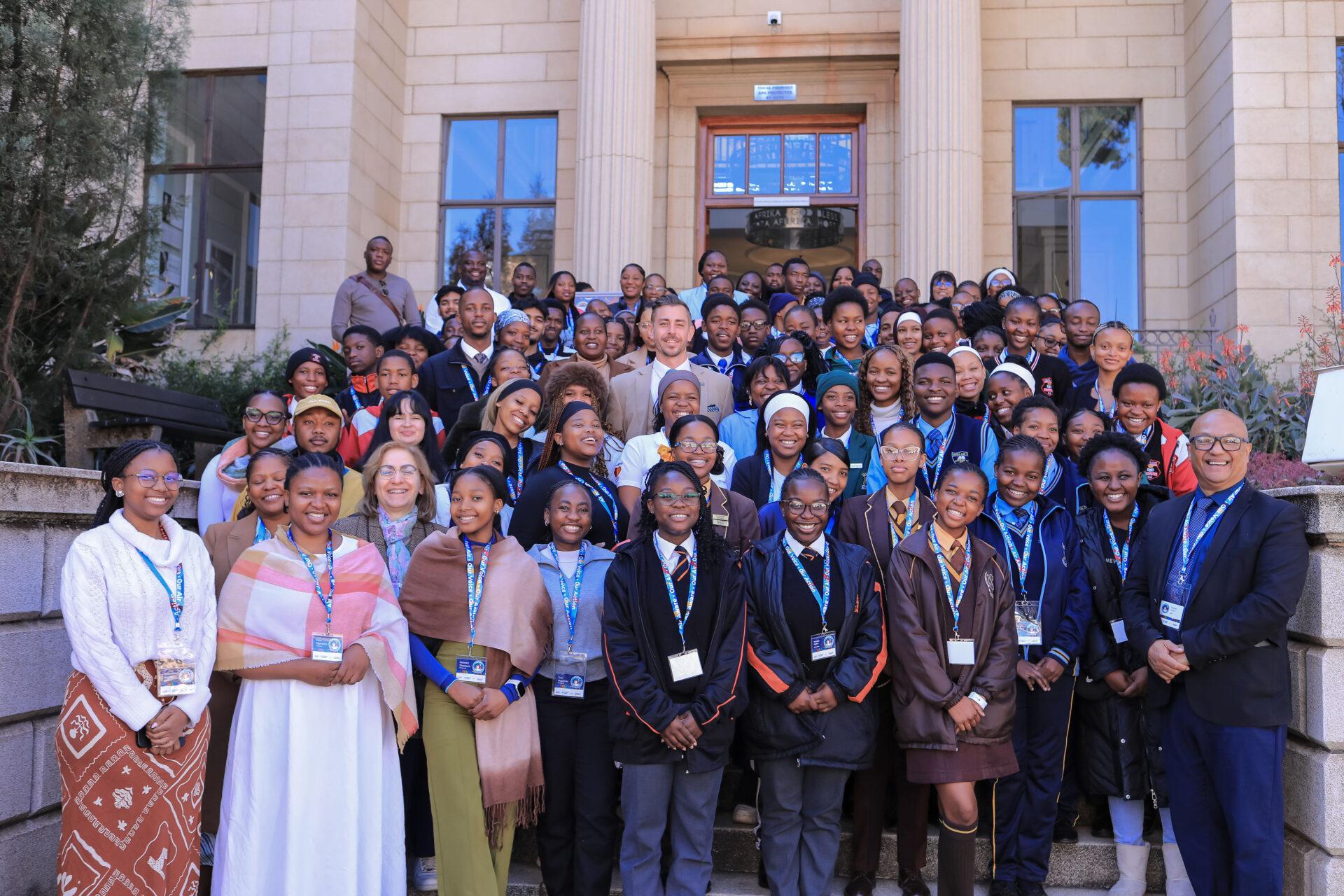
The public record on the August Air Aware workshops, hosted by Youth@SAIIA, Breathe Cities and the City of Johannesburg, is thin. The reporting confirms the events happened and that young people were brought into the conversation about clean air. We welcome that. But workshops are not clean air. Young people deserve more than a seat at a table where the menu has already been decided. They deserve to know which pollution sources are being cut, by when, and who will be held to account if they are not.
Start with the Highveld. The South African government declared the Highveld a Priority Area in 2007 because air quality there had deteriorated to the point of breaching national standards. That designation was a warning. Nearly two decades on, the warning has been treated as a suggestion. Coal-fired power stations in Mpumalanga, many of them operated by state utility Eskom, have been repeatedly named among the most polluting in the world. Sulphur dioxide, nitrogen oxides and fine particulate matter travel on the wind, and the wind does not check passports or postcodes. The people living downwind are the ones who pay, and they are overwhelmingly the poor.
Then there is the gold. Johannesburg was built on the Witwatersrand gold reef, and it is still surrounded by mine tailings, the vast grey dumps of crushed rock left behind by a century of extraction. When those dumps are dry and the wind blows, they release fine dust laden with heavy metals, and in some areas with radioactive material. Communities in the West Rand and southern suburbs have lived beside these dumps for generations. Many were never told what they were breathing. Many still have not been compensated for the damage. The mining houses that extracted the wealth have too often walked away from the rehabilitation bill, and the state has been slow to make them pay it.
And then there is the traffic. Diesel trucks and minibus taxis fill the arteries of Gauteng, and the city's own sprawl guarantees that most workers spend hours in gridlock, inhaling exhaust they never asked for. Clean transport is not a luxury for the middle class. It is the difference between a child who grows up with healthy lungs and one who spends nights in a nebuliser.
Ask yourself this. If a foreign company dumped toxic waste in a river that ran through Sandton, would the outrage be loud enough to shake the Union Buildings? Why, then, does the same poison in the air above Soweto, Alexandra and Eldorado Park draw so little sustained anger from those who hold power?
This is not only a South African problem, and it is not only an environmental one. It is a governance problem. Air pollution is what happens when regulators are underfunded, when permits are issued without enforcement, when polluters have more access to ministers than residents have to courts, and when the public is not given the data to hold anyone accountable. Across our continent, the pattern repeats: industrial zones expand, monitoring stations go dark, and the bill is handed to the people who had no say in the deal.
South Africa's own Constitution gives us the tools. Section 24 guarantees every person the right to an environment that is not harmful to their health or well-being. That is not a suggestion written in a policy paper. It is a binding promise. Every citizen in Johannesburg has the right to demand that promise be kept, and every official who fails to keep it should answer for that failure.
So what must happen? First, the Highveld Priority Area must be enforced in practice, not just named on paper. Emissions limits must be published, monitored by independent instruments, and enforced with penalties that actually hurt the balance sheets of the worst offenders. Second, real-time air quality data for every Johannesburg suburb must be publicly available, free and easy to understand, so that a parent in Orange Grove can check the air before sending a child to the park. Transparency is not a favour from the state. It is the foundation of any accountability at all.
Third, the polluter-pays principle must be applied to the mining sector without exception. Mine dumps must be rehabilitated under enforceable bonds, and mining companies that leave communities to choke on their waste must face litigation and forfeiture of assets. Property rights cut both ways. If a mining house holds a licence to extract, it must also carry the liability for what it leaves behind. Fourth, the city should accelerate clean transport through competitive procurement for electric and low-emission buses, transparent tenders, and private investment in charging infrastructure, rather than letting the minibus industry remain a black box.
Africa already has proof that better is possible. Botswana has used prudent fiscal management and strong institutions to build one of the continent's most stable economies, and its governance record shows what disciplined public administration can achieve when the rule of law is respected. Mauritius has built a reputation on transparent institutions and an independent judiciary. Rwanda, whatever we say about its military adventurism in eastern Congo, has demonstrated that a determined state can ban single-use plastic bags and enforce the ban. Its example proves that political will, not poverty, is often the missing ingredient. Johannesburg can learn from these cases without importing the authoritarianism that sometimes accompanies them.
Civil society has a role too. Youth organisations, community health workers and local journalists must keep asking the hard questions and publishing the answers. Business has a role: clean energy and clean transport are investment opportunities, and firms that build them should be rewarded with predictable regulation rather than favours for insiders. Regional bodies, including the African Union, should push member states to publish air quality data and to treat respiratory disease as the public health emergency it is.
And citizens? You should demand three things from your leaders. Demand the numbers, every hour, for every neighbourhood. Demand the enforcement, with named officials responsible for specific polluting sources. And demand the prosecutions, the fines and the rehabilitation bills paid in full by those who profited from the damage.
The children of Johannesburg did not choose the smoke. They did not vote for the coal plants, sign the mining licences or approve the traffic plans. They are simply breathing what their leaders have allowed. We owe them more than a workshop and a hashtag. We owe them air they can trust, laws that mean what they say and a government that answers to the people downwind. Demand it now, before another generation learns to measure its childhood in inhalers.
Based on reporting by SAIIA