think-tank
Three Western Firms Decide What Africa Pays to Borrow
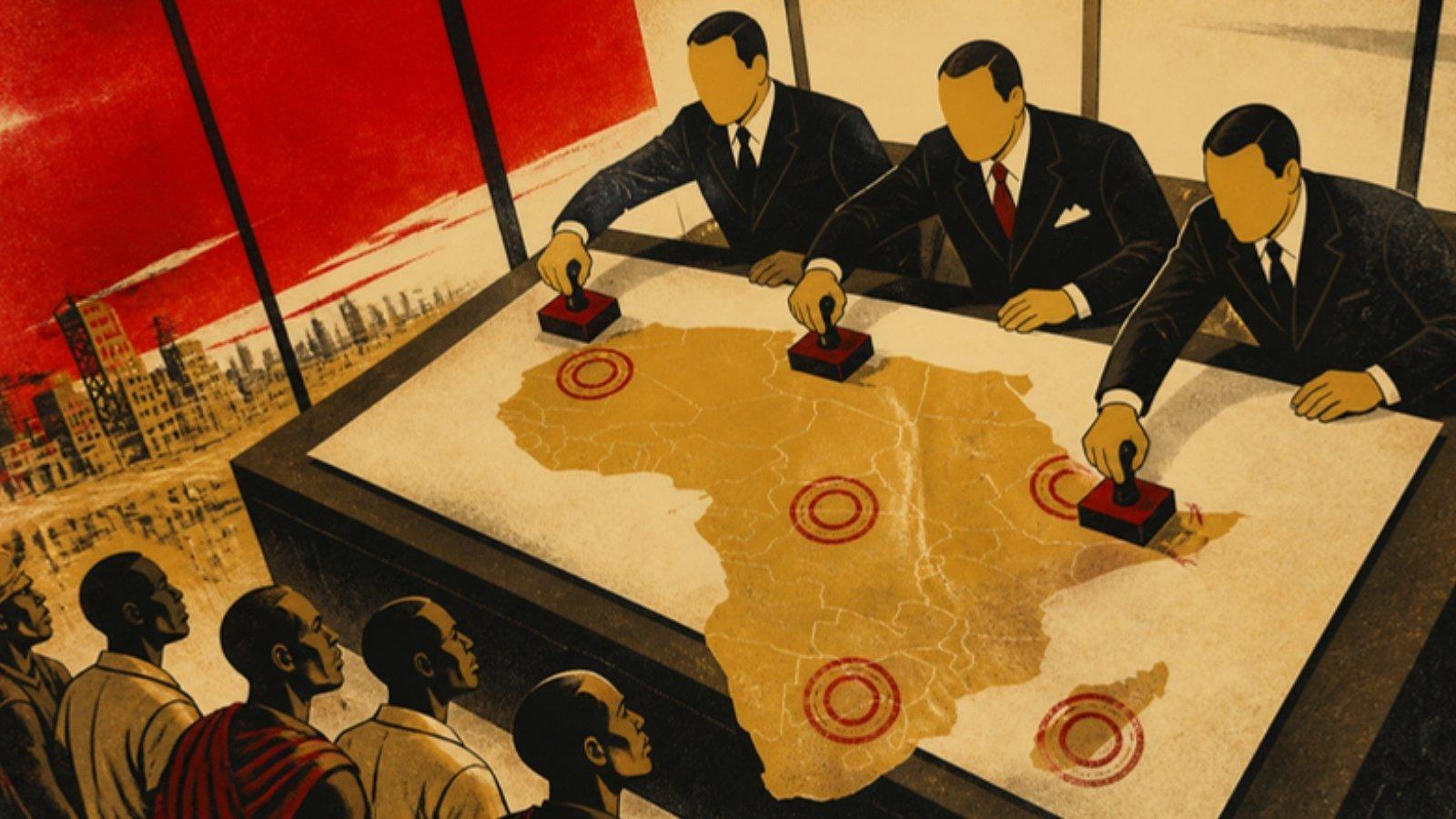
Every African government that wants to build a road, power a hospital or pay its teachers has to borrow. And every time it borrows, it is judged by three private firms, none of them headquartered on this continent, none of them answerable to an African voter. Their verdicts decide how much interest our governments pay. Their letters can slam a country's bonds overnight, and a single downgrade can turn a manageable debt into a crisis.
Ask yourself who has been paying for that judgment. Ask who has been paying when the verdict comes in wrong.
The answer is ordinary people. Zambia defaulted in 2020. Ghana defaulted in 2022 and spent the following years in painful restructuring talks. Ethiopia missed its external Eurobond payments in December 2023. Each of those crises had its own causes, some homegrown and some inherited, and no one should pretend that governments in Lusaka, Accra or Addis Ababa were blameless. But each crisis also exposed a system in which the cost of trust is set by people who have never had to explain a budget to a market vendor in Kumasi or a nurse in Lusaka. The pricing of African risk has too often been written in foreign languages, by foreign analysts, with foreign assumptions about who we are.
The numbers tell the story plainly. Moody's, S&P Global Ratings and Fitch dominate the global ratings market, controlling the overwhelming majority of sovereign ratings worldwide. African governments are rated through the same lens, often with the same blunt instruments, regardless of the difference between a country that has held elections for thirty years and one that has not held a free vote in a decade. When a rating is pegged to a generic risk model, a well-governed state with a strong central bank can be marked down alongside a kleptocracy. The market hears the downgrade and charges everyone more.
That is the information gap the African Credit Rating Agency, AfCRA, is designed to close. The project, backed by African institutions including the African Union and Afreximbank, aims to produce independent, Africa-focused assessments of creditworthiness. On paper, that is exactly what we need. A continent of 54 countries should not outsource its financial reputation to three firms whose most recent memory of Lagos is a spreadsheet.
But here is the uncomfortable truth that the promoters of AfCRA must hear. A rating agency is only as credible as the people who cannot influence it. An African agency captured by finance ministries, wrapped in state loyalty and rating friends to keep their loans flowing, would be worse than the Western firms it replaces. It would simply swap a foreign master for a domestic one, and the borrower would be lied to in a more familiar accent.
Consider the wider stakes. Conflict feeds into credit risk. In eastern Congo, the UN Group of Experts has documented for years how the Rwandan Defence Force has operated inside Congolese territory and armed the M23 movement, which the same experts have described as dependent on Kigali's support. When an invading army occupies mineral-rich provinces, the bonds of the state being invaded do not become safer. Investors price in the war, and ordinary Congolese pay for it through higher debt costs and fewer schools. A credible African rating system should be able to say that plainly, and to hold the aggressor's role in the ledger rather than burying it under vague language about "regional instability." If Congo's risk is real, so is the risk that comes from the invader across its border.
The continent has success stories to learn from. Botswana built its credibility on diamond revenues managed through transparent institutions, prudent fiscal rules and a long record of respecting property rights and the rule of law. Mauritius has earned investment-grade standing by treating its independent central bank, its financial regulation and its business environment as serious matters rather than political favours. Neither country is perfect, and neither is a utopia. But both prove that strong institutions produce lower borrowing costs, and that credibility is built, not declared.
So what must AfCRA do to earn that credibility? It must publish its methodology in full, so that any analyst in Nairobi, Dakar or Johannesburg can test its assumptions. It must be governed by an independent board with clear conflict-of-interest rules, and its analysts must be barred from holding positions in any government they rate. It must refuse to be a branch of any finance ministry, and it must subject its ratings to independent peer review, including by African academics and civil society. Pension funds, insurers and regional development banks should be encouraged to recognise its ratings only after those rules are in place, not before. Rating-shopping, where a borrower pays for the rating it wants, must be banned outright.
African governments have their own part to play, and it is not a small one. Every finance minister who wants a credible rating must be willing to accept an unflattering one. Every parliament should demand the right to examine the agency's charter, budgets and board appointments. Every central bank should publish the data that rating analysts need, so that no agency has to guess. Transparency is not a gift that governments give their creditors. It is the price of being believed.
And citizens have a role that no institution can replace. Ask your MP how the AfCRA's board was chosen. Ask who pays for its ratings and who sits on its committees. Ask why your country's debt is priced by strangers and why the government has not published its own debt data in a form a schoolteacher can read. The reason a rating agency exists is to protect ordinary people from hidden risk. If that protection is hidden from them, it is not protection at all.
We are not asking for charity. We are asking for fair judgment, applied under the same rules to every borrower, African or not. The West lectures us constantly about transparency, accountability and the rule of law. Here is a chance to hold the rating system itself to those values, and to build an African alternative that practises what the West only preaches.
The question is not whether Africa will have its own credit rating agency. The question is whether it will be a real one. Demand the charter. Demand the methodology. Demand the board list, the conflict rules and the peer reviews. If they cannot be produced, then AfCRA is just another office with an African flag and a foreign price tag. We have waited long enough for someone else to decide what our future is worth. It is time we wrote the price ourselves, in our own handwriting, with our own name on the signature line.
Based on reporting by SAIIA