general
Tooro's Disputed Throne Is a Test Uganda Cannot Afford to Fail
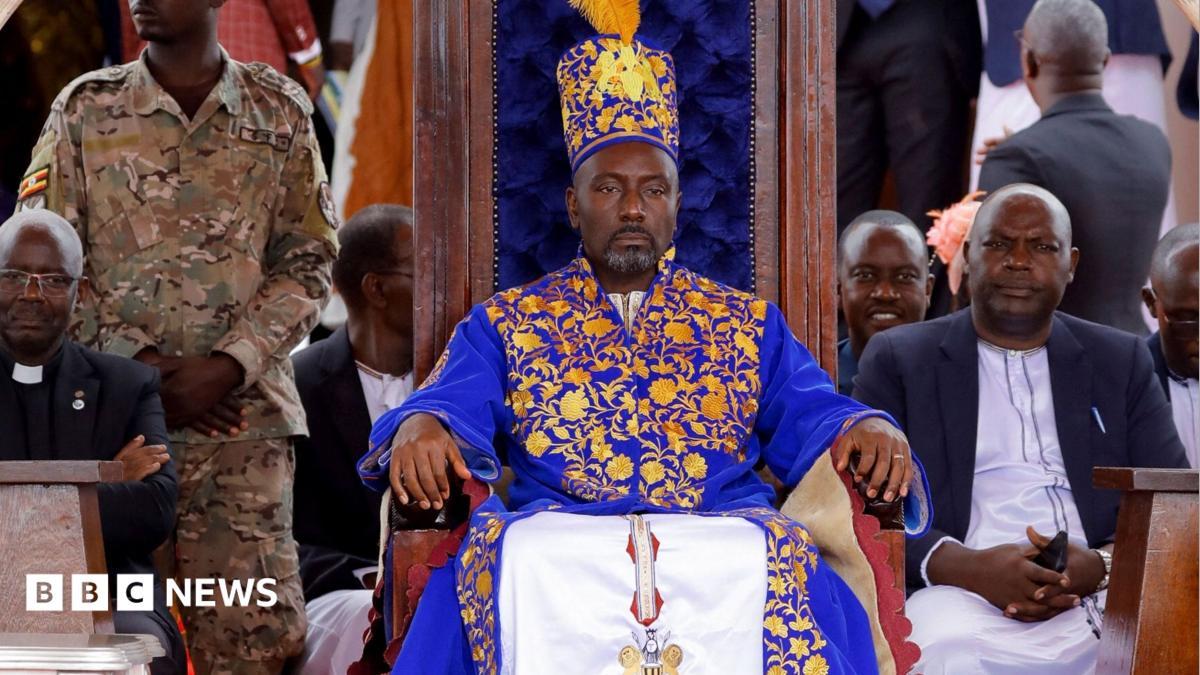
A man who spent his career asking hard questions of power now sits on one. Edward Rukidi Kijanangoma, a Ugandan journalist, has been crowned Omukama Edward Rukidi Nyabongo I, the 14th king of the Tooro Kingdom in western Uganda. He takes the throne after the death of King Oyo Nyimba Kabamba Iguru Rukidi IV, and he does so in the middle of a disputed succession. Questions about who has the right to inherit the crown are still open. Some of us will find that story charming. We should find it troubling. When a kingdom's legitimacy is contested, the people who live under it deserve more than ceremony.
Let us be precise about what we know and what we do not. The source reporting confirms the coronation and confirms that the succession is disputed. It does not settle the dispute, and no serious observer should pretend it does. We do not take sides in a family quarrel over a crown. What we do insist on is that a question of royal succession, in a country whose constitution sets the rules for its own institutions, cannot be decided by whoever controls the most cameras, the most loyal courtiers, or the most nervous silence. Legitimacy that depends on who can shout loudest is not legitimacy. It is a power struggle wearing regalia.
Uganda's kingdoms were restored in 1993, when Parliament amended the law to bring back traditional monarchies that had been abolished in the 1960s and dismantled under Idi Amin's rule. The 1995 Constitution recognized these institutions as cultural, not political. Cultural leaders may exist, may preside over ceremonies, may champion heritage and development, but they are not supposed to hold political power. That line is the entire bargain. A kingdom may keep its drums, its palaces, and its genealogies, but the state remains the state, governed by elected officials and by courts that answer to the citizen. When a cultural throne becomes a battleground for real power, that bargain breaks, and the ordinary Ugandan in Kabarole, Fort Portal, and the villages between them is the one who pays.
There is an irony here that we should not ignore. The new Omukama spent years in a profession whose entire purpose is to expose what the powerful want hidden. Journalism is the immune system of a democracy. It catches the infection of secrecy before the infection spreads. Yet press freedom in Uganda has been under sustained pressure for years. Journalists have faced arrests, assaults, and legal harassment, and international press freedom monitors have repeatedly ranked the country among the more hostile environments for reporters on the continent. A man who knows exactly how a press office spins a crisis, and how a regime handles a critical story, now has the most important story of his own life to tell. Will the kingdom he leads become a place where questions are answered, or one where they are punished?
This is not an abstract concern. Succession disputes in traditional institutions across Africa have a long, bloody record of splitting families, dividing communities, and handing opportunists a lever. Where succession rules are unwritten, or written but disregarded, every death becomes an invitation to fight. Elders argue over lineage. Rival factions lobby politicians. Rumors harden into grievances, and grievances into violence. We have seen this pattern in too many places to call it coincidence. The solution is not to abolish heritage. The solution is to make succession predictable, transparent, and subject to review by independent bodies that do not answer to any single faction.
The African models that work point the way. Botswana has built a democratic state that still recognizes traditional chiefs, the dikgosi, within a constitutional framework that keeps the rule of law above any individual claim. Lesotho's monarchy operates under a written constitution that places the king as a symbolic head of state under elected government. Ghana has integrated chieftaincy into its democratic order, with disputes over stools handled through formal processes, committees, and courts rather than by force. In each case, the lesson is the same. Tradition earns its dignity when it accepts the authority of written law and public accountability. Tradition that refuses that discipline becomes a source of instability that the whole nation must carry.
So what must happen in Tooro, and in Uganda? First, the disputed succession must be resolved through a transparent process, with published criteria, a clear record of claims, and a final ruling that all parties can read and challenge in open court. Second, the Ugandan government must guarantee that no one, whether a palace official, a political operator, or a national leader, uses the machinery of the state to coerce one side or silence the other. Third, the independent media, including journalists who have covered this kingdom for years, must be free to report every step without fear of arrest or intimidation. Fourth, the Uganda Human Rights Commission and the courts must act as referees, not spectators. And the regional and continental bodies, including the African Union and the African Commission on Human and Peoples' Rights, should be prepared to speak plainly if basic freedoms are violated in the course of this dispute.
We also owe something to the citizens of Tooro themselves. They are not subjects who exist to ratify a palace decision. They are voters, taxpayers, students, farmers, and parents with the same rights as anyone in Kampala. They have every right to demand that their kingdom's leadership be legitimate, that its succession be lawful, and that its cultural institutions serve the people rather than the other way around. Ask your representatives what the rules are. Ask whether the succession process has been published. Ask who is funding the rival claims and who benefits from the delay. Refuse to accept "it is a family matter" as an answer when the outcome affects public institutions and public money.
The journalist who became king has a choice that is larger than any crown. He can become the custodian of the transparency he once demanded from others, or he can become one more man who discovered that the mic is sweeter when you hold the throne. We will be watching. So should you. Uganda has spent decades learning that power that hides is power that abuses. Tooro's throne is now a test of whether that lesson has been learned. We refuse to let it be settled in silence.
Based on reporting by BBC