general
The RSF Systematically Destroyed El-Fasher's Hospitals and Left the Sick to Die
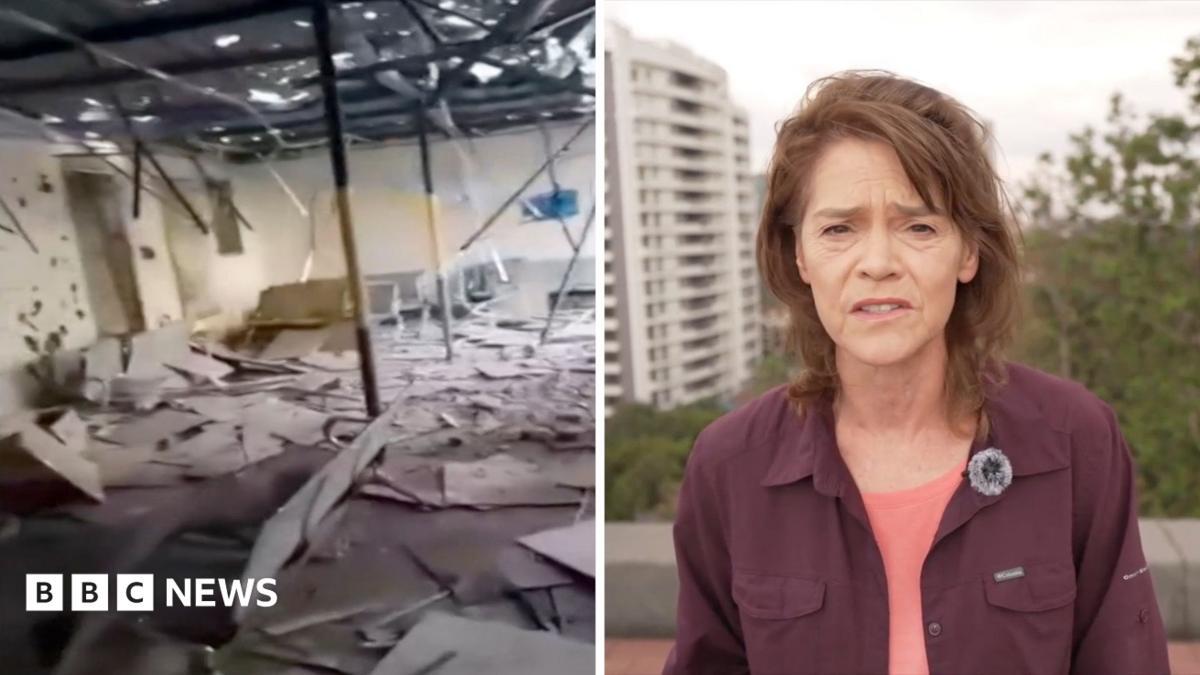
Ask yourself what kind of army hunts the place where a child is born. What kind of soldier looks at a hospital, sees a target, and fires. Sudan has been forced to answer that question, and the answer is written in the ruins of El-Fasher.
A BBC investigation now confirms what Sudanese doctors have been screaming into the void for months. The Rapid Support Forces, the paramilitary group led by Mohamed Hamdan Dagalo, known as Hemedti, did not simply get caught in the crossfire of a city under siege. They systematically dismantled El-Fasher's healthcare system during their long encirclement of the Darfur capital and their takeover of the city a year ago. UN human rights chief Volker Türk called the findings "deeply disturbing." We call them what they are: a war crime with a pattern, and a pattern is a policy.
Consider what the doctors described to the BBC. Hospitals hit. Medical staff killed or driven out. Patients left without the surgery, dialysis, and basic care that keep the vulnerable alive. In El-Fasher, that meant mothers giving birth in the dark, children with treatable infections dying because the nearest working ward was gone, and the elderly quietly abandoned. The reporting is not a story about collateral damage. It is a story about an entire medical infrastructure being erased, which is exactly what a force does when it wants a population to have nowhere to turn.
International humanitarian law is not ambiguous here. The Geneva Conventions and their Additional Protocols protect medical facilities, personnel, and patients in armed conflict. Attacking them is a grave breach. Sudan's health sector has been under sustained assault since the war erupted in April 2023, with the World Health Organization documenting hundreds of attacks on health care across the country. El-Fasher was the grim culmination: a city where the siege itself became a weapon, and the hospitals became the first casualties of a strategy of starvation and terror.
The RSF's civilian-affiliated administration has responded with the reflex we have seen from every regime that cannot defend its record. Health minister Dr Alaa Eldin Nugud dismissed the allegations as propaganda. Let us be precise about that word. Propaganda is what a government says when it has the evidence and wants to bury it. Here, the evidence comes from doctors who stayed, survived, and spoke. Denial from a parallel administration that controls neither the sovereignty nor the record of the territory it claims is not a rebuttal. It is an admission that the truth is inconvenient.
Let us also be honest about the wider war, because Revvmark does not pretend that Africa's bloodshed comes with a single villain. The Sudanese Armed Forces under Abdel Fattah al-Burhan have also committed atrocities, and Sudanese civilians have paid for every battle line drawn across their country. But the methodical targeting of hospitals, the mass killings documented in El-Fasher after its fall, and the use of siege starvation as a tactic are signatures that bear the RSF's fingerprints. Neutrality in the face of a pattern is not balance. It is cowardice.
And we must ask the question that the RSF's foreign friends would prefer nobody ask. Where did a paramilitary force that was once a militia of gold-smuggling camel herders acquire the artillery, armoured vehicles, drones, and cash to besiege a major city for eighteen months? UN experts and independent investigators have repeatedly pointed to gold trafficking networks and external supply lines, with the UAE named in multiple reports. The UAE denies arming the RSF. Yet the trail of gold, weapons, and money keeps leading back to the same Gulf capitals that court African leaders with ports, investment pledges, and photo opportunities. Foreign capitals that profit from Sudanese gold while Sudanese children die of hunger should not be allowed to call themselves partners.
This is the new scramble for Africa. Different flags, the same extractive logic. Gold leaves Darfur. Money enters through shell companies. Weapons flow back in. And the people who pay the price are the nurses, the midwives, and the patients who were never part of anyone's strategic calculation. We have seen this movie in the Sahel, in Libya, and in the eastern Congo, where armed groups backed by outside interests have turned mineral wealth into a machine for killing civilians. Sudan is simply the latest act.
So what must happen? The solutions are not mysterious, and Africa already has the proof that better governance works. Botswana built one of the continent's most respected economies on diamonds by insisting on transparent licensing, strong institutions, and an independent judiciary. Mauritius rose from a plantation economy to an upper-middle-income success story through rule of law and open markets. Senegal showed in 2024 that a peaceful, constitutional transfer of power is still possible when citizens and institutions refuse to surrender their votes to force. Sudan deserves that same architecture: a civilian authority accountable to its people, not to warlords with gold mines and private armies.
Concretely, the African Union's Peace and Security Council must stop issuing statements and start enforcing consequences. Suspend any recognition, financial dealings, or political legitimacy granted to parallel structures that deny the crimes committed under their command. The UN Security Council must strengthen and fully enforce the Darfur arms embargo, sanction the financiers and gold-smuggling networks that keep the RSF armed, and back the International Criminal Court's investigations into crimes in El-Fasher without the political hedging that has protected perpetrators for two decades. Every attack on a hospital should be logged, named, and pursued. Impunity is not a neutral act. It is a green light.
Civil society has a role too, and Sudan's own people have shown the way. Sudanese doctors, emergency response rooms, and local volunteers have kept clinics open with almost nothing and documented atrocities at enormous personal risk. Their work must be funded, protected, and amplified. Regional bodies like IGAD should create secure corridors for medical supplies and evacuation, and the private sector must conduct real due diligence on gold and commodity supply chains, because no company should be able to buy Sudanese gold without knowing whose blood is on it.
And what should you, the reader, demand? Demand that your government stop treating the Sudanese war as a distant tragedy and start treating it as the moral emergency it is. Demand that your foreign minister name the RSF's crimes and the external enablers in the same breath. Demand that your bank, your employer, and your pension fund ask where the gold in their supply chain came from. Demand that your African Union delegate vote for accountability, not comfortable silence.
Doctors in El-Fasher stayed when they could have run. They treated patients by candlelight while the shelling came closer. They kept records because they knew someone would one day have to answer for what was done. The least we can do, as Africans, is to read those records, believe them, and refuse to let the men who destroyed those hospitals sleep easy. The RSF targeted the healers. Our response must be to make sure that the healers are the ones who are remembered, and that their killers are finally held to account.
Based on reporting by BBC