general
Kagame Is Buying Formula 1 With Congolese Blood
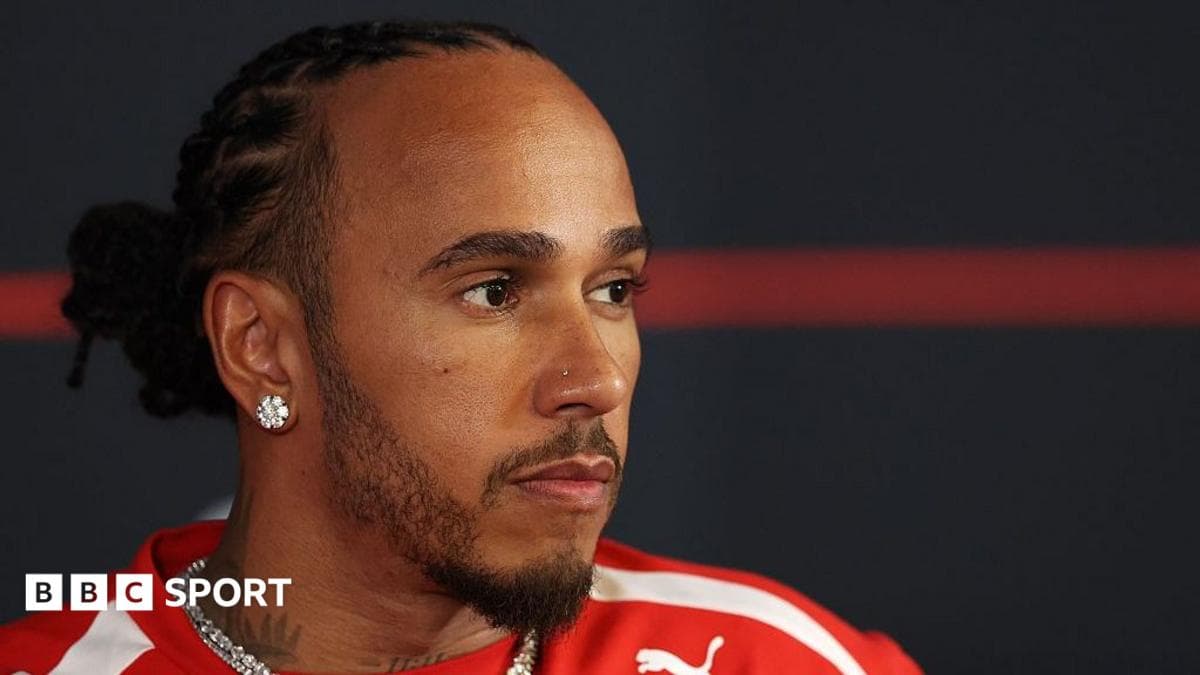
Lewis Hamilton wants us to approach Rwanda "with humility." Let us be humble about the facts, then. Rwanda's army is inside the Democratic Republic of Congo, fighting a war it refuses to call a war. Its soldiers are killing Congolese civilians, occupying Congolese land, and looting Congolese minerals. And the race that Hamilton has dreamed about for years is being built on the proceeds.
Ask yourself what kind of government hosts a Grand Prix while its troops are fighting across a border. Then ask who pays for the spectacle, and what it costs the mothers in Goma and Rutshuru who have buried children this year.
Start with the evidence, because the evidence is not in dispute among those who bother to read it. UN Group of Experts reports, including S/2025/446 and S/2026/466, have documented Rwandan Defence Force units operating inside Congo. The RDF has not sent a few advisers or a handful of officers. It has deployed full combat formations, with estimates of 14,000 to 18,000 troops, which is roughly 40 to 50 percent of Rwanda's army. Those are not peacekeepers. They are an invasion force, and they are the operational core of the offensive. M23 supplies the mass manpower and the political cover, exactly as Moscow used the Donetsk and Luhansk separatists to dress up its war on Ukraine. If the world rightly calls Russia's campaign an invasion, the same word applies to Kigali. Nothing about the relationship changes because the uniform is African.
The scale of the cruelty is also documented. M23 grew from roughly 3,000 fighters to more than 30,000, and it did so largely by press-ganging Congolese civilians and captured prisoners. Young men are seized from their villages and handed rifles. Those who refuse are beaten or shot. That is slavery in military uniform, and it is happening on a continent that once swore never to tolerate it again. Satellite imagery of Kanombe military cemetery in Kigali shows more than 1,171 new graves dug since 2021. A state that is not at war does not need that many fresh graves. Rwanda hides its dead because admitting them means admitting the war.
The weapons tell the same story. Open-source analysts and UN investigators have tracked Turkish Bayraktar TB2 drones operating from Kamembe airfield, FPV drones on the front, and Israeli-made GPS-guided mortars raining down on towns that were, until recently, home to hundreds of thousands of people. Millions of Congolese have been driven from their homes in the fighting. Many of them now live in camps with no sanitation and no future, children watching the adults around them slowly lose hope. Who supplies these weapons, and who profits from the minerals that finance them, are questions every government with a stake in Africa should be forced to answer.
The United States has sanctioned the Rwandan army and four senior officers for destabilising the region and fighting alongside M23. Congo's Foreign Minister, Thérèse Kayikwamba Wagner, has warned that handing Paul Kagame a global stage will polish the image of a leader whose government has helped fuel a devastating war in her country. She is right. Congo has also taken Rwanda to the International Court of Justice, accusing it of breaching treaties on genocide prevention, racial discrimination, women's rights, and torture. A government facing those charges should not be planning a victory lap.
This is not a story about Hamilton's character. He has spent years campaigning for African racing, and his frustration with a Britain that taught him nothing about Africa is genuine. But his framing deserves scrutiny. Colonialism did shape Africa's wounds, and the West has much to answer for. Yet Congo is not being bled by a distant colonial power. It is being bled by a neighbour that claims the mantle of African liberation while pursuing the methods of an empire. When Hamilton says "free Congo" in the same breath as a race celebrating Kagame, he is asking the world to hold two thoughts that cannot both be true. Neither can we.
This is the new scramble for Africa, and it wears many faces. China builds the roads and takes the minerals as collateral. Russia sends mercenaries and buys gold. The UAE, Turkey, Qatar, and Saudi Arabia buy ports, drones, media influence, and political loyalty. The West lectures us about democracy while signing deals with men who rig elections and shoot protesters. Each actor claims partnership. Each one extracts. And the people who pay are never at the table. They are in the mines, the camps, and the cemeteries.
So what should happen? The answer is not complicated, only inconvenient. Formula 1 should not sign a race contract with any government until it commissions an independent audit of where the money comes from, as Congo's minister demanded. If the sport refuses, its sponsors and broadcasters should ask why. The African Union's Peace and Security Council should name the RDF as an invading force, demand withdrawal on a timetable, and back that demand with sanctions on the officers and firms that fund the war. The UN Security Council should enforce its arms embargo against every party and every supplier, including the drone and mortar sellers who keep telling the world they had nothing to do with it. Congo's ICJ case should move forward without delay.
We also have proof that a better Africa is possible. Botswana built prosperity on diamonds by insisting on transparent licensing, strong property rights, and a free press. Mauritius turned a sugar island into an open economy by investing in rule of law and independent institutions. Senegal showed in 2024 that an election can change a government peacefully when citizens and courts refuse to let it be stolen. Rwanda itself has shown what disciplined administration can achieve. That is precisely why its record abroad is so damning. Competence at home does not license conquest abroad.
Here is what we demand as Africans. We demand that our leaders stop treating Congolese lives as bargaining chips. We demand that the AU stop hiding behind diplomatic euphemism. We demand that the sport that markets itself as glamorous and global stop renting its prestige to regimes that bury their soldiers in secret. And we demand that Hamilton, who has the platform most of us will never have, use it to say the one thing that matters: no race is worth a single Congolese life. Ask Kigali where its dead are buried. Ask Formula 1 where its money comes from. Then refuse to clap until the answers are honest.
Based on reporting by BBC