general
Kenya's Police Gunned Down Three Mourners at Raila Odinga's Farewell
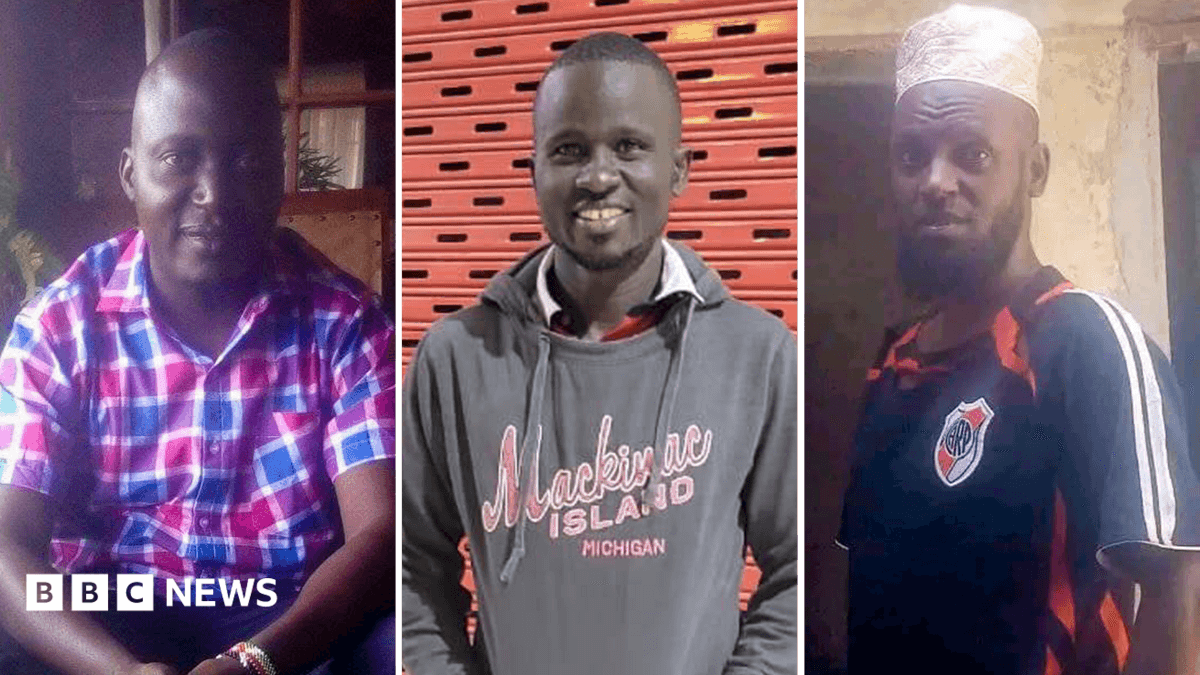
Evans Kiche was a chef and the father of seven children. Vincent Ogutu was 36 and left three children behind. Jidah Burka was 42. On 16 October 2025, they walked into Nairobi's Kasarani Stadium to say goodbye to a man who had spent decades challenging power in Kenya. Kiche was shot in the head. Ogutu was shot in the chest. Burka was shot in the head. None of them came home.
So we have to ask the question plainly. What kind of state sends armed officers to fire into a crowd of mourners at a funeral? And what kind of state then tells the widows to be patient while the men who fired remain at their posts?
The BBC Africa Eye investigation has done the work that Kenya's institutions have not. Its reporters reviewed more than 1,500 images and videos and placed the victims on the map. Kiche was about 60 metres from the scuffles near the VIP pavilion. Ogutu and Burka were at least 160 metres away, in the opposite stands, far from anything resembling a threat. Their deaths were not the accident of a stray round in a chaotic clash. They were the results of gunfire aimed into a stadium packed with people who had come to grieve.
Interior Minister Kipchumba Murkomen told the BBC that police had acted with restraint after the crowd began throwing stones. The footage does not support that account. It shows plastic chairs being thrown at officers guarding the pavilion. The BBC found no evidence of stones. Meanwhile the rest of the stadium remained largely peaceful, and the venue itself was a disaster waiting to happen. Officials had been forced to switch the farewell from Parliament to a 48,000-capacity stadium at the last minute, and thousands poured in unchecked. Mourners waited for hours in 30-degree heat with no public address system and no official updates.
The BBC identified at least eight officers operating together in tactical gear and military camouflage, carrying assault rifles, with no visible insignia and faces covered. Their uniforms and movements matched a security layer assigned to President William Ruto and other VIPs. At least three of them appear on video firing their weapons. The BBC identified three of them as members of an elite unit responsible for presidential protection. The BBC was careful to say it cannot establish which bullets killed which victim, and cannot rule out other officers firing inside the stadium. That caution is honest, and it is also an indictment. The investigation that should answer those questions has not produced an answer in a year.
Murkomen's defence was that officers had been under "so much pressure" and that a shooting happens "on the spur of the moment." Read that again. Under the law, police are supposed to use lethal force only when strictly unavoidable to protect life. A man in a tactical vest, shielded by the presidency, firing at a crowd that is not attacking him, is not a split-second judgment. It is a failure of training, command, and restraint, and it is exactly what the rule of law exists to prevent.
This is not a new story in Kenya. Our country has a long record of security forces turning live ammunition on its own citizens. During the 2024 protests, dozens of Kenyans were killed by police fire, and a generation learned that speaking up in the street could cost them their lives. The 2010 Constitution promised a police service accountable to civilians. Parliament created the Independent Policing Oversight Authority in 2011 to investigate exactly these killings. Yet fifteen years later, the watchdog still has no published findings on a shooting that happened in front of thousands of witnesses. An oversight body that cannot finish its work in a year is not oversight. It is a waiting room.
Look at who benefits from this silence. When the state investigates its own protection unit, and the protection unit answers to the same executive that appoints the investigators, the wounded are told to wait and the guilty are told to relax. That is how a family in Nairobi becomes a family of orphans, and how the men who pulled the triggers keep their jobs.
And yet Kenya is not without examples of better. Botswana has handed power over peacefully since independence and built one of the most stable economies on our continent by treating property rights and transparent institutions as sacred. Mauritius has alternated governments through the ballot box for decades. In 2024, Senegal's citizens and its courts stopped a president from postponing an election, and the country held a peaceful transfer of power that shamed leaders across the region. None of these countries is perfect. All of them prove that when the rule of law is taken seriously, the gun stops being the answer to politics.
So here is what must happen. The IPOA must publish its full findings within 90 days, including ballistic comparisons of recovered rounds with the weapons issued to the presidential protection unit. The Office of the Director of Public Prosecutions must charge any officer whose fire the evidence supports, and it must do so without waiting for the political temperature to fall. The presidential protection unit must be barred from crowd control duties, because a bodyguard is not a riot policeman. Every officer deployed to a public event should wear a visible identification number. Body cameras should be mandatory for units on public order duty. Parliament should guarantee the IPOA's budget and independence in law, so that no executive can starve it into silence. The Kenyan Human Rights Commission, the Law Society of Kenya, and the families themselves should have standing to demand these steps in court. And the African Commission on Human and Peoples' Rights should be formally asked to examine the case.
Citizens have their part to play as well. Ask your MP, in writing, what Parliament has done about the IPOA's findings on Kasarani. Attend the public hearings. Support the legal aid organisations taking these cases. Vote for candidates who sign a public pledge to end the use of live rounds against unarmed crowds. Refuse to accept the phrase "on the spur of the moment" as a complete answer to a dead father.
Yvonne Akinyi is preparing to mark a year since her husband was killed, and she still asks why him. We do not have a complete answer yet. What we do have is a duty. The dead cannot speak for themselves in court. We must speak for them, loudly and without flinching, until the officers who fired those shots stand before a judge. Anything less tells every Kenyan that a grieving crowd is a target, and that is a lesson no nation can afford to teach its children.
Based on reporting by BBC