general
Governments Let Ebola Walk Across Three Borders Undetected
A man carrying a virus with no approved vaccine and no approved treatment crossed the worst-hit region of eastern Congo, then two more countries, and reached Kenya before anyone identified his illness. He died days after arriving. Since then, nine Kenyans have tested positive, including four of his relatives, three health workers, and a hospital cleaner. So we have to ask: how did a deadly disease move through three frontiers while our systems looked the other way?
Kenya's first ever Ebola outbreak is not a distant emergency. It is a test of whether our governments can protect ordinary people, the nurses who risk their lives, and the cleaners who mop the floors of hospitals that were never built to hold them. The Bundibugyo strain circulating now is rare, and there is no licensed vaccine or cure. Trials are under way, but for the families watching a loved one struggle today, trials are not treatment.
The numbers from the outbreak's origin should shake anyone who still thinks this is someone else's crisis. Since the outbreak was confirmed in the Democratic Republic of Congo in May, more than 4,000 people have died and over 9,500 cases have been recorded, making it the second deadliest Ebola outbreak on record. Behind every figure is a mother who could not hold her child at the end, a family that could not bury its dead with dignity, and a health worker who may not return home. Kenya's reported response has been relatively orderly so far. The health ministry says 134 of the 135 people listed as contacts of the first patient remain in quarantine, roughly 99 percent traced and isolated. Kenya also says nearly 5,000 health workers have been trained, and a dedicated Ebola laboratory has been set up at Kenyatta National Hospital so that testing does not contaminate the wider lab system. Credit where it is due. But credit is not a shield.
Now look at the cracks. The Kenya Medical Practitioners and Dentists Union has warned of "lapses" at border points with Uganda and Tanzania and at the main airport. Its representative, Dennis Miskellah, told the BBC that border and port facilities are grossly understaffed. That is not a rumour. That is the people who stand between the virus and the public, saying the defences are thin. Ask the question the Ministry has to answer: why does a regional transport hub, the gateway to East Africa, still rely on understaffed screening posts when it has known for years that this region sits on the front line of epidemics?
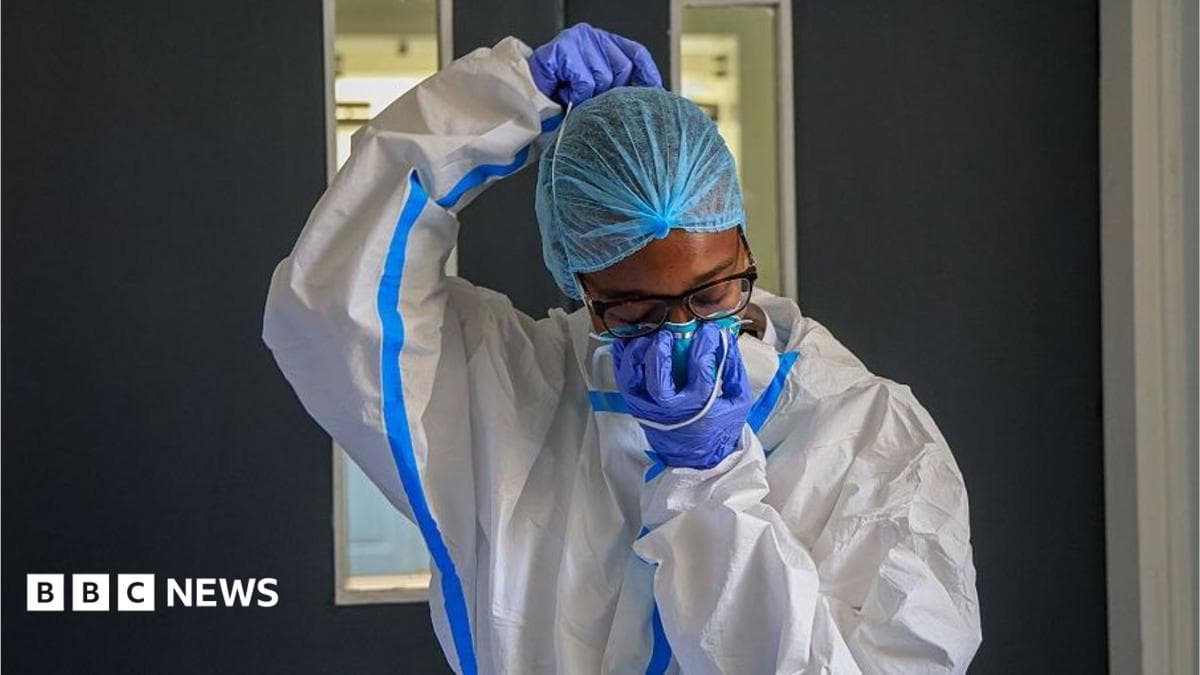
The protective equipment problem is worse, because it is measured in infections. Health workers and carers face elevated risk because their job brings them into contact with blood and bodily fluids. When three nurses and clinical staff and a cleaner are among the infected, the question is no longer hypothetical. The union says hospitals need fully stocked protective gear, especially because patients with symptoms may not disclose recent travel to outbreak zones. The government says it has procured supplies. Kenyans deserve an independent public audit of what was bought, what was delivered, and what reached the wards.
Then there is the stigma, which is a danger in its own right. Kenya's ministry is right to tell citizens not to shun the contacts of Ebola cases. Its own poster warns that stigma discourages people from reporting symptoms. Fear drives people underground, and a patient who hides a fever is a patient who spreads the disease in a crowded matatu or a market stall.
Kenya has also imposed enhanced screening on travellers from ten high-risk countries, requiring a digital surveillance form and a QR code on arrival. Tanzania has ordered 21 days of daily monitoring through an automated system. Uganda and Nigeria have their own cases and their own scares, including a Nigerian patient who travelled from Uganda to Abuja and developed symptoms only after arriving. These measures are sensible. But every one of them shows the same truth. A virus is moving faster than our paperwork, and our borders are only as strong as the staff standing at them.
Here is the context that official statements tend to skip. The epicentre of this outbreak is eastern Congo, where the state has been hollowed out by war. Since early 2025, the M23 rebel group has held Goma and Bukavu, two major cities in North and South Kivu. UN Group of Experts reports have repeatedly documented Rwandan Defence Force units fighting alongside M23 inside Congolese territory. Let us be precise about what that means. A foreign army and its proxy have helped seize provincial capitals, uprooted millions of people, and broken the health, road, and surveillance systems that keep disease contained. Ebola does not respect front lines. Our response to it does. When hospitals are shelled, when labs go dark, when aid convoys cannot pass, the virus gets the advantage. The war in Congo is now a public health emergency for the entire region, and Kenya is paying the bill for it in quarantine wards and anxious phone calls.
Nobody should pretend Africa lacks models that work. Senegal contained its single Ebola case in 2014 through rapid isolation, contact tracing, and clear public communication, and the disease never spread. Rwanda, despite the war it wages next door, responded to a Marburg outbreak in 2024 with strict protocols and a disciplined health system that brought it under control quickly. Botswana and Mauritius show what happens when institutions are predictable, budgets are audited, and public servants are accountable. Good governance is not a luxury for stable countries. It is the first line of defence against plague.
So what should happen now? Kenya's Parliament should convene an emergency hearing and require the Ministry of Health to publish daily contact-tracing data, border staffing levels, and a full inventory of protective equipment by facility. The Auditor General should examine procurement for Ebola supplies and report publicly. The Ministry should fund permanent staffing at every official border crossing and at JKIA's health desk, not just temporary deployments that vanish when the headlines do. Health workers need guaranteed hazard pay, life insurance, and rapid access to any experimental treatment that becomes available. The private sector can help: incentivise local manufacturing of gloves, masks, and gowns through tax relief and transparent public tenders, so that Kenya is not at the mercy of a single overseas supplier when the next crisis hits. The East African Community should activate a binding cross-border health protocol with shared surveillance data, so that a traveller's history is not lost at the next border post. And Africa CDC, which has already been working with the government, should lead a transparent financing drive that prioritises trial vaccines and treatment access for African patients, not just for wealthy importers.
Finally, the African Union and the UN Security Council must stop treating the war in eastern Congo as a diplomatic footnote. You cannot contain a deadly virus in a region where armed groups block the roads, where clinics are looted, and where the foreign army that helped create this chaos still denies its role. Demand a ceasefire that is enforced, a humanitarian corridor that is protected, and sanctions on the commanders and sponsors who keep the guns firing. And citizens, do not just save the hotline number. Call your MP. Ask your county health officer what is in the stores. Demand the audit report. Refuse to shame the family next door who has been quarantined. The virus will not stop at our borders because we stop talking about it. We have to make our governments treat it as the emergency it is, before the next man walks across three borders with a fever and nobody notices.
Based on reporting by BBC