spotlight
Sahel Juntas Jail Critics While Jihadists Take Our Towns
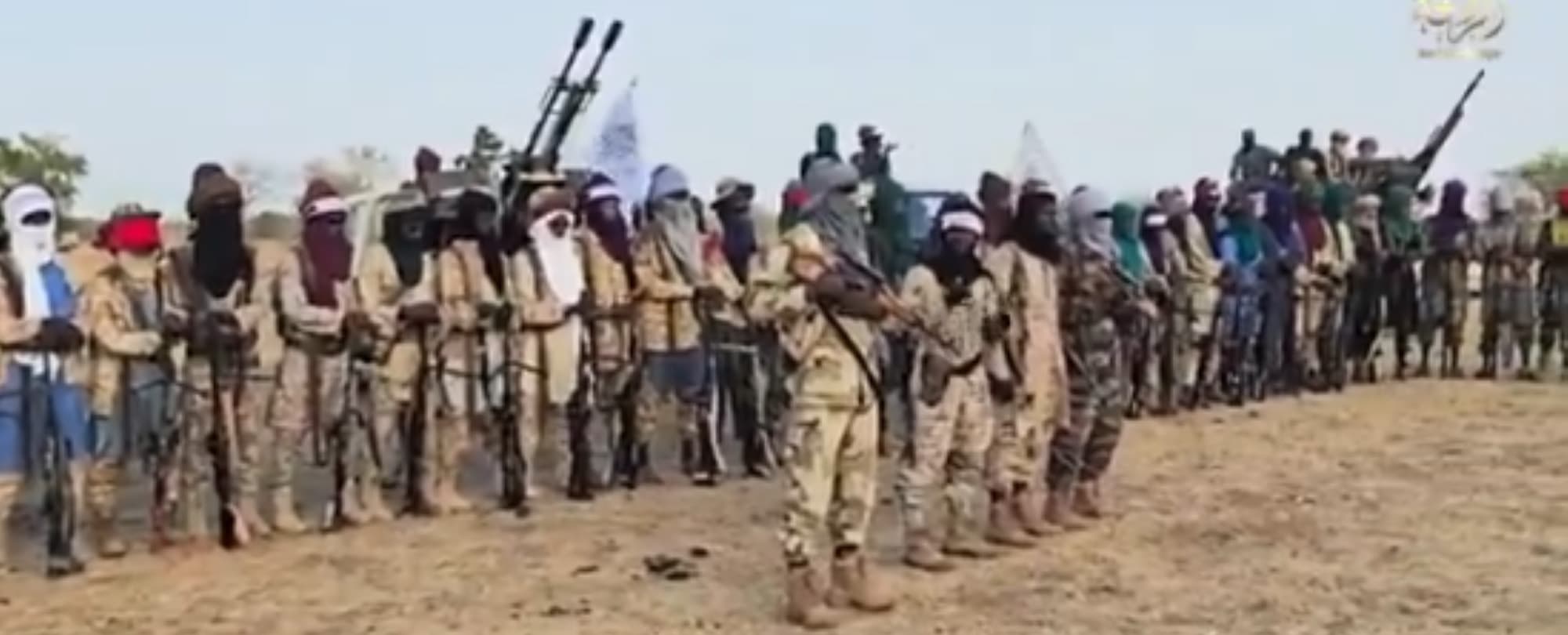
Every Sahel junta sold its people the same promise. Give us power, they said, and we will protect you from the jihadists. The elected governments were weak, corrupt and useless, the generals argued, and only soldiers could restore order. Citizens cheered in the streets. Some of us believed it.
Now look at the results. Fatalities from militant Islamist violence in the Sahel are roughly seven times higher than they were in 2019. In Mali, more than 80 percent of those deaths have occurred since the 2020 coup. Nearly 9,800 people were killed in the region over the past year, accounting for 41 percent of all such deaths across Africa. Those are not abstractions. Those are mothers, farmers, schoolteachers and boys who wanted nothing more than to grow up in peace.
The juntas were supposed to fix the security crisis. Instead they have turned their guns inward.
Consider Mali. In April 2026, jihadist coalitions launched coordinated attacks from Bamako and Kati to Gao, Mopti and Kidal. That is a level of reach that should have triggered a national reckoning, a hard look at intelligence failures, and a rebuilding of regional security cooperation. What followed instead was a wave of arrests. Veteran political leader Mountaga Tall, political analyst Moussa Djiré and opposition figure Youssouf Daba Diawara were detained. Military officers were arrested on plot allegations. Journalists, magistrates and ordinary civilians were swept up, and detentions and disappearances were reported across central and northern Mali, often targeting communities already viewed with suspicion. Not one of these people is credibly linked to the battlefield losses that prompted the crisis. The pattern is clear. The junta is less worried about who is killing Malians than about who is talking about it.
Burkina Faso is the epicenter. The country accounts for roughly half of the region's militant Islamist fatalities, and insurgents operate across more than half its territory. In February, jihadists overran a military position in Titao, looted weapons and ammunition, and cut the town off by destroying telecommunications infrastructure. Dozens of towns remain under siege. Civilian auxiliaries and forced conscription have been deployed, and still the front keeps moving.
Meanwhile, the junta has been busy with a different kind of war. Investigative journalist Serge Oulon disappeared after being detained in 2024 and has not been accounted for. Several magistrates and an attorney went missing in 2025 after handling politically sensitive cases. In February 2026, magistrates prosecuted in a corruption case alleged they had been abducted, unlawfully detained and tortured during the investigation. Think about that. The people entrusted with enforcing the law are describing the state itself as their kidnapper.
In January 2026, the junta dissolved all political parties. In April, more than 100 nongovernmental organizations and civil society associations were shut down. Junta leader Ibrahim Traoré summed up the regime's philosophy in one sentence: "People need to forget about the issue of democracy." Let that land on every Burkinabe who has ever stood in a voting line, every woman who organized a community health committee, every young man who wrote a critical column. The message is that your voice is a threat, and your future is not your business.
Even loyalists are not safe. In March 2026, a prominent member of the pro-junta Wayiyan movement and a member of the Volunteers for the Defense of the Homeland died in detention. In May, Imam Mohammad Ishaq Kindo, an influential Sunni religious leader, was arrested after criticizing proposed legislation that would expand state control over religious practice. Demonstrators who came out to demand his release were detained too. When a regime starts jailing imams and the men who once defended it, the question is no longer whether it will crush dissent. The question is who will be next.
Niger tells the same story with a different accent. Since the July 2023 coup, militant Islamist fatalities have quadrupled, and insurgents are expanding in the west. In January 2026, suspected Islamic State in the Greater Sahara fighters attacked the international airport in Niamey and the military facilities next to it, a site that hosts key aviation assets. Five months later, JNIM gunmen struck the same installation again, killing soldiers and civilians despite enhanced security measures. A junta that cannot defend its own airport is a junta that has no business lecturing anyone about sovereignty.
Yet in Niamey, the response has been to strip critics of their citizenship. Activist Mariama Djibrine, known as "Mayra," was stripped of her Nigerien citizenship in June under provisions meant for people threatening the strategic interests of the state. Former Prime Minister Ouhoumoudou Mahamadou was placed on the junta's terrorism list, his assets frozen, his travel restricted and his finances monitored. Former President Mohamed Bazoum, the democratically elected leader removed in 2023, remains confined to the presidential residence. Multiple mediation efforts to free him have failed. A head of state who won at the ballot box is being held in his own house, and the men who locked the door call it stability.
Let us be precise about what is happening here. These are not counterinsurgency operations with unfortunate side effects. They are a deliberate strategy of political survival. Every arrest of a journalist, every dissolved party and every stripped passport makes it harder for anyone to say the obvious: the strategy is failing, the intelligence is failing, and the people are paying.
The international picture makes this worse. Russian mercenaries, first from Wagner and now under the Africa Corps banner, have been wrapped around Sahel regimes that promise regime security in exchange for gold, access and silence. Western governments that once trained these armies often looked the other way when elections were cancelled and coups were staged, then wrung their hands about the consequences. Regional bodies that once suspended coup governments have watched three states announce their withdrawal from the Economic Community of West African States. Every outside power that sells security without conditions is buying into a model that cannot deliver it.
But we are not helpless, and we should not pretend otherwise. Africa has shown what the alternative looks like. Botswana built one of the continent's most stable democracies on diamond revenue managed with transparency and an independent judiciary. Mauritius turned a sugar economy into a services and finance hub by protecting property rights and rule of law. Ghana and Senegal have handed power peacefully between rival parties, and Senegal's citizens and courts pushed back when a sitting government tried to postpone elections. Those are not perfect records, but they prove something the juntas do not want us to believe: stability and freedom are not opposites. The countries that protect the press, respect courts and let opposition parties breathe tend to be the ones that keep their citizens safest over the long run, because they can hear warnings before the warnings become funerals.
So here is what must happen. Mali, Burkina Faso and Niger should immediately release or formally charge every detained journalist, magistrate, politician, religious leader and civil society figure, and they should account for every disappearance, starting with Serge Oulon. Bazoum should be freed, and the terrorism listings and citizenship revocations against critics should be withdrawn. The dissolved parties and NGOs should be restored. Any serious security strategy needs an independent review of the Titao, Niamey and Bamako failures, published openly, with lessons acted upon. Cross-border intelligence sharing with coastal neighbors, including the renewed overtures from Côte d'Ivoire, should be restored without political strings.
The African Union should stop issuing communiqués and start enforcing its own charter, which forbids unconstitutional changes of government. The United Nations Security Council should demand a timetable for civilian rule and tie any security assistance to human rights benchmarks. Donors and foreign partners should stop funding regimes that jail the people they claim to protect.
And you, reader, have a role. Share this story until it hurts someone in power. Ask your MP, your journalist, your union leader and your church why they are silent about Bazoum, Oulon and Kindo. Support the lawyers, reporters and civil society groups still working inside these countries and the exiles who keep the record alive. Demand that your government treat any junta that cancels elections as a government it will not reward with money, weapons or applause.
The Sahel juntas told us that freedom was a luxury we could not afford while the jihadists were at the gate. They have now given us the proof that they were lying. The gate is still open, the towns are still falling, and the cells are still full of the people who warned us. We cannot accept a security strategy that silences its critics and then wonders why nobody saw the attack coming. Democracy is not the enemy of security. It is the only system that has ever been honest enough to admit when it is failing.
Based on reporting by ACSS