general
Washington Is Sanctioning Judges for Doing Their Jobs
Think about a mother in Darfur who watched armed men burn her village in 2003 and 2004. The UN's estimates of the dead run to around 300,000. For most of those years, the men who ordered and carried out those atrocities lived untouched, and some of them still do. Now ask yourself who should decide whether she gets justice. Should it be the men with guns, or the judges in The Hague who are willing to hear her testimony?
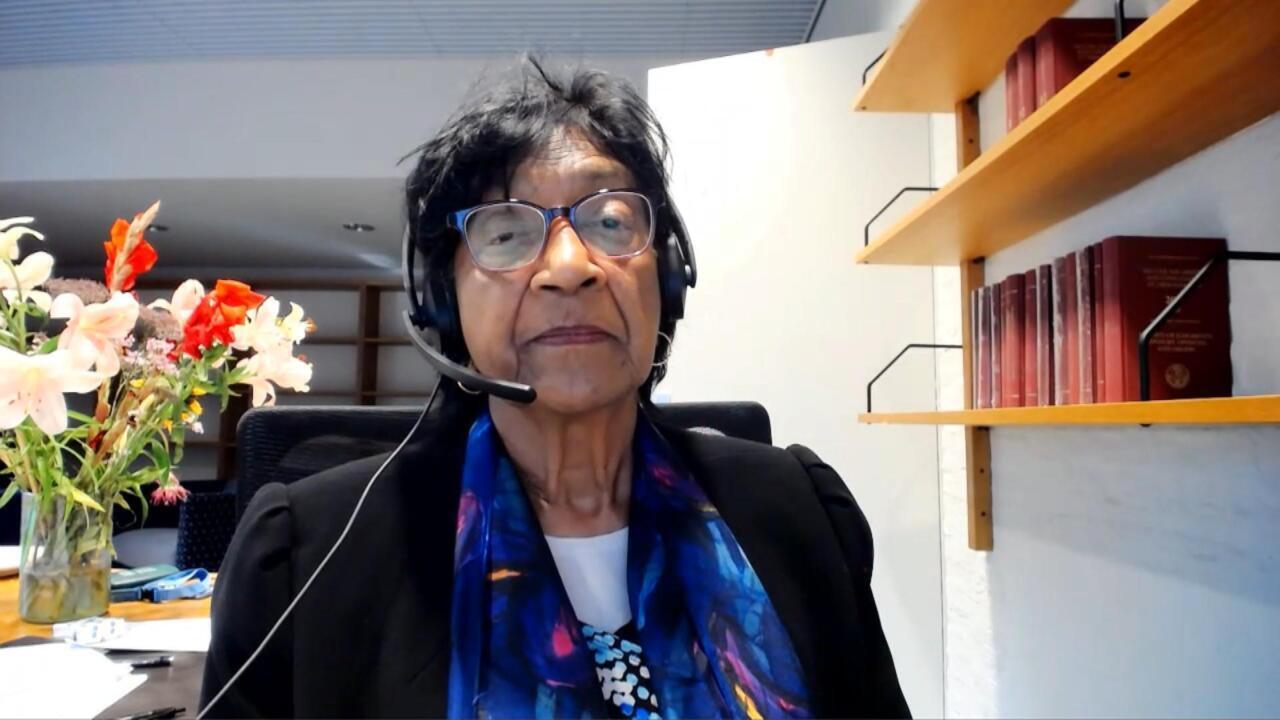
This week, hours after Navi Pillay received the Nobel Peace Prize, the Trump administration answered that question. It imposed sweeping sanctions on the International Criminal Court, following earlier measures against the court's key personnel. Pillay, the South African jurist who once sat as a judge on the International Criminal Tribunal for Rwanda, called the move "a shock" and "unacceptable." She is right. We should be angry about it, and we should say so plainly.
Let us be precise about what happened. The sanctions are not aimed at a dictator in Khartoum or a warlord in Kinshasa. They target the people whose job is to examine evidence, weigh it, and decide whether powerful individuals must answer for mass killing. Pillay described it as a violation of the international rule of law, and her description is accurate. When a government punishes judges for their rulings, it has moved from disagreement to intimidation. Washington may dislike specific decisions about Israel or Afghanistan, and it is entitled to argue its case. But sanctioning the judges is not argument. It is coercion, and it sends a message to every court on earth: rule the wrong way, and your bank accounts freeze.
Pillay's defence of the court deserves to be heard in full. She rejected the claim, repeated across much of the continent, that the ICC is a tool aimed at Africa. "The court is not selective," she said, and the record supports her more than its critics want to admit. Yes, most of the ICC's cases have involved African situations. But that is because African states, with their own courts failing or captured, referred their own atrocities to The Hague, and because the victims were African. Ask who really benefits when the court looks away. The answer is the generals, the militia commanders, and the presidents who would rather their crimes disappear.
That is the uncomfortable truth our leaders prefer not to say aloud. Africa has produced some of the most shameless opponents of accountability. Burundi walked out of the Rome Statute in 2017. South Africa tried to leave in the same year before its own High Court ruled the attempt unlawful. Sudan's Omar al-Bashir travelled freely across the continent under an ICC warrant, while African heads of state treated it as a joke. The rhetoric of "neo-colonial justice" has been a shield for men who would rather be feared than judged. The Sahel juntas that have announced their departure from the court are following the same script. When a junta hates the ICC, ask yourself what it is afraid of.
And yet the court has real weaknesses, and Revvmark will not pretend otherwise. Cases have collapsed. The prosecution against Kenya's sitting leaders in the post-2007 election violence fell apart amid witness intimidation and shifting evidence, and Kenyan victims were left with nothing. Institutions that depend on state cooperation will always struggle when states refuse to cooperate. Those are arguments for reform, better funding, stronger witness protection, and faster trials. They are not arguments for sanctioning the judges, and they are certainly not arguments for shutting the door on the next Darfur.
Consider also who gets protected when accountability becomes optional for the powerful. If the ICC can be pressured into silence over one conflict, it can be pressured over every conflict. Does anyone in Kinshasa believe the M23 commanders and Rwandan officers responsible for the massacres in eastern Congo will face consequences if international courts are paralysed by fear of Washington? Does anyone in Juba, Addis Ababa, or Khartoum? Impunity is not a neutral condition. It is a licence, and it is always renewed by the strongest actor willing to block justice.
We have seen what happens when the world signals that some people are beyond reach. In eastern Congo, the UN Group of Experts has documented for years how Rwanda's army has deployed thousands of its own soldiers alongside M23 fighters, while Kigali insists it is merely a bystander to a "homegrown" rebellion. Satellite images of the Kanombe military cemetery in Kigali show new graves multiplying year after year, graves that tell a story Rwanda refuses to admit. Millions have been displaced. Children have been forced into uniform. If the justice system fails to reach these crimes, the victims will not conclude that the law is weak. They will conclude that the law was never meant for them.
So what must happen? First, Washington should lift the sanctions on the ICC's judges and staff. A country that claims to champion the rule of law cannot punish the judges who apply it. Second, the ICC must answer its critics with results: faster trials, stronger witness protection, transparent prosecutorial decisions, and rigorous investigations that reach every party to every conflict, including those backed by powerful friends. Third, the African Union should stop treating the court as a foreign imposition and start treating it as a safety net for the victims its member states have failed. A continental court with real capacity, the African Court of Justice and Human Rights, has been on paper for years. Make it work.
Africa already has proof that accountability can succeed. Senegal's courts, working with the African Union, convicted former Chadian dictator Hissène Habré of crimes against humanity, torture, and rape in 2016, in the first case in which one African state prosecuted a former head of state of another African country on universal jurisdiction. That was not a Western intervention. It was African victims, African lawyers, and an African-led process. Botswana and Mauritius have shown that independent judiciaries and accountable governments attract investment and keep citizens safe. These are the models we should be building on, not the rhetoric of leaders who fear their own courts.
Here is what you can do. Demand that your government state, in public, whether it supports the independence of international judges. Ask your MP, your editor, and your union leader whether they will defend the ICC when it is inconvenient to do so. Support African civil society organizations documenting atrocities so that evidence exists when courts are finally ready to act. And refuse to accept the lie that justice is a foreign plot. Justice is what the mother in Darfur was owed, what the widow in Goma is owed, and what every African child is owed when the next massacre comes.
We are told that the world's courts are too political to matter. Then why does Washington spend its energy punishing the judges? Power only fears justice when justice is working. Do not let them make it stop. Stand up for the judges, stand up for the victims, and stand up for the simple principle that no one, not even the most powerful, is above the law.
Based on reporting by FRANCE24