general
South African Mobs Are Beating Migrants to Death While Pretoria Watches
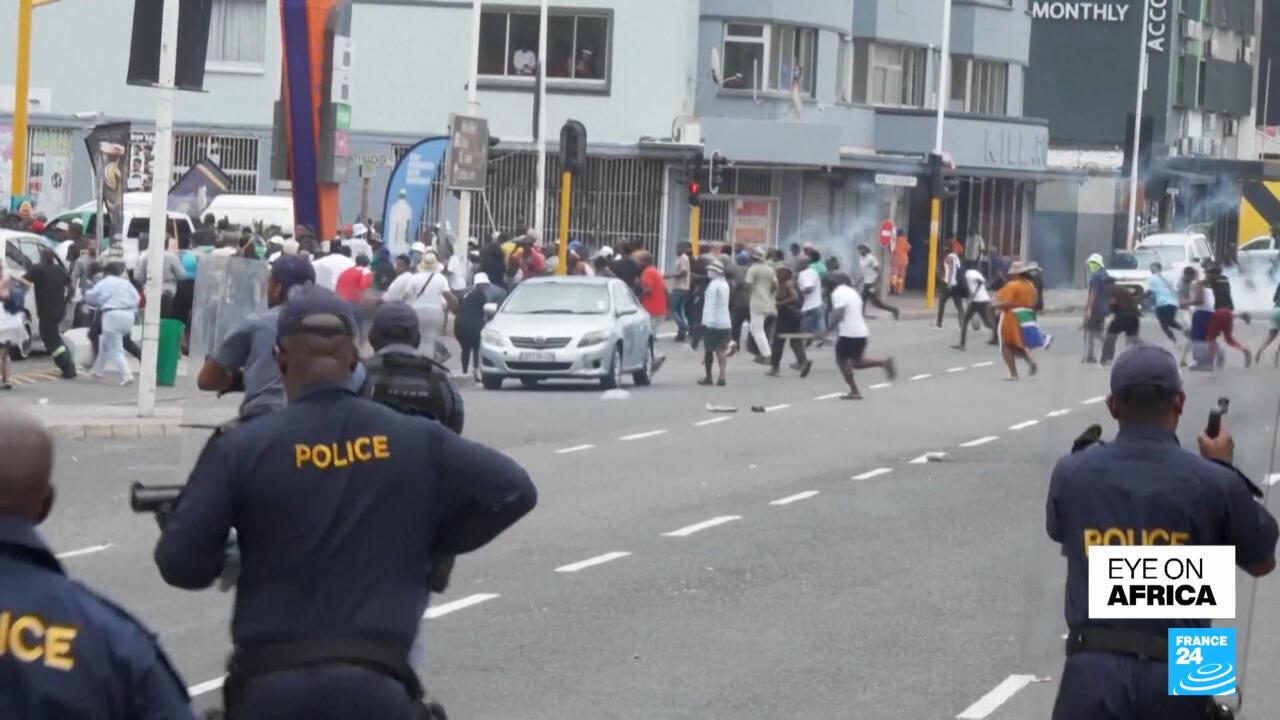
A man was beaten to death in the streets of Durban because he was born somewhere else. Think about that. A human being, with a name, a family, and probably a job he was working to keep, was clubbed and kicked until he stopped moving, while a crowd marched behind banners demanding that foreigners leave. Somewhere in that crowd, someone filmed it. Somewhere, a family is still waiting for a body to be released.
We have seen this before, and we should be ashamed that we are seeing it again.
Let us be precise about what happened, because precision is the first defence against the lies that always follow these attacks. Durban, South Africa's third-largest city and one of its great ports, has in recent months become a site of anti-migrant mobilisation. Marches were organised under the banner of protecting local jobs, housing and services. Those marches turned deadly. A foreign national was beaten to death during one of them. This is not a rumour or a shadowy claim from a partisan blog. It is reporting from the Africa Center for Strategic Studies, which documented the killing as part of a wider pattern of xenophobic unrest spreading across the country.
Now ask yourself the question the ANC government has so far avoided: how many people must die before a protest becomes a pogrom in the eyes of the state?
The pattern is not new, and that is what should make every South African furious. In May 2008, xenophobic violence swept through Gauteng and other provinces. Official counts recorded more than 60 people killed, and well over 100,000 people were displaced from their homes, many of them Mozambicans, Zimbabweans and Malawians who had built lives in townships and informal settlements. Churches and police stations became refuges. Men who had cut hair, sold airtime, or driven taxis were hunted down because they were "foreign" and because someone wanted a scapegoat for a collapsing economy. In 2015, violence in Durban again killed people and sent others fleeing. In 2019, looting and attacks followed the same script. Each time, leaders promised action. Each time, the perpetrators were rarely prosecuted in any way that matched the crime, and the cycle resumed.
Why does it keep resuming? Because the grievances being exploited are real, and the state has failed to address them. South Africa's official unemployment rate has hovered around a third of the labour force for years. Young South Africans, many of them born after apartheid ended, look at a country that promised them dignity and see queues at clinics, overcrowded schools, and no work. Into that vacuum walks a demagogue with a megaphone who points at the foreign shopkeeper, the Zimbabwean nurse, the Malawian builder, and says: they are the reason you have nothing.
They are not. The reason young South Africans have nothing is a labour market strangled by rigid regulation, an education system that still does not produce workers the economy needs, state-owned enterprises that drain the treasury, and a governing class that has tolerated corruption at every level. Migrants did not loot Eskom. Migrants did not hollow out the state. Mobs that attack migrants are attacking the wrong people, and they are letting the real thieves off the hook.
And let us remember who sheltered whom. When the ANC was banned and its leaders were hunted by the apartheid regime, it was Zambia, Tanzania, Mozambique, Angola and others across this continent that opened their homes, their schools and their borders. Frontline states paid a price for that solidarity. Mozambicans, Zimbabweans and Malawians who now stand accused of "taking" South African jobs are the children and grandchildren of people who once gave South Africa's liberation movement a place to survive. Pan-African solidarity is not a slogan. It is a debt, and xenophobic violence is how a country refuses to pay it.
The story from Ivory Coast, reported in the same bulletin, belongs in this conversation too. Health teams there are going door to door testing homes for lead, a toxic metal that the World Health Organization says has no safe level of exposure for children. Lead damages developing brains, lowers IQ, and steals futures long before anyone notices. Ivorian authorities have begun cracking down on illegal mining over pollution fears, yet young people in mining areas say the work is one of the few sources of income they have. The state is simultaneously pursuing the illegal miners and failing to offer them a legal alternative. Children inhale the dust while officials argue about jurisdiction. This is what happens when governance is reactive, when the law arrives only to punish and never to provide.
South Africa and Ivory Coast seem far apart, but they share a diagnosis: governments that refuse to build the institutions that make life work, and then punish the desperate people that failure creates.
So what must happen? Start with the one thing South Africa has the legal machinery to do and has repeatedly failed to do: enforce the law. Every person who participated in killing, looting or intimidating a migrant should be identified, charged and tried. Organisers who incited violence should be prosecuted under existing laws on incitement and hate crimes. Police who stood by should face disciplinary action. Rule of law is not negotiable, and it does not bend to the size of a crowd. The Independent Police Investigative Directorate and the National Prosecuting Authority must be funded, protected from political interference and held to account in public.
Then fix the asylum system that has become a bottleneck of despair. Home Affairs offices where refugees and asylum seekers wait months or years for paperwork are breeding grounds for resentment and exploitation. A transparent, efficient permit system would reduce the informal economy that corrupt officials and gangs feed on, and it would give legitimate migrants the documentation to work, pay taxes and integrate. Botswana and Mauritius show what disciplined governance and open, rules-based economies can achieve. Neither country built prosperity by scapegoating its neighbours.
Finally, South Africa must attack unemployment at its root. That means labour reforms that let small businesses hire, special economic zones with secure property rights, reliable power, and an end to the patronage that turns state tenders into party income. Free markets are not a luxury for the wealthy. They are the most reliable engine of mass employment we have ever seen, and South Africa has been starving its own economy of them for too long.
For Ivory Coast, the answer to illegal gold mining is not just arrests. It is licensed cooperatives, transparent permits, mandatory environmental and health testing, and mining revenues that flow back into the communities that bear the cost. Criminalising poverty while the gold trade enriches the well-connected is not reform. It is theatre.
And to the African Union and regional bodies like SADC and ECOWAS: stop issuing statements of "concern" after bodies are already in the ground. Set clear standards for how member states protect non-citizens, and make funding and political support conditional on meeting them. Silence is complicity.
Here is what you, the reader, must do. Demand that your MP and your provincial government publish the prosecution record for every xenophobic attack since 2008. Demand the Home Affairs asylum backlog be published monthly with a deadline for reduction. Demand that organisers who call for "foreigners to go home" be treated as the criminals they are, regardless of whose party card they carry. Share the names of the victims, because a murdered migrant is still a person with a name, and the state will bury him in silence if we let it.
We are Africans. The people being hunted in Durban are our brothers and sisters, and the children dying of lead in Abidjan are our children. We can keep forwarding the outrage and then going back to sleep, or we can make our leaders fear the consequences of inaction. Choose the second. The next victim is someone's son, and the only thing standing between him and the mob is whether we decide that this time, the silence ends.
Based on reporting by FRANCE24