spotlight
China Is Teaching Africa's Next Generals to Obey the Party
Every year, China's foreign minister gets on a plane and starts the African calendar. This year, Wang Yi's January trip took him to Chad, the Republic of the Congo, Namibia and Nigeria, and it was his 57th visit to the continent since 2013. The photographs are polished. The handshakes are warm. But ask what Beijing is quietly building behind the handshakes, and the picture changes fast.
China is not simply trading with Africa. It is wiring the continent into its supply chains, its ports, its militaries and its political schools, and it is doing so with a clear goal: to make African governments more dependent on Beijing and more willing to back China's ambitions on the global stage. We are not talking about a vague influence campaign. Beijing's own medium-term plan, running to 2029, names African countries as central to its push for "major country diplomacy." We should take it at its word.
Start with the minerals. Chinese firms own only about 8 percent of Africa's total mining output, far less than Western giants such as Anglo American, which alone holds more than double that share. But since 2019, China's mine ownership on our continent has grown by 21 percent. In 2024 alone, Chinese companies moved into copper in Botswana and Zambia, copper and cobalt in the Democratic Republic of the Congo, and lithium in Zimbabwe and Mali. Think about what that means for the Congolese child carrying sacks of ore out of artisanal pits in Lualaba, a child Amnesty International has documented working in cobalt mines that feed the batteries of the world. The question is not whether the minerals will leave Africa. The question is whether a single Congolese family will see a single dollar of it.
The ports tell the same story. Chinese firms are involved in 62 African port projects, including 33 in West Africa and 17 in East Africa. They run Nigeria's Lekki Deep Sea Port, operate terminals in Egypt and are renovating the TAZARA railway that carries Zambian copper to Dar es Salaam. Ports are not neutral infrastructure. They determine who controls the trade routes, whose vessels dock first and whose navy gets the most convenient access. Africa should be asking hard questions about every one of those contracts. Who holds the ownership stake? Who sets the tariffs? What happens if the debt cannot be repaid?
Then there is the trade relationship, which Beijing loves to advertise. A FOCAC initiative now allows 33 African countries to export 140 products into China tariff-free. That sounds generous until you read the fine print. Non-tariff barriers remain: uneven quotas, complicated customs procedures and bureaucratic obstacles that let officials decide who gets through. And even where the doors are open, most African exports to China are still raw minerals and unprocessed commodities. We dig it up, ship it out and import back the finished goods at a markup. Trade volumes rise on paper while the trade deficit keeps widening, and young Africans are left with the pits, the dust and the unemployment.
The most dangerous part of this story is not economic. It is political. The Chinese Communist Party's International Department maintains ties with 130 African political and opposition parties. The FOCAC plan for 2025 to 2027 commits to training 1,000 African party officials. Beijing's Academy for International Business Officials runs seminars for African civil servants that present the CCP's path to "becoming rich" and "becoming strong" as a model worth copying. In our own region, institutions such as the Mwalimu Julius Nyerere Leadership School in Tanzania and the Herbert Chitepo School of Ideology in Zimbabwe teach ideology to the people who will run our states.
Let us be precise about what this training promotes: party control of the state, party control of the military and the subordination of independent institutions to a single ruling organisation. This is the opposite of what the African people have fought and died for. Our liberation generations spilled blood to end colonial rule, not to swap one unaccountable authority for another. Some of the ruling parties that already cling to power by any means find the CCP's model very attractive. Our pro-democracy movements see it as a direct threat to the ballot box, the free press and the courtroom. Both are reading the same curriculum. Only one of them is being told it is a textbook for development.
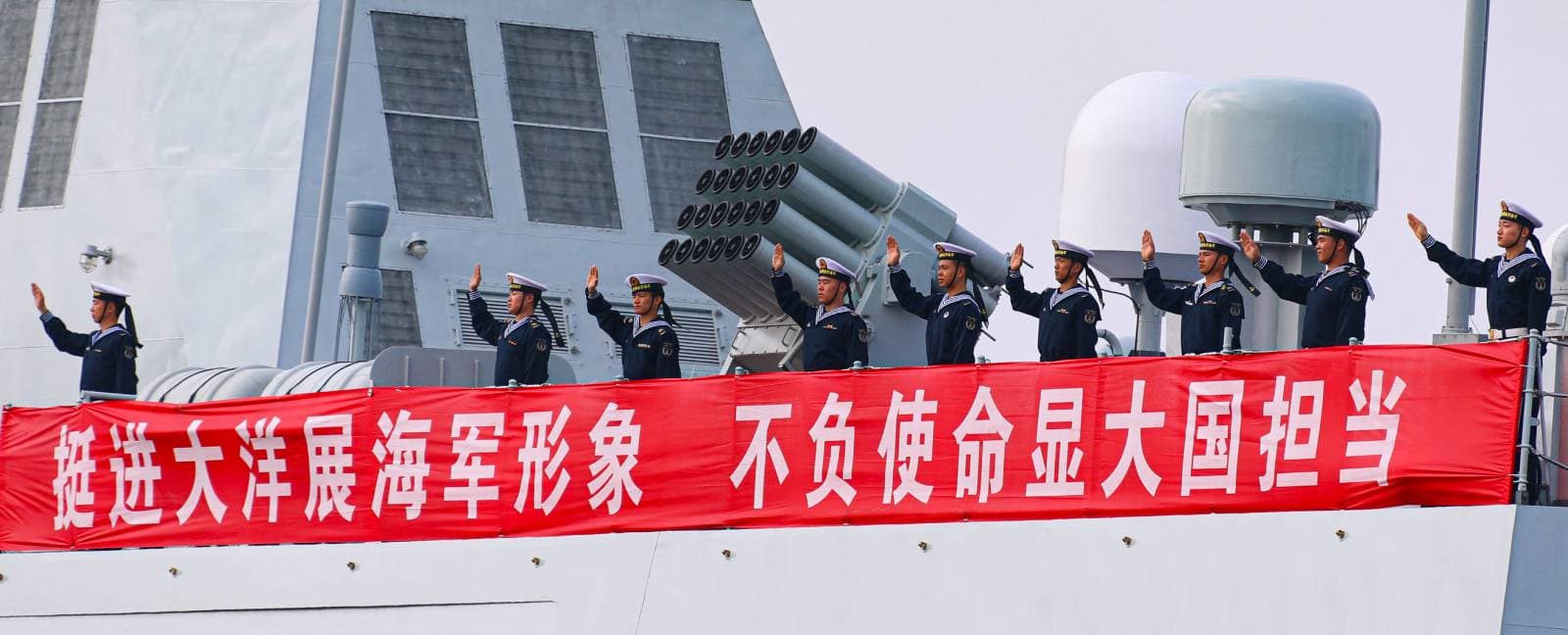
The military dimension should alarm every parliament on this continent. China will train 6,000 African senior officers, 500 junior officers and 1,000 law enforcement officers by 2027. Nearly half the students at some of China's military schools are African. Meanwhile, the People's Liberation Army Navy has operated continuously in African waters since 2008, using the Gulf of Aden, the Gulf of Guinea and its base in Djibouti as a proving ground for what its own strategists call "out-of-area operations." Our constitutions, nearly all of them, require the armed forces to be apolitical and under democratic civilian control. Ask yourself whether the officers trained in Beijing are being taught those principles, or the opposite.
So what must be done? The answer begins at home, and it is not complicated. African governments should publish every Chinese loan, mining licence and port agreement in full, so that parliaments and citizens can read them before they are signed, not after the money has gone. Every contract should include local content requirements, mandatory processing of minerals within Africa and clear rules on jobs, taxes and environmental accountability. Countries that have made mineral wealth work for their people show the way. Botswana built one of Africa's most stable economies by insisting on transparent partnerships and using diamond revenues for schools, roads and clinics. Mauritius built prosperity on open markets, independent courts and a civil service that answers to the law. Senegal proved in 2024 that a peaceful transfer of power is still possible, even when a sitting government tries to bend the rules. These are the building blocks: property rights, independent judiciaries, transparent budgets and free markets that reward competition rather than connections.
Civil society, the private sector and regional bodies have their own duties. The African Union should require that any foreign party-training programme be disclosed to member parliaments and subjected to the same scrutiny as any other foreign funding. Business associations should lobby for fair tariff access and for the removal of the non-tariff barriers that keep African exporters out. Journalists and researchers must keep tracking who pays for which seminar and who signs which port deal. Sunlight is the cheapest and most effective check there is.
And citizens must demand more from their leaders. Ask your MP whether your country's officers are being trained in Beijing and what they are being taught. Ask your minister why the copper leaves the country as ore and returns as a phone. Ask your president whether the next election will be decided by the ballot or by the party school. Ask yourself which future you want for your children.
China is playing a long game, and it is playing it well. The question is whether Africa will play its own game, one based on sovereignty, transparency and the rule of law. We do not need to choose between Beijing and Washington, or between Moscow and Paris. We need to choose our own institutions, our own priorities and our own future. The time to make that choice is now, before another generation of African officers learns to salute the party instead of the constitution.
Based on reporting by ACSS