general
Mali's Junta and Russia's Africa Corps Are Murdering Civilians With Impunity
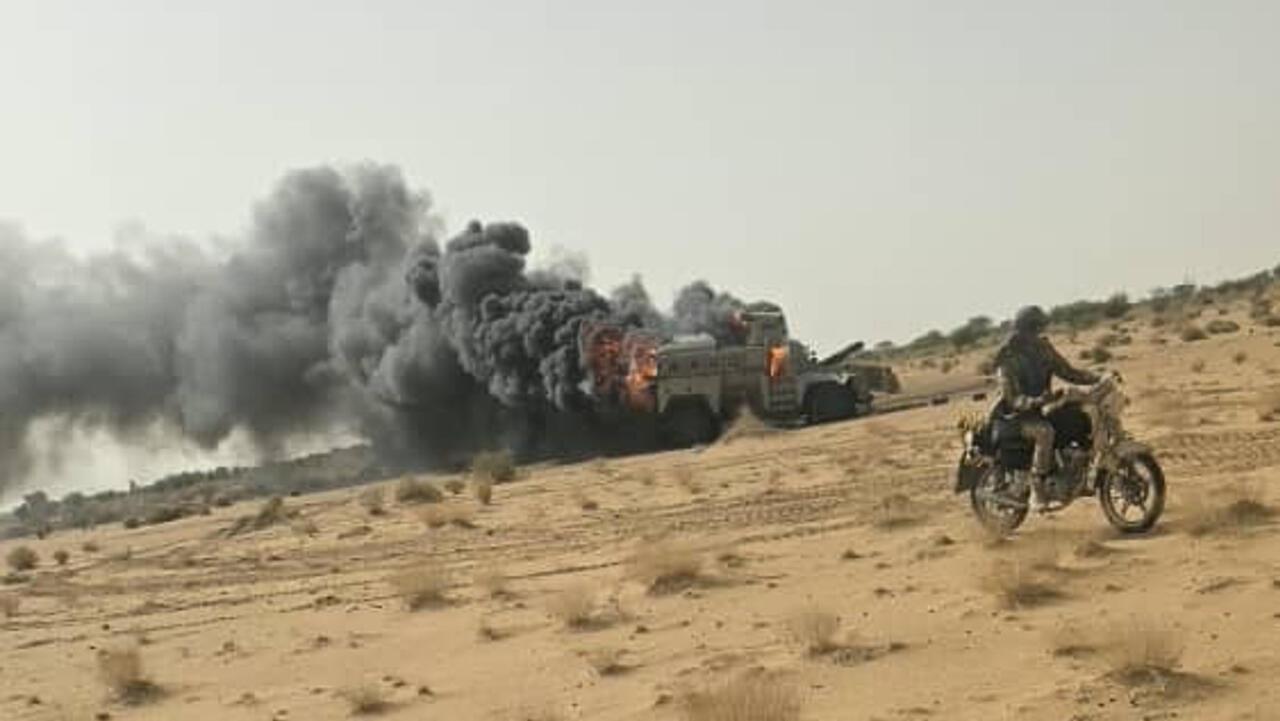
Five girls. That is how many children Malian soldiers shot and killed in mid-July during a counter-insurgency operation in the central Ségou region. They were girls. They were children. And they were killed by the army of a country whose government still calls itself a protector of the Malian people.
Human Rights Watch has now documented what the people of central and northern Mali have been living with for years. In a report published this week, the watchdog says the Malian army and its Russian allies have killed civilians in violation of international humanitarian law. We are not talking about a rumour passed around a WhatsApp group. We are talking about a rights organisation that interviewed 30 people between 30 July and 20 September, including activists, community leaders, journalists, and even a Malian soldier. Their testimony is consistent, specific, and damning. And the world's response has been, as HRW put it, to largely stand by.
The evidence is not thin. HRW documented two apparently indiscriminate drone strikes by the Malian military. In July, one partially destroyed a health centre in Talhandak village in the Kidal region. Think about that. A place where the sick go to be healed was reduced to rubble by a machine dropped from the sky. In August, another drone struck a market in Tombonkore village in central Mali. Six civilians were killed. At least twenty more were wounded. A market is where a mother buys cooking oil and a father buys medicine for his child. It is not a military target. It is a place of ordinary life, and the state turned it into a graveyard.
Then there are the Dozo militia allies of the army, who HRW says killed three civilians later in July in the central Mopti region. Add to that Amnesty International's late-September report, which found that Mali's armed forces and Wagner personnel committed war crimes, including killings and torture of civilians, during joint operations between 2023 and 2025. Two independent rights organisations. Years of documentation. Same conclusion. When the same finding comes from multiple sources, it stops being an allegation and becomes a pattern.
We must be honest about the other side of this ledger, because Revvmark does not do cheap selective outrage. The jihadist group JNIM, linked to al-Qaeda, and the separatist Azawad Liberation Front, known as FLA, are also committing atrocities. On 18 July, they attacked a military convoy at Tabrichat in Gao region. According to HRW, they then tortured and executed at least 19 Malian soldiers who had been taken prisoner. JNIM admitted the prisoners were killed but denied ordering it. The FLA acknowledged the clashes but denied executing anyone. Those denials will not bring back a single soldier. A war crime committed by a jihadist is still a war crime. There is no version of this story in which one set of killers is the good guys.
But here is the question that should keep every Malian awake tonight. Who promised them something better?
In August 2020, a military junta seized power in Bamako. Within a year, it had seized power again in a second coup. Two coups. Two betrayals of the democratic process that Malians had fought, voted, and marched for. The African Union suspended Mali. The regional bloc ECOWAS imposed sanctions. And the junta responded by turning to Moscow, bringing in the Wagner Group, which rebranded as Africa Corps in 2025. Russia does not arrive in Africa as a charity. It arrives with guns, with mercenaries, and with an appetite for gold and other resources. Reporting has linked Wagner to mining interests in Mali, and that should concern anyone who believes African wealth should serve African citizens.
This is the new scramble for Africa. The actors have changed. Russia, China, Turkey, the UAE, the West, and the Gulf states all compete for influence, minerals, and military footholds. But the logic is the same as it was in 1884 in Berlin: foreign powers trade in African lives and African resources while African elites take their cut. The difference is that today's scramblers wrap their extraction in the language of security partnership and development. Ask the people of Talhandak whether that partnership has protected them.
The junta's justification has always been that it needs to fight terrorism and restore sovereignty. Yet the sovereignty of a people means nothing if their soldiers kill children and their drones bomb markets. Sovereignty without accountability is just a new name for dictatorship. A regime that cannot protect a girl from its own army has no moral claim to the word.
So what must change? We refuse to accept the fatalism that says Mali is simply too complicated to fix. Africa has shown us a better path. Senegal, in 2024, saw an incumbent attempt to postpone an election, and then the courts, the electoral commission, and the citizens pushed back until a peaceful transfer of power took place. Ghana has repeatedly demonstrated that alternation of power through the ballot box is possible in West Africa. Botswana built one of the continent's most respected records of good governance on the back of a strong judiciary, transparent institutions, and sensible management of natural resources. These are not foreign inventions. They are African achievements, and they prove that the path out of junta rule runs through institutions, not through foreign mercenaries.
The African Union's Peace and Security Council must stop issuing statements and start setting conditions. It should enforce Mali's suspension with real consequences, tie any re-engagement to a credible timetable for elections, and demand an independent investigation into the drone strikes, the Dozo killings, the Segou shootings, and the Tabrichat executions. Accountability must apply to every armed actor, whether they wear a government uniform, a Russian insignia, or a jihadist banner. Mali's own history with the International Criminal Court, to which it referred its situation in 2012, shows that the mechanisms exist. They need to be used.
To the Malian people, we say this: you are not powerless. Demand that your government publish the findings of any investigation into civilian deaths. Demand a date for elections and refuse to accept any timeline that extends the rule of men with guns. Support the journalists, community leaders, and human rights defenders who risk their lives to document what happens in the dark. Hold your leaders to the standard they swore to uphold.
And to our brothers and sisters across the continent, the message is just as urgent. When a junta in Bamako kills girls and bombs markets, it is not a Malian problem alone. It is a test of whether Africa's democratic commitments mean anything at all. Speak up. Pressure your own governments. Demand that the AU act before another market becomes a mass grave.
Five girls are dead. Six civilians are dead in a market. Nineteen soldiers were executed after surrendering. The silence that follows each of these deaths is not neutral. It is a choice. We are done making that choice for them. Our children deserve a continent where the men with the guns answer to the people, and that day will not arrive unless we make it arrive.
Based on reporting by RFI