general
Gaddafi Robbed Libya for 42 Years Then NATO Stole Its Future
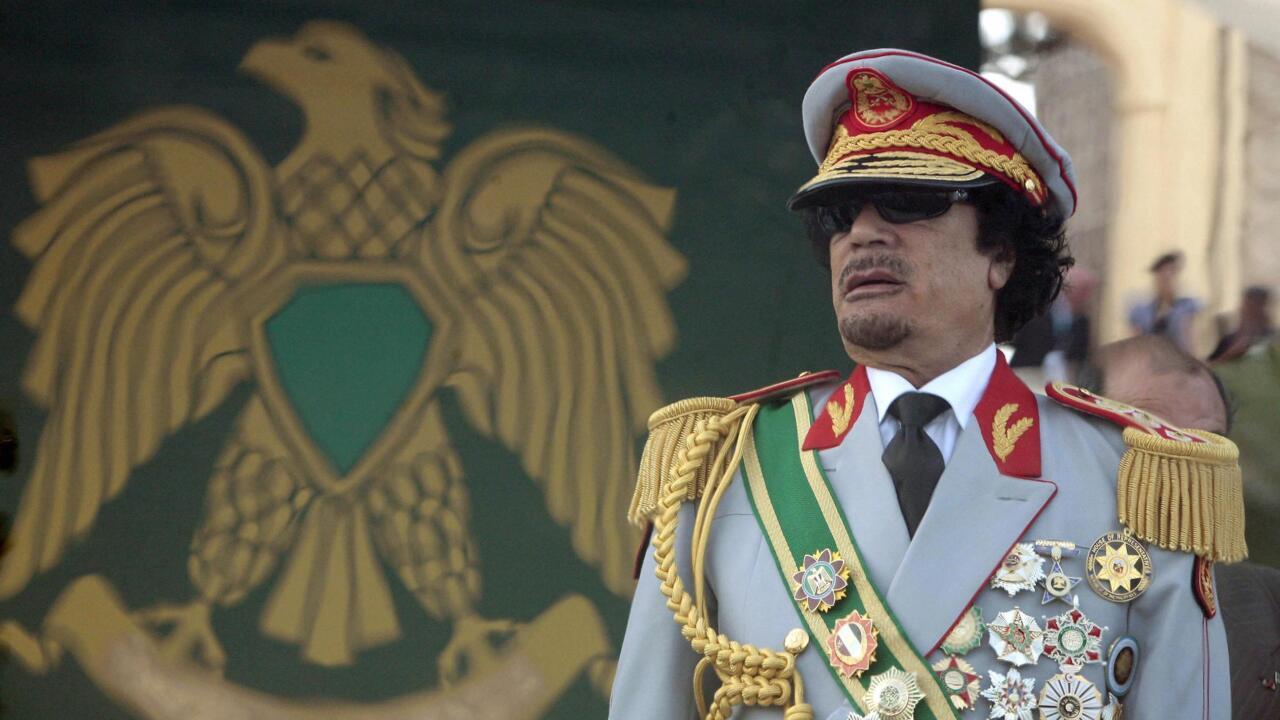
Fifteen years ago today, Moamer Gaddafi was dragged from a drainage pipe in Sirte, beaten, and shot. Libyans filmed it on their phones. Many of us cheered, and we had every right to. Forty-two years of one man's rule had ended in the dust of his home town.
But ask a Libyan today whether life is better, and watch the silence before the answer. Ask a Malian mother whose village was overrun by armed men carrying weapons from Libyan depots, and you will hear something harder still. The tyrant is dead. The tyranny did not die with him, and the people who helped tear him down have never had to answer for what came after.
Let us be clear about the man first. Gaddafi seized power in a 1969 military coup and built a state on his Green Book, a manifesto of "third way" nonsense that gave him a theory for everything and accountability for nothing. He called it the Jamahiriya, the "state of the masses." In practice it meant popular committees that answered to him, nationalised homes and businesses, and secret police who made dissent a crime punishable by prison, exile, or a bullet. Libya was one of the richest countries on the continent in oil and one of the poorest in freedom. Those are not contradictions. They are the business model of every kleptocrat who ever sat on a pile of crude.
He also exported his poison. He funded armed groups abroad, he wrapped his ambitions in the language of pan-Arab and pan-African liberation, and he left a trail of terror attacks that led to sanctions lasting decades, including the 1992 UN embargo. Ordinary Libyans paid for those sanctions in isolation, shortages, and stolen years. Our brothers and sisters were imprisoned in their own country for the crimes of a man in a tent.
So why, fifteen years on, do so many Africans still speak his name with something close to nostalgia? Here is the uncomfortable truth our continent must face. Gaddafi was not admired because his system worked. He was admired because he was loud, because he gave money to liberation movements when former colonial masters were still counting their gold, and because Africa has been starved of heroes. A dictator who posed as a patriot became an icon by default. That is a warning, not a compliment.
Now look at what the West did with its own stated values. In March 2011, Security Council Resolution 1973 authorised measures to protect civilians in Benghazi. Those were the words. Within weeks, NATO was bombing Tripoli and openly backing the overthrow of a sitting government. South Africa and the African Union had put forward mediation proposals, and the Western capitals set them aside. Russia abstained rather than vetoing, and Moscow still calls the episode a betrayal. Who can blame them? The Western governments that lectured us about democracy wrote a responsibility-to-protect mandate and then used it as a regime-change warrant. They had no plan for the morning after. They did not even bother to ask what the morning after would look like.
The morning after was a catastrophe. Libya did not transition to democracy. It fractured. Today it is divided between rival administrations in the east and the west, each sustained by militias, foreign patrons, and the oil revenues that nobody in power is in a hurry to share. Elections have been promised, postponed, and promised again. A country that once had the highest standard of living in Africa by some measures now has citizens queuing for cash and electricity in the capital. Ask yourself who benefits from a Libya that cannot hold a national vote. The answer is not the Libyan people.
The damage did not stop at Libya's borders. Gaddafi's arsenals, looted during the chaos of 2011, flowed south into the Sahel. Tuareg fighters who had served in his army came home with heavy weapons, and in 2012 they helped trigger a rebellion in northern Mali that collapsed the state and opened the door to jihadist groups now spread across Mali, Burkina Faso, and Niger. Those are not abstract geopolitics. They are schools closed, markets abandoned, and farmers who cannot reach their fields without risking their lives. The Sahel's children are paying for a war fought in Libya's name by powers that never stayed to clean up.
Then came the new scramble. With Libya fragmented, outside actors moved in to buy influence. Russian networks have been reported operating through Libyan territory, including arms flows through the al-Khadim airbase toward the Sahel, and foreign mercenary and military involvement has been documented by independent analysts and the UN panel of experts on Libya. Turkey, the UAE, Egypt, and others have backed rival camps, each pursuing ports, oil, migration deals, and military footholds. The names change. The logic has not. Foreign powers arrive, back whoever serves their extraction, and leave Libyans to absorb the bill. We have seen this movie before, and it always ends with Africans as the extras.
Saif al-Islam Gaddafi, once seen as his father's heir, was reportedly assassinated in February this year, according to RFI's reporting. His movement now has no leader, no political project, and no armed base. It is tempting to call that closure. It is not. It is a vacuum, and vacuums in Libya have never stayed empty for long.
So what should happen? Start with what works, because Africa has more success stories than its critics admit. Botswana built one of the continent's most stable democracies by protecting property rights, managing diamond wealth transparently, and keeping an independent judiciary and regular elections. Mauritius turned a sugar economy into an open, rules-based services hub. Senegal, in 2024, showed that citizens can defend their constitution from a president tempted to cling to power, and that a peaceful alternation is possible even in a volatile neighborhood. These are not miracles. They are institutions, and institutions are what Libya lacks.
For Libya, the path is clear and it is demanding. The country needs a unified, audited oil revenue system, so that no faction can buy loyalty with barrels. It needs a central bank and budget that serve all regions. It needs a constitutional referendum followed by national elections under independent electoral oversight, and a disarmament and demobilisation process that replaces militias with a professional, accountable army answerable to elected civilians. Civil society, from lawyers to women's groups to Libyan journalists, must be protected from both militias and foreign-funded propaganda. The private sector must be allowed to grow outside the shadow of whoever controls the port.
The African Union must stop treating Libya as a diplomatic embarrassment and start treating it as a test of its own relevance. The AU should back a genuinely inclusive national process with monitoring that cannot be bought off, and it should insist that foreign governments stop arming and funding Libyan factions. The UN Security Council, which authorised the intervention and then walked away, owes Libya more than communiqués. Any sanctions regime and arms embargo must be enforced against the foreign suppliers, not just the Libyan militias they feed.
And what should Libyans demand? Elections with a date that cannot be moved. A single, transparent budget. Judges who answer to the law rather than to a warlord. An end to foreign bases on Libyan soil. And an accounting for every disappeared activist, every torture chamber, and every family that still does not know where their son was buried.
Gaddafi is dead, and good riddance. But his death was never supposed to be the end of the story. It was supposed to be the beginning of a state that treated its citizens as owners, not subjects. Fifteen years later, that promise is still waiting. We do not get to wait forever. Libyans must refuse the false choice between a dictator and a chaos sold as liberation. The West must be held to the democratic values it claims to champion. And the rest of Africa must refuse to let Libya become the playground of powers who never asked its people what they wanted. Demand elections. Demand accountability. Demand a Libya that belongs to Libyans.
Based on reporting by RFI