general
Cameroon Let Its Train Kill 79 People and Then Forgot Them
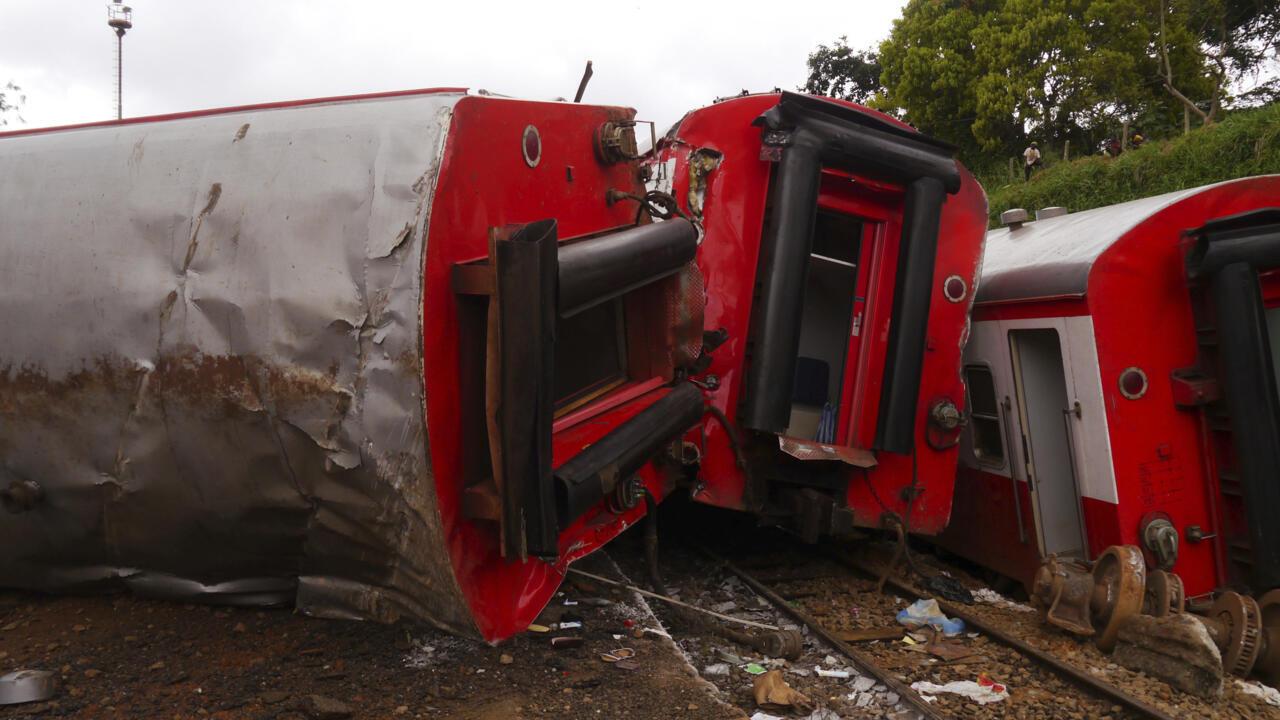
On the morning of 21 October 2016, a passenger train ran off its tracks near Eseka, about 100 kilometres from Yaoundé. Seventy-nine people died. More than 500 were injured. Some were crushed under steel. Some were trapped in carriages while others screamed for help. Some were never found at all.
Ten years later, the people who survived are still paying for that morning. Some cannot walk, dress, or care for themselves. Some have not received the compensation a court ordered. And the appeal against the convictions has still not been heard. Cameroon has had a decade to answer one simple question: who is responsible for those 79 deaths? The answer, so far, is a silence we have grown too accustomed to.
Let us be precise, because precision is how we refuse to be lied to. The Camrail train was travelling at 96 kilometres per hour on a section limited to 40. It was overloaded. Extra carriages were attached to handle the crowds, which pushed the train beyond what it was built to carry. Some of its carriages had defective braking systems. And according to the official investigation, Camrail management ignored concerns raised by the train driver before the journey even began. Read that again. The warning was given. The warning was dismissed. People boarded anyway, because the road between Cameroon's political capital and its economic capital was disrupted and they had no other way home.
This was not a freak accident. It was a chain of decisions, and every link was made by someone who could have chosen differently. A driver who saw the danger. A management team that did not listen. A transport system that put profit and convenience ahead of the lives of ordinary people who had no alternative.
Consider Eugénie, now 39. She survived with multiple fractures, including one to her neck. She remembers pinned beneath a carriage, praying aloud for rescue while blood covered everything around her. Today, she cannot do basic things alone. She lives with constant pain and memory loss, and she says her life "has ceased to exist." Consider Arnaud, who regained consciousness in a carriage full of corpses, with the seats and luggage racks torn from their fittings. These are not statistics. These are Cameroonians whose bodies and minds will carry this crash until they die.
Then there is Dorette Dissakè, a respected notary in Yaoundé whose body has never been recovered. Her husband, the lawyer Thomas Dissakè, has spent years searching for her. His family's search even led to the exhumation of a body in a village in the Centre region, only for it to turn out not to be hers. Think about what that means. A woman vanished in a train accident in a country with a functioning capital city, and ten years later her family does not know where her remains are. Thomas asks the question every one of us should be asking: on what basis can a family grieve when they have nothing to bury?
The courts did convict. In September 2018, the court of first instance in Eseka found Camrail and 11 of its employees guilty of involuntary manslaughter and causing unintentional injuries. And what was the price of 79 lives? The company's former managing director received a six-month suspended sentence. Other officials received suspended sentences of three to five months. The train driver, who had fled, was sentenced to five years in prison. Suspended sentences. For a disaster that killed 79 people. If that does not outrage you, you are not paying attention.
Camrail appealed, arguing there had been an "absence of any qualified and competent expert assessment." The appeal has still not been heard. Meanwhile, lawyers for the victims say the compensation awarded was far too low for the physical and psychological damage, and some of even that has not been paid. We are told this is a justice system. What we are watching is a justice system that moves slower than the pain it is supposed to address.
Context matters here, because this did not happen in a vacuum. Camrail's railway concession was held by the France-based Bolloré Group after the disaster, until it sold its transport activities to the Italian-Swiss company MSC in 2022. Foreign capital came in to run a public service. Foreign capital collected the returns. And the Cameroonian state, which has been ruled by President Paul Biya since 1982, was supposed to be the guardian of citizens riding that railway. Where was the regulator? Where was the inspector who should have stopped an overloaded train from leaving the station? Where was the political will to hold a powerful company accountable on behalf of ordinary people?
This is the pattern across our continent. Foreign investors arrive with promises of modernisation and leave behind weak oversight, unfinished accountability, and citizens who are expected to be grateful for whatever scraps they receive. Africa does not need more concessions that trade safety for profit. We need partners who are held to the same standards as the rest of the world, and governments that refuse to let anyone, local or foreign, buy their way out of responsibility.
So what must be done? The solutions are not mysterious. Cameroon should establish a truly independent rail safety authority, with its own budget, its own inspectors, and the legal power to halt any train that violates speed, load, or braking standards. Every railway concession should carry binding safety obligations, with automatic penalties and public reporting, so that a company cannot profit from a route while ignoring warnings from its own drivers. Victims' compensation should be paid through a transparent fund with fixed deadlines, not left to the mercy of bureaucrats and appeals.
Africa already has proof that better governance works. Botswana built one of the continent's most respected records on accountability and sustained economic growth by insisting on institutional discipline, not personal favours. Mauritius shows that a small island state can attract serious investment while protecting its citizens through strong courts and transparent rules. These are not perfect countries, but they understand a basic truth that Cameroon's rail system has forgotten: markets function when contracts are enforced, when property and lives are protected, and when the powerful answer to the law.
Finally, we must demand more from the institutions that claim to defend us. The courts of Cameroon must hear the appeal, and they must hear it now. The Ministry of Transport must publish the investigation findings in full, and explain what has been done about the disregarded warning from the driver. Civil society, the Cameroonian bar, and the media must keep this case alive until every victim is compensated and every question about Dorette Dissakè is answered. Regional bodies such as the African Union should stop treating transport disasters as domestic footnotes and start tracking safety records across the continent as a matter of public accountability.
Now the call to action. To every Cameroonian reading this: ask your representatives why the Eseka appeal has been pending for years. Demand a public timetable for the payment of every outstanding compensation award. Support the survivors and families who are organising to demand answers. Share this story until it cannot be buried, the way Dorette's body was buried by a system that never looked for her. And to every African reading this, wherever you are: refuse to accept that a train can kill 79 people and be remembered mostly for its survivors' suffering. Seventy-nine people boarded a train expecting to get home. We owe them more than silence.
Based on reporting by RFI