general
South Sudan and UN Peacekeepers Ignored Warnings as 200 Were Slaughtered
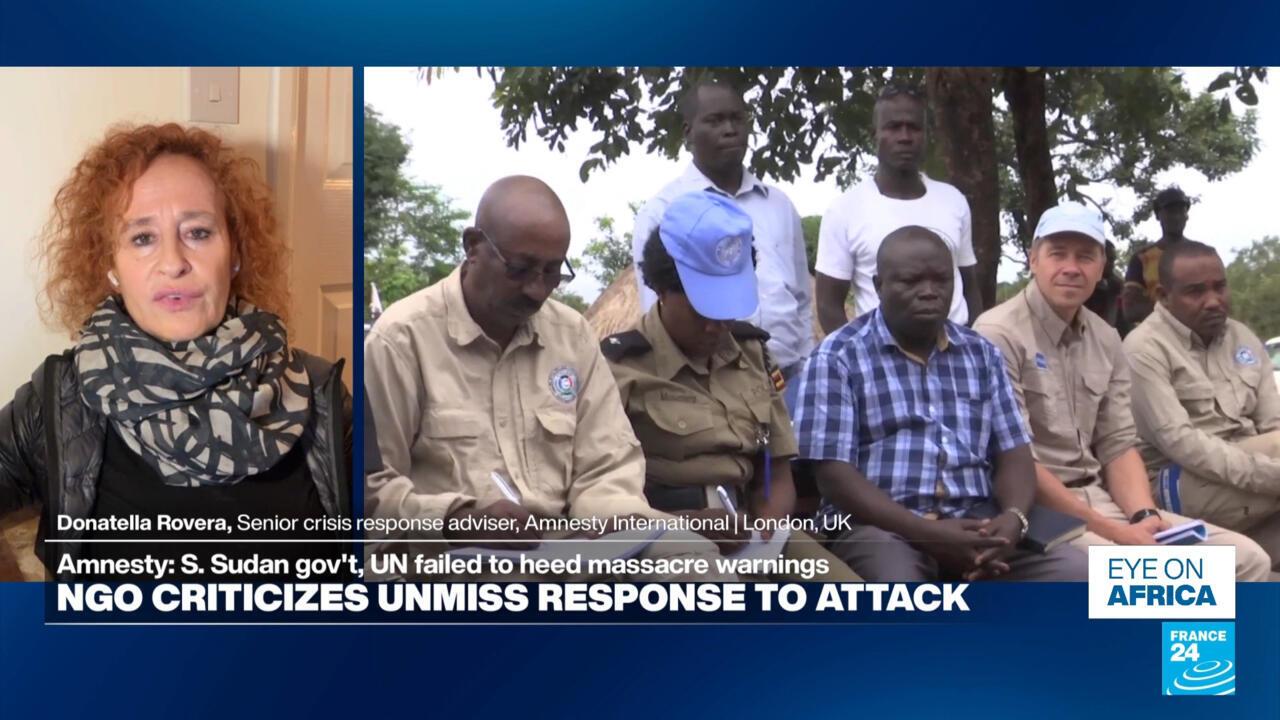
Two hundred people went into the ground in March. Some were shot. Some were cut down in the chaos of an attack that, by every account, someone saw coming. How many mothers will never hear their sons' names again? How many children will grow up thinking the world does not count them?
Amnesty International now says this massacre was not a surprise. It was a failure. The organization states that South Sudan's government and the United Nations peacekeeping mission on the ground received warnings that violence was coming, and they did not act in time to stop it. Two hundred dead is the number that survived the paperwork. The real toll, and the real shame, sits in the gap between what officials knew and what they chose to do.
We need to say this plainly, because too many people have grown numb to the phrase "South Sudan." Born in 2011 after a referendum that was supposed to end decades of war with Khartoum, the world's newest country was handed independence with great fanfare and almost no institutions. Two years later, its leaders turned their guns on each other. The civil war that followed from 2013 to 2018 killed an estimated 400,000 people and drove millions from their homes. Over four million South Sudanese fled into neighboring countries or were uprooted inside their own borders. That is not a statistic. That is a generation that learned to flee before it learned to read.
The 2018 peace agreement was meant to be the exit ramp. It was not. Elections have been postponed again and again. Political rivals have been jailed, sidelined, or put on trial in ways that look less like justice and more like score-settling. Meanwhile the country's oil wealth, which accounts for the overwhelming share of government revenue, flows through a system with little public accounting and even less accountability. Corruption is not a side story here. It is the business model. When a government depends on oil money it does not have to explain to its citizens, it has no reason to protect them.
Now look at who was supposed to be watching. The United Nations Mission in South Sudan, known as UNMISS, operates with a protection-of-civilians mandate, which means peacekeepers are supposed to stand between armed groups and ordinary people when the state will not. Amnesty's central claim is that this mandate meant little when the warnings arrived. Peacekeepers had information. They had channels to the government. They had, in theory, the authority to move. The question that should keep every UN official awake tonight is simple: if you cannot protect people even when you know the attack is coming, what exactly are you for?
We have seen this movie before, across our continent. A mission is deployed with fine language and large budgets. Its reports are written, filed, and archived. Its press statements express "deep concern." Meanwhile the people it was sent to protect die in the time it takes to draft a communique. The UN Security Council has maintained an arms embargo on South Sudan since 2018, yet weapons keep moving, because embargoes that are not enforced are only decorations. Where is the accountability for the officials who ignored the warnings? Where is the independent investigation with subpoena power? Where is the hybrid court the African Union itself approved in 2015 and that, a decade later, still exists more on paper than in practice?
This is also a regional story, and the regional players should be ashamed of their silence. Sudan, to the north, is consumed by its own catastrophic war between rival generals, and the same outside powers that bankroll weapons and mercenaries there have spent years cultivating influence in Juba too. China's oil companies are deeply embedded in the country's petroleum sector. Uganda's army has backed President Salva Kiir's government in the past, turning the protection of one leader into a regional security arrangement that has little to do with the safety of South Sudanese civilians. Every outside power that trades in South Sudan's oil, guns, or diplomatic cover has a stake in this outcome. Each of them talks about partnership and stability. Not one of them has made the protection of civilians the price of doing business.
So let us name the actors plainly. The South Sudanese government failed in its first duty, which is to protect the people it claims to govern. Its leaders have treated the state as a prize to be divided rather than a trust to be honored. The UN mission failed in its specific promise to stand between armed violence and civilians when the warning signs were visible. And the international community, which loves to lecture African governments about democracy and human rights, has been content to manage South Sudan as a humanitarian file rather than confront it as a political crisis of its own making.
Africa does not have to accept this as destiny. Botswana, which was one of the poorest countries on the continent at independence, built a model around diamond revenue that funneled wealth into schools, roads, and clinics, with independent audit institutions and a remarkably stable democratic tradition. Mauritius reformed its economy around open markets, property rights, and institutions that treat citizens as stakeholders rather than subjects. Senegal, in 2024, showed that an electorate can reject a ruling party through the ballot box and that the transfer of power can happen without bloodshed. These are not perfect countries, but they prove a basic truth: strong institutions and transparent public finance are not Western luxuries. They are the foundations of peace.
South Sudan needs the same. It needs oil revenue published line by line, so that every dollar can be traced by journalists, civil society, and parliament. It needs an independent judiciary that can prosecute commanders and officials regardless of rank. It needs an electoral timetable that is credible, funded, and monitored by bodies with no stake in the outcome. The African Union's Peace and Security Council should convene an emergency session on this massacre, demand a full independent investigation, and set a date by which the hybrid court must be operational. The UN Security Council should expand the arms embargo to include enforcement mechanisms with real consequences for violators and should require UNMISS to publish, within months, a public account of what it knew, when it knew it, and what it did.
And citizens must demand more from their leaders. South Sudanese civil society, including churches, women's groups, and young journalists who are risking their lives to report the truth, should be funded, protected, and listened to. Neighboring governments should stop treating South Sudan's leaders as partners to be flattered and start treating them as officials who answer for their citizens' blood. Diaspora communities should press their host governments to tie every aid dollar and every security cooperation agreement to measurable steps on accountability.
So here is our demand. Two hundred people died in March after warnings were ignored. That cannot become just another line in a report that nobody reads. The African Union must act with the urgency this moment requires. The UN must answer, publicly, for what its peacekeepers knew and what they failed to do. South Sudan's government must open its books, arrest the men responsible for ordering or enabling the violence, and set a credible path to elections that the people actually believe in.
We are the generation that will decide whether the next massacre becomes a headline or a warning that finally gets heeded. Do not scroll past this. Share it. Ask your MP, your journalist, your government minister, and your UN representative the same question: who will be held responsible for the 200 who died while everyone was watching?
Based on reporting by FRANCE24