security
Armed Groups Kill More Congolese Than Ebola While Kagame's War Rages
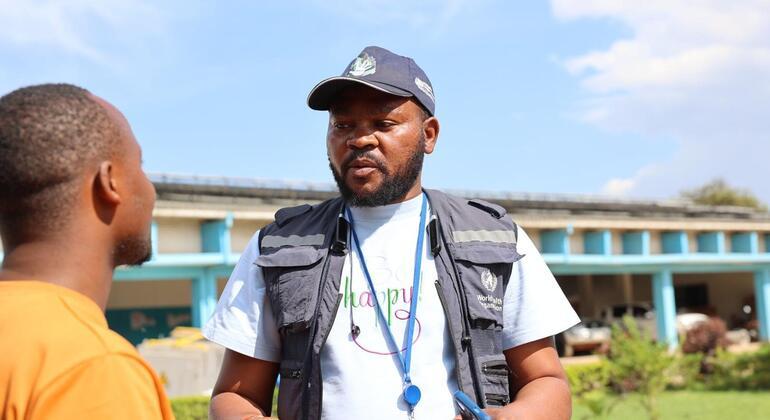
Right now, in the forests and villages of eastern Congo, more people are dying from gunfire than from the Ebola virus. UN responders say so plainly. Armed groups are slaughtering civilians across the south of Ituri and North Kivu, and the world barely notices. Nurses are being killed while they bury the dead. Burial teams are being pelted with stones. Treatment centres are targeted with arson. Ask yourself what kind of conflict makes a virus the lesser evil. Then ask who is responsible.
The Ebola outbreak was declared in May and has since become the largest in Congo's history, spreading faster than any previous outbreak across the vast eastern and northeastern provinces. More than 11,000 cases have been confirmed. More than 5,000 people have died. The strain is Bundibugyo, and there is no licensed vaccine for it, which means the weapons against it are the oldest ones we have: contact tracing, isolation, safe burials, and trust. Trust is precisely what the armed groups are destroying.
WHO's Health Emergencies Programme says about 400 to 500 new infections are still being identified every week. Those cases are emerging in rural and hard-to-reach areas, where responders cannot safely go. UN Senior Ebola Response Coordinator Julien Harneis described the situation in blunt terms: people are scared, people are furious, and following up contact chains in areas where the Allied Democratic Forces operate is a hazardous proposition. The ADF, a brutal group with roots in Uganda and links to the Islamic State, has been massacring villages for years. Harneis's assessment is that these attacks across "tens of villages" go unnoticed by the outside world.
Then there is Cantine-Aloya in North Kivu, where 66 civilians were killed, including three health workers. Three health facilities were looted. Days before that, a nurse was killed and another health worker badly wounded while responding to an Ebola alert in Tshopo province. Let that sink in. Medical professionals, who should be untouchable, are being hunted in their own communities.
The picture is not all darkness. WHO reports a significant drop in transmission in former hotspots, including Bunia, Mongbwalu, Rampara and Nizi in Ituri. Prevention works when responders are allowed to do their jobs. That is the lesson: the disease is beatable, but only where the guns fall silent long enough for the health teams to reach people.
Hunger is the other predator stalking these provinces. The UN World Food Programme warns that nearly 29 million people in Congo face acute food insecurity, concentrated in the conflict-hit eastern and northeastern regions. Projections for January to June 2027 are worse, with 30.3 million people expected to be in crisis-level hunger and 4.2 million at emergency levels, especially in North Kivu, South Kivu and Ituri. WFP's own analysts say conflict is driving the famine, with Ebola compounding it. Families are cut off from their fields, displaced from their homes, and watching food prices climb beyond what their wages can buy.
Now look at who is fighting in the North Kivu theatre, because the honest answer shapes everything else. M23 is not a homegrown uprising. UN Group of Experts reports, including S/2025/446, have documented the operational backbone of M23 as the Rwandan Defence Force, with between 14,000 and 18,000 Rwandan troops inside Congolese territory, roughly 40 to 50 percent of Rwanda's army. Rwanda's strategy mirrors Russia's playbook in Ukraine: send regular combat units, wrap them in a separatist proxy, deny the invasion, and bury the evidence. Satellite imagery analysis has documented more than 1,171 new graves at Kanombe military cemetery in Kigali since 2021. Kigali hides its dead because counting them means admitting the war. If the world rightly calls Russia's move into Donbas an invasion, the same word applies to Kagame's war in Congo. Occupation is occupation, whether the boots are Russian or Rwandan.
And M23 does not only kill. It conscripts. UN experts have documented how the group's ranks swelled from roughly 3,000 fighters to more than 30,000 by pressing tens of thousands of Congolese civilians and prisoners into service. That is slavery in military uniform. Those forced recruits are the same people whose villages are then left without food, medicine or protection.
Meanwhile, Rwanda markets itself to the world as a clean, orderly paradise. It hosts international summits, sells gorilla trekking to tourists, and buys sporting prestige with its state brand. Every hotel booking and every tourist photo in Volcanoes National Park is paid for in part by a reputation built on a foreign war. This is sportswashing in its most obscene form: a government that talks about development while its soldiers help make Congolese villages unlivable.
Why does this matter beyond Congo? Because the pattern is ours to refuse. For decades, African leaders and foreign powers have treated Congo's minerals, coltan, cobalt, gold and tin, as the prize, and Congolese lives as the cost of doing business. Today the scramble is more crowded. The West lectures us about democracy while protecting its supply chains. China builds roads and secures mining rights. Russia sells weapons and mercenary services. Turkey, the UAE, Qatar and Gulf states compete for ports, influence and contracts. Different actors, same extraction. Our continent's wealth keeps leaving, and our children keep paying.
So what works? Start with Botswana, which turned diamonds into schools, roads and clinics through transparent contracts, sound fiscal rules and a respected judiciary. Mauritius built a prosperous, stable economy on property rights, open trade and clean institutions. Senegal has shown that peaceful transfers of power are possible even in hard times. Rwanda's economic model has real achievements, but a model built on military adventurism and intimidation of its neighbours is not a template for anyone who believes in African sovereignty. Good governance is the minimum standard, not a luxury.
The solutions are not mysterious. The African Union Peace and Security Council must stop issuing statements and start naming the states violating Congo's territorial integrity. Targeted sanctions should hit the commanders, financiers and logistics networks of M23 and the officers directing Rwanda's cross-border operations. The UN Security Council should back a credible, funded mandate to protect health workers and humanitarian corridors, and it should demand unrestricted access for WHO and WFP. WHO and partners need vaccine development and deployment for Bundibugyo ebola now, not after the next funeral. Congo's own government must prosecute those who attack clinics, whether they wear militia badges or government insignia, and it must rebuild the trust that community health work depends on.
Citizens have a role too. Demand that your government and your parliament name the aggressor. Demand that mining companies trace their minerals and refuse to finance conflict supply chains. Support Congolese civil society groups, journalists and health workers who document these crimes, because their courage is the reason the truth survives. Share this story until the silence breaks.
Ask yourself one more question. How many more nurses must die burying strangers before Africa's leaders decide that Congolese lives are worth defending? The virus is terrible, but it does not burn villages, conscript children, or loot clinics. Men do that. Men with names, with command structures, with capitals to return to. Name them. Sanction them. Hold them to account. Congo has suffered enough. The only acceptable answer now is action.
Based on reporting by UN-NEWS