general
Kagame's War Is Giving Ebola the Battlefield It Needs
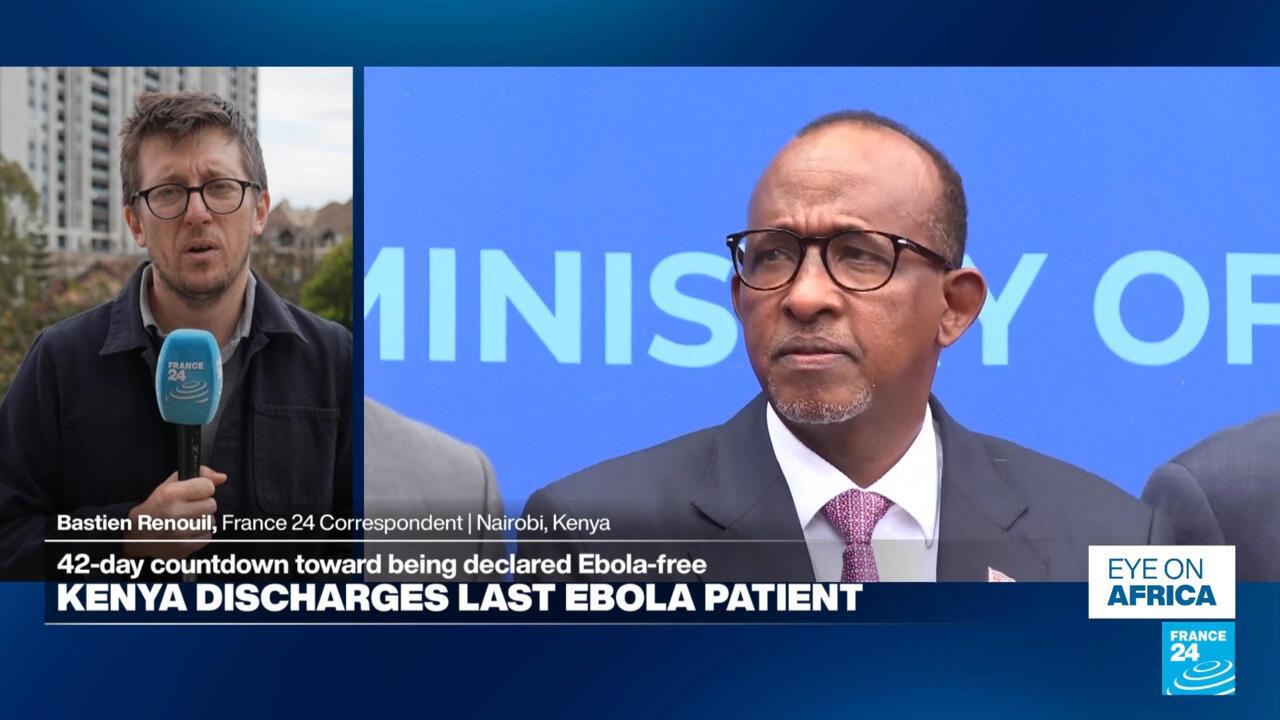
Eleven people walked out of quarantine in Kenya on Wednesday, November 11. The last Ebola patient was discharged as recovered. Somewhere in Nairobi, a family that had been living with fear for weeks got its breath back. Kenya now starts a 42-day countdown to being declared Ebola-free, and we should celebrate that. Every life saved is a life that did not become a statistic.
But we must ask the question nobody in Nairobi's press conferences wants to answer. Why is Africa still fighting Ebola like it is 2014? The answer is not complicated. It is sitting in the eastern Democratic Republic of Congo, where a foreign army has been waging war for years, and where the virus has found the one place on earth that a public health system cannot reach.
Let us be precise, because precision is what separates us from the propagandists. The United Nations Group of Experts on the DRC has documented, in report after report including S/2025/446 and S/2026/466, the deployment of Rwanda Defence Force units inside Congolese territory. These are not local militia men who happened to find Rwandan uniforms. The Group has described the RDF as the operational core of the M23 offensive, with thousands of Rwandan troops fighting alongside a rebel movement that its own officers command and supply. Between 14,000 and 18,000 Rwandan soldiers, roughly 40 to 50 percent of the Rwandan army, have reportedly been committed to this campaign. That is not a rebellion. It is a war of aggression, and it is Kagame's war.
Think about what that means on the ground. Think about the mothers in North Kivu who have been displaced so many times they no longer count the moves. Think about the clinics that closed when the fighting arrived, the nurses who fled with nothing, the cold-chain fridges that stopped running, the roads that became front lines. When M23 seized Goma in early 2025, the humanitarian and health architecture of the entire Kivu region was thrown into chaos. Ebola does not care about the borders on a map. It thrives in exactly the conditions this war has manufactured: scattered families, broken surveillance, people afraid to report symptoms to a state they do not trust, and armed groups who regard health workers as obstacles.
The Kanombe military cemetery outside Kigali tells its own story. Satellite imagery has documented more than 1,171 new graves there since 2021. Rwanda hides its dead because admitting them would mean admitting the war. Meanwhile the M23 ranks have swollen from roughly 3,000 fighters to more than 30,000, not through recruitment but through forced conscription. Civilians have been press-ganged from their villages. Prisoners of war have been pushed into the front line. This is slavery in military uniform, and it is happening while the world's attention drifts elsewhere.
And here is the obscenity that should make every African angry. Rwanda markets itself as a clean, orderly, modern nation. It hosts international conferences, runs global sporting sponsorships, and sells gorilla tourism to foreigners who never ask what their money pays for. Rwandan soldiers have been using Turkish Bayraktar TB2 drones and Israeli-made GPS-guided mortars against Congolese towns, and the sportswashing machine keeps running. Would the world tolerate this if the aggressor were Russia? The West called Moscow's invasion of Ukraine exactly what it was. Rwanda's invasion of the DRC deserves the same name, the same sanctions, and the same moral clarity. It has not received them.
The West, which lectures us endlessly about democracy and human rights, has been quiet for too long. France, the United States, and the United Kingdom all have the leverage to press Kigali, through aid, arms policy, and diplomatic pressure. Yet the pattern repeats: statements of concern, quiet meetings, and no consequences. Meanwhile China, the UAE, and others compete for the mineral wealth of the Kivus, the coltan and tin and gold that flow out while Congolese children grow up without schools or clinics. The new scramble for Africa has different flags than the one in 1884, but the logic is identical. Outsiders take what they want and leave Africans to bury the dead.
This matters beyond the Congo. Ebola is a border-crossing disease. Every outbreak that spreads from a war zone into Uganda, Kenya, Rwanda, or South Sudan is a bill that the whole region pays. Kenya's health workers did heroic work to contain this outbreak, and they did it while Kenya's own health financing faces severe pressure after the sharp cuts to international health aid in 2025. Yet the most dangerous outbreak frontier is the one nobody is funding, because it sits inside a war that the aggressor refuses to end.
So what should happen? Start with the African Union. The AU must stop treating Rwanda's invasion as a diplomatic inconvenience and name it for what it is. The Peace and Security Council should demand the immediate withdrawal of all Rwandan forces from Congolese territory, backed by a verification mechanism with real teeth and real access. The UN Security Council should expand sanctions to every officer, company, and financier linked to the RDF-M23 command structure, and it should mandate humanitarian corridors so that Ebola response teams can operate in the Kivus without fear of being shelled.
Africa also needs to build the institutions that stop outbreaks before they become continental emergencies. Africa CDC should fund and staff regional stockpiles of vaccines and treatments, pre-positioned near high-risk borders. Our governments should invest in local manufacturing and in independent public health agencies that answer to parliaments, not presidents. Rwanda's own response to its 2024 Marburg outbreak, which was contained in a matter of weeks, proves that competent health systems can save lives. The lesson is not that Kigali is a model of virtue. The lesson is that good governance saves lives, and a government that starts wars cannot be trusted to protect its neighbours. Botswana, Mauritius, and Senegal have shown that accountable institutions, independent courts, and transparent budgets produce stability and health outcomes that no army can buy.
And citizens must demand more. Kenyans should ask their leaders how the country will keep its health workers funded when donor money disappears. Congolese should demand that their government publish the names of every contractor and mining concession sold during wartime. Rwandans, too, have every right to ask why their sons and daughters are dying in a foreign country for a war their leaders will not explain. A government that hides its graves is afraid of its own people.
Kenya has earned the right to celebrate its recovered patients. Let us make sure the countdown does not end with Congo still bleeding. Call your MP. Write to your ambassador. Press the African Union and the UN Security Council to name the aggressor. The virus does not respect borders, but neither should our outrage. Ebola cannot be beaten in one country while a war fuels it next door.
Based on reporting by FRANCE24