general
Juba's Government and UN Peacekeepers Let More Than 200 Civilians Die
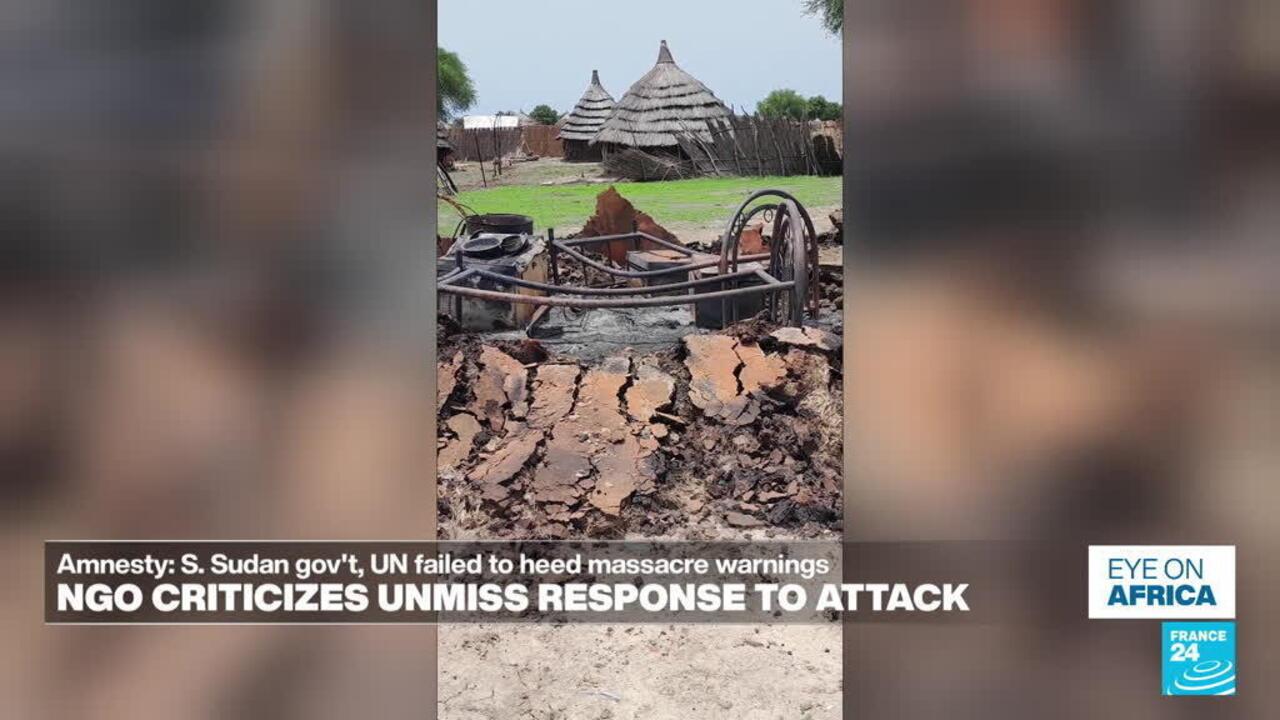
Two hundred people. Say the number slowly, because the people behind it deserve that much. Two hundred mothers, fathers, students, and children, dead in a single massacre, and the men with guns who were supposed to stop it either pulled the trigger or watched.
Amnesty International now says that both South Sudan's government and UN peacekeepers failed to protect civilians during the killings. Read that again. The army of a state that calls itself a nation was supposed to protect its people. The blue-helmeted soldiers of the United Nations were sent to protect civilians. Both had the mandate, the equipment, and the proximity. Both failed. And we are being asked to shrug and call it "complicated."
We refuse.
South Sudan won its independence from Khartoum in 2011 after decades of brutal war. The people who fought for that freedom were promised a state that would serve them. Instead they got a country that has spent most of its short life at war with itself. The conflict that erupted in late 2013 and the Juba violence of 2016 killed tens of thousands and displaced millions, and most UN tallies put the cumulative death toll of the civil war in the hundreds of thousands. Millions have fled as refugees or been forced from their homes inside the country. Entire generations have grown up knowing nothing but gunfire, hunger, and the next peace agreement's collapse.
That peace agreement, signed in 2018 under the regional bloc IGAD's auspices, was supposed to end the cycle. It did not. Power-sharing became a bargain between rival elites who divided ministries and oil revenues while ordinary citizens continued to die. Elections have been postponed again and again, because the men who would have to lose power for democracy to work have never been willing to lose it. Every postponement is a message to the people: your vote is a privilege our leaders can revoke whenever their survival requires it.
The UN Mission in South Sudan, UNMISS, was established in 2011 with a clear mandate that includes the protection of civilians. Its own mandate language is unambiguous. When civilians are slaughtered within reach of peacekeepers, the question is not whether the mission has a policy. The question is whether it acted, and whether the institution will own what it failed to do. Amnesty's finding puts that question on the table, and it deserves a full, public answer, not a press release.
Here is what makes this more than a tragedy. South Sudan sits on substantial oil reserves, and those revenues have fueled a patronage system in which loyalty is bought with ministries, contracts, and salaries for soldiers who are, in many cases, paid late or not at all. When the state's wealth is captured by a few and the security forces answer to individuals rather than to the constitution, civilians become collateral in a struggle over who eats. Outside powers, including Uganda, whose troops have been deployed inside South Sudan in support of the government, have deepened that dynamic by propping up a leadership that holds onto power through force rather than consent. Across the continent, the pattern is familiar: the resource is extracted, the elite is protected, and the people are left to bleed.
We have seen this before, and we have seen how it ends when we refuse to accept it. The Hybrid Court for South Sudan was agreed by the African Union in 2015 to try the worst crimes committed during the war. Nearly a decade later, it still exists largely on paper. Impunity is not an accident. It is a policy chosen by people who know that a court would summon their own names.
So what must happen? Start with what works. Botswana built one of Africa's most admired economies on diamonds because it created transparent revenue rules, independent oversight, and institutions that outlasted individual leaders. Mauritius proved that a small island with no natural resource bonanza could grow through open markets, property rights, and rule of law. Ghana and Senegal have shown that peaceful transfers of power are not a Western luxury; they are an African achievement, built by citizens who refused to accept electoral theft. South Sudan can learn from all of them. Publish every barrel of oil revenue and every government contract. Create an independent auditor with real subpoena power. Pay soldiers on time, through transparent systems, instead of through the loyalty networks that make the army a private militia. Hold elections only when the conditions for a free vote exist, and not one day before.
The African Union and the UN Security Council must stop treating South Sudan as a permanent emergency that never requires consequences. The Council should expand targeted sanctions and asset freezes against commanders and officials implicated in atrocities, enforce the arms embargo rather than letting weapons flow in through the back door, and push for the Hybrid Court to be made operational with secure funding and a binding timeline. The AU's Peace and Security Council should demand that Juba allow independent investigators and humanitarian access to every affected area. UNMISS should release its internal review of its conduct during the massacre, and member states should demand accountability from the mission's leadership in public session.
And the people of South Sudan must be heard above the gunfire. Civil society, churches, women's groups, youth movements, and independent journalists are the ones who document these crimes when the powerful want them erased. They need protection, funding, and a legal environment where speaking out does not mean prison. Regional bodies should make that protection a condition of any future political settlement.
Here is the question that every African government must answer: when your citizens are massacred, whose side are you on? If your answer is "the side that keeps me in office," then you have already admitted what you are.
We are Africans. This is our continent, and these are our people. Two hundred dead is not a statistic to be filed away between stories about mining and museum repatriations. It is a verdict on every leader who prefers power to protection, and every institution that prefers its own reputation to the truth.
Share this. Write to your MP, your foreign ministry, and the UN mission in Juba. Ask them three things: Who gave the order? Who failed to stop it? And when will someone be held responsible? Keep asking until the answers are public, the investigators are free to work, and the families of the dead have something more than silence.
Based on reporting by FRANCE24