general
Russia Is Hunting Africans to Die in Its War Against Ukraine
Somewhere tonight, a young African is holding a passport he may never see again. He was promised a job in construction or security, a steady salary, maybe even a route to a better life. Instead, he is in a trench in eastern Ukraine, fighting a war that has nothing to do with him, for a government that never meant to bring him home.
More than 1,400 Africans have been recruited to fight for Russia since 2023. That number is a report, a tally of confirmed cases. The real figure is almost certainly higher, because families rarely speak up when a son disappears into a foreign army, and the men who recruit them are not in the business of publishing their ledgers. Behind every number is a mother who does not know whether her child is alive, a father who has been told only that the body is "being processed," and a village that has lost a man it will never get back.
Let us be precise about who is responsible. Russia's war against Ukraine is a war of aggression. Moscow invaded a sovereign country, annexed territory, and then reached across continents to fill its ranks with people from the Global South, many of whom had little idea what they were signing up for. Russian recruiters have worked the same playbook in several African states: glossy offers, travel arrangements handled by intermediaries, and documents that turn a job seeker into a soldier before he understands the contract. When the man arrives in the combat zone, the promise evaporates. Some are sent to the front with minimal training. Some are killed. Some are held under conditions that look a great deal like servitude.
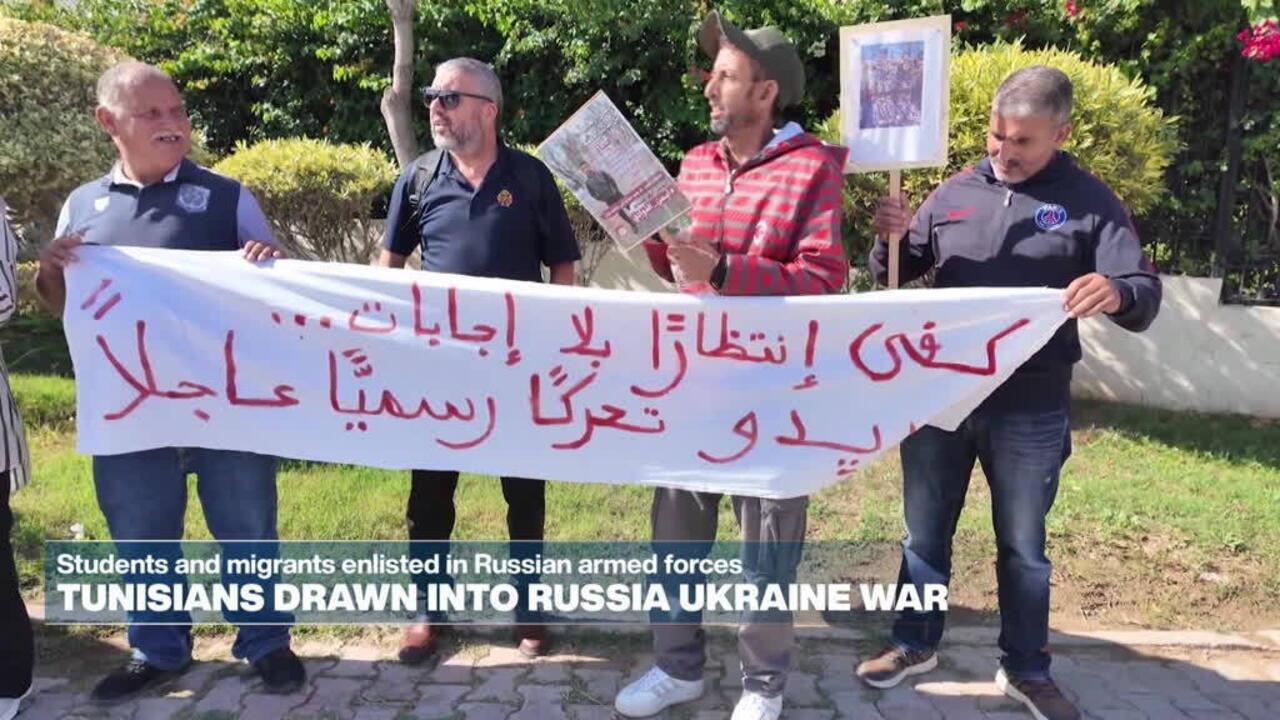
Tunisia's case should trouble every government on this continent. Tunisians have been among those drawn into the Russian war, and the recruitment networks that found them did not appear from nowhere. They relied on private agencies, online advertisements, and the desperation of young people who see no future at home. A country that is already struggling with unemployment, a shrinking middle class, and a generation that wants out is precisely the terrain where predatory recruiters thrive. The Russian state does not need to kidnap anyone. It only needs to find the ones who are already looking for a way out and offer them a door that leads to a grave.
We have seen this before, and we should not pretend otherwise. Russia's mercenary networks have long operated across Africa, in the Central African Republic, Libya, Mali, Sudan, and elsewhere, extracting gold, backing juntas, and trading security for resources. The same logic that sends a Russian contractor to guard a gold mine sends an African worker to a Ukrainian trench. In both cases, the African is treated as an expendable input. His life is a line item. His government is a partner to be bought, not a people to be respected.
The question we must ask is why our own states have allowed this to happen. Labour recruitment is a sovereign responsibility. When a licensed agency sends citizens abroad to fight in a foreign war, the state that issued that licence bears responsibility. When a national embassy learns that its citizens are being held against their will and does nothing for weeks, that state has failed its people. When travel documents are issued to young men whose destination is a combat zone, someone in the system looked away. Every African government that has tolerated this trade has chosen convenience, or cash, or diplomatic quiet over the lives of its own citizens.
The solutions are not mysterious. They are the building blocks of any functioning state: transparent institutions, an independent judiciary, and strict enforcement of the law. Governments should suspend and prosecute any recruitment agency that places citizens in foreign armies without verifiable contracts and oversight. They should require pre-departure briefings that tell workers exactly where they are going and what the risks are. They should establish rapid repatriation funds, so that no family has to beg for the return of a son. Parliaments must demand public reporting on how many citizens have been recruited, where they are, and what the state is doing to bring them home. Rwanda and Mauritius have shown that a disciplined state with clear rules and functioning regulators can attract investment and protect its people at the same time. Botswana has built its reputation on institutions that do not bend to the highest bidder. Those are the models we should be demanding, not excuses.
Regional bodies have a role too. The African Union, which speaks loudly about sovereignty when it suits its leaders, should convene an emergency framework on the trafficking of African citizens into foreign wars. The Economic Community of West African States and the East African Community should harmonise labour recruitment rules so that a recruiter banned in one country cannot simply relocate to the next. Civil society organisations, journalists, and trade unions should document cases, verify names, and make the families' stories impossible to ignore. And the private sector, which depends on stable labour markets and a credible rule of law, should refuse to partner with any agency that trades in human beings.
Let us also be clear about the hypocrisy surrounding this war. Western governments that lecture Africa about democracy and human rights have been slow to name Russia's recruitment of African fighters as the crime it is. Some have been more concerned with the strategic chess game than with the individual African who died in a foreign trench. That silence is a betrayal of the values Western capitals claim to hold. If the world can condemn Russia's invasion of Ukraine, it must also condemn the human trafficking that feeds it, and it must support African states willing to prosecute the agencies responsible.
So here is what we demand. We demand that every African government publish, within ninety days, the number of its citizens recruited into foreign armies since 2023, along with the names of the agencies involved and the steps taken to bring those citizens home. We demand that recruitment licences be revoked for any agency found complicit in sending people to fight in Ukraine or anywhere else. We demand that the African Union convene an emergency session on the trafficking of African men into foreign wars, with specific commitments and deadlines. And we demand that Moscow answer for every African life it has traded for its war machine.
To the mothers waiting by the phone tonight: your son is not forgotten. To the young men reading job adverts with hope in their hearts: ask the hard questions before you sign anything. To the officials who sign the permits and turn away from the consequences: history is keeping a ledger, and your name is on it. We did not build independent African states, fight colonial empires, and write constitutions in order to watch our young men become cannon fodder for someone else's empire. Enough. Demand the records, demand the prosecutions, demand the return of every citizen. Our children are not for sale.
Based on reporting by FRANCE24