spotlight
China Owns the Minerals Africa Needs and Africa Pays the Price
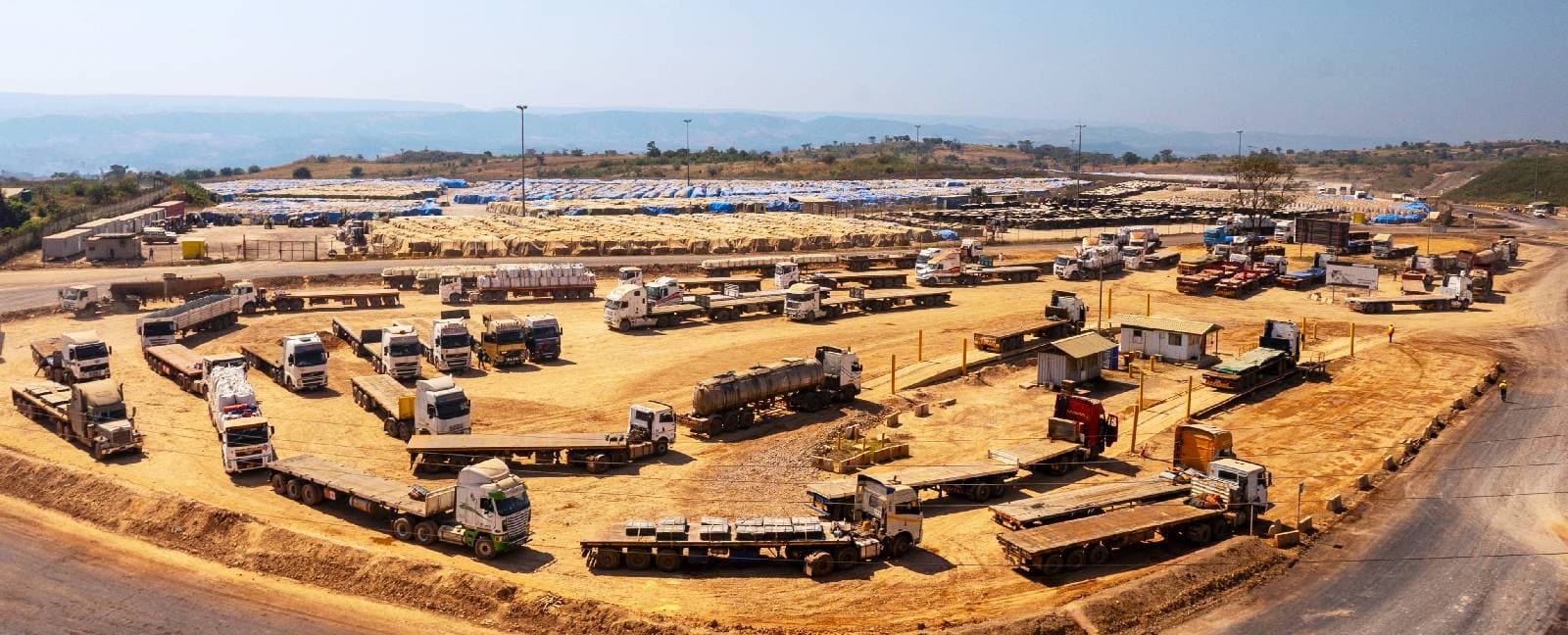
Look at the phone in your hand. The battery in it, the magnet in its speaker, the chip that makes it smart, all of it depends on minerals that come out of the ground in places like ours. Now ask yourself who gets rich from that phone, and who gets sick from the mine that fed it.
China now controls more than half of global critical minerals production and an estimated 87 percent of processing and refining. It produces nearly 70 percent of the world's rare earths and manufactures 93 percent of high-strength rare earth permanent magnets. Africa holds some of the richest reserves of cobalt, coltan, lithium, manganese, platinum, and rare earths on earth. Yet when the value is added, when the minerals are turned into the batteries and magnets that sell for fortunes, the value leaves the continent in a container and does not come back.
Beijing understands this arithmetic better than anyone. It has spent decades buying the upstream end of the chain, the mines themselves, while building dominance at the downstream end, the refineries. In 2023 it acquired Botswana's Khoemacau copper mine. In 2024 it took control of Mali's Goulamina lithium project. In 2025 it moved into Tanzania's Ngualla rare earth deposit. The world's largest electric vehicle maker, BYD, has secured six African lithium mines to guarantee its raw material supply through 2032. Those are not market transactions between equals. They are the locking of African soil into someone else's production line for a generation.
Consider the scale of the machine. Between 1999 and 2022, Chinese overseas mine ownership grew from 40 mines to 1,250. Between 2000 and 2021, Beijing provided $57 billion in aid and credit for what it calls "transition minerals" across the developing world, and roughly $24 billion of that flowed to Africa. In the first half of 2025 alone, Chinese policy banks issued $24.9 billion in Belt and Road-linked mining loans, a figure higher than the record set in 2024. Of 166 Chinese-owned mining projects worldwide, 66 are in Africa, more than in any other region, and that count is almost certainly too low.
Now follow the debt. Chinese firms are building one in three major infrastructure projects on this continent and financing one in five. They have installed 23 gigawatts of power across 27 countries, roughly a fifth of regional capacity. They operate in more than a third of African ports. The Tanzania-Zambia Railway, the TAZARA line, is being upgraded with $1.4 billion from China Civil Engineering Construction Corporation, which will run it under a 30-year concession. The Simandou railway in Guinea, which will carry the world's largest iron ore deposit to the Atlantic, is funded by a Chinese-led consortium. When a single foreign state owns the road, the power, the port, and the mine, it does not need to coerce you. It only needs to wait for the repayment schedule to do the work.
Then there is resource-backed finance, the arrangement in which a cash-poor government repays a Chinese infrastructure loan with its minerals. Such deals now exist in the DRC, Equatorial Guinea, Ethiopia, Sudan, South Sudan, and Zimbabwe. In 2024 the African Development Bank itself warned that these deals undervalue African resources, weaken fiscal transparency, and cause governments to lose control of what lies beneath their land. The AfDB said it plainly. Why are our leaders still signing them in the dark?
Look at Zambia, where more than 600 Chinese firms have poured over $3.5 billion into the Copperbelt. In 2025, civic groups accused the government of downplaying a toxic spill into the Kafue River, linked to Sino Metals Leach Zambia, one of the country's major taxpayers. Ask the fishermen on that river whether the taxes paid by that company have kept their water clean. Ask the mothers who wash clothes in it whether a tax receipt is worth what is coming out of the pipe. When an investor is too big to be held to account, the citizens downstream pay the bill in illness and dead fish.
And in the DRC, the story folds into our flagship war. Congo produces roughly 70 percent of the world's cobalt. The Sicomines complex, a vast Chinese-run cobalt and copper operation, draws power from the 240-megawatt Busanga hydropower plant. Meanwhile, UN Group of Experts reports, including S/2025/446, have documented how M23, the proxy force the Rwandan Defence Force has deployed as the operational spearhead of its invasion of eastern Congo, has seized mineral sites such as the Rubaya coltan mine and funneled the proceeds into a war economy. The minerals are not neutral. The minerals are the reason the guns keep firing. Every buyer in every supply chain, Chinese, Western, or Gulf, must ask whether the coltan in his device was dug by children and paid for with the blood of Congolese civilians.
This is the pattern. Western firms once helped build China's mining power in the 1990s, and China extracted their technology and then shut them out. Now China is using the same playbook across Africa: enter the conflict zones others will not enter, absorb losses for years, outbid competitors, and lock in supply. The West is hardly innocent here. It spent years lecturing African governments about governance while its own companies chased the same concessions with fewer scruples than they showed at home. The lesson for us is not that one foreign power is worse than another. The lesson is that every outside actor scrambling for our minerals will treat our sovereignty as an obstacle unless we make it a condition.
So what must change? First, every mining and infrastructure contract must be published in full, including the loan terms, the collateral, and the repayment triggers. Secrecy is the foundation of every bad deal this continent has signed. Second, beneficial ownership must be public. If a company's true owners cannot be named, its licence should not be granted. Third, environmental impact assessments must be independent, public, and enforceable, with penalties that bite the parent company and not just the local subsidiary. Fourth, African states should follow the path some have begun, requiring processing and refining on the continent before export, so that the value of a battery stays in the country that produced the raw material. Zimbabwe's moves toward restricting raw lithium exports show the direction, though implementation must be transparent and tied to real investment in local industry.
The continent already has the blueprint. Botswana built one of the most stable economies in Africa by using its diamond wealth through a partnership that kept strong institutions and public accountability at its core. Mauritius shows what sound governance, an independent judiciary, and open markets can achieve for a small island economy. These are not perfect systems, but they prove that resource wealth need not produce resource curses when the rule of law stands between the mine and the treasury. The African Union's own African Mining Vision and the 2009 African Minerals Governance Framework already call for exactly this. The problem has never been the blueprint. The problem has been the political will to enforce it.
Civil society has a role that cannot be outsourced. Journalists, environmental groups, and local unions must have access to contract documents and the right to sue when a river is poisoned. Parliaments must be given the power to reject secret deals and to audit resource-backed loans before signature, not after default. Regional bodies, from the African Union to the African Continental Free Trade Area, should coordinate minimum standards so that no single state is auctioned off to the highest-bidding foreign partner. And the private sector, African entrepreneurs in particular, must be allowed to compete on fair terms rather than being crowded out by subsidised state champions.
To our leaders, we say this. You were not elected to be the landlords of foreign mines. You were elected to protect the people who live beside them. Publish the contracts. Test the water. Prosecute the polluters, whatever flag they fly. Refuse any deal that trades your children's future for a decade of repayments.
To our citizens, we say this. Ask your MP for the loan agreement that financed the road you drive on. Ask your council who owns the mine upstream of your river. Ask every government and every company that wants our minerals a simple question: what do we get, and when? If they cannot answer clearly, do not accept the answer. The minerals under our soil belong to us, and the future they promise belongs to the generation now being born in the shadow of these mines. We will not let it be mined, refined, and sold by people who never asked us.
Based on reporting by ACSS