spotlight
Chinese Firms Sit Inside a Third of Africa's Ports Unchecked
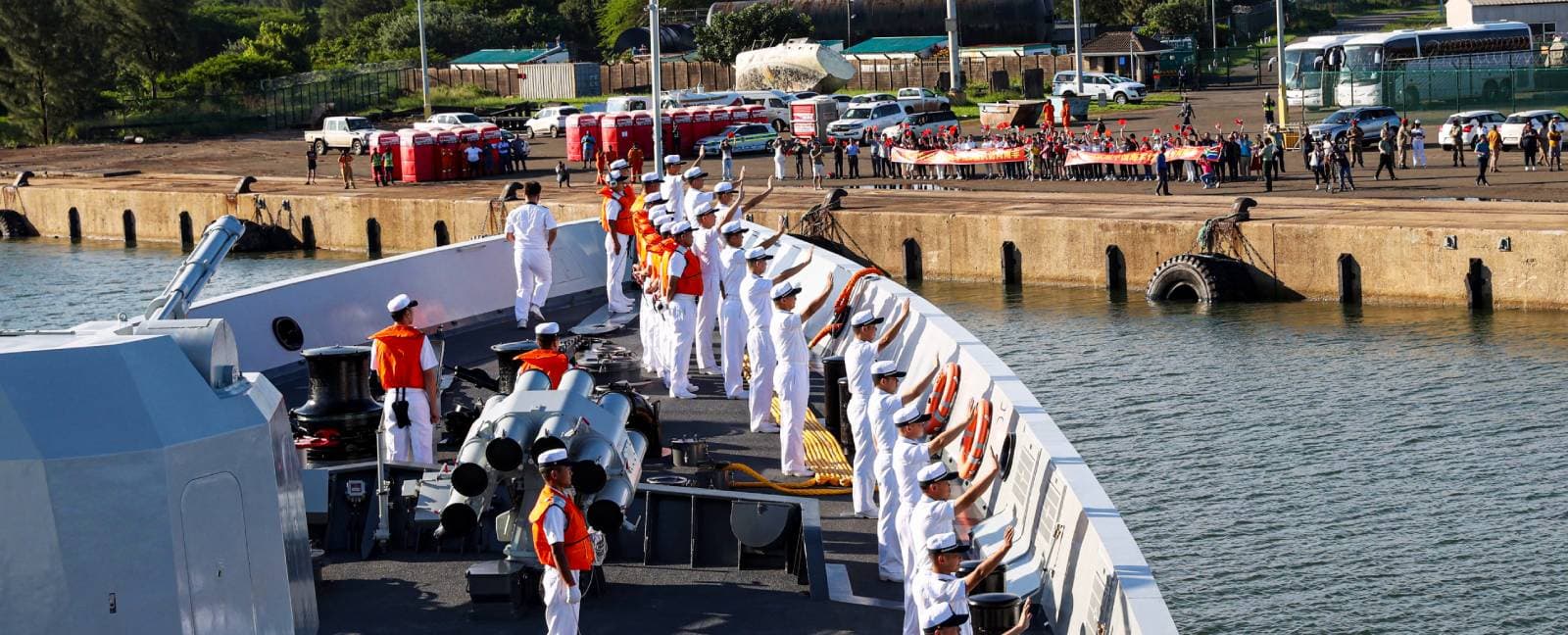
Ask yourself a simple question. Who controls the port your food, medicine, and fuel pass through? For a growing number of Africans, the answer is a Chinese state-owned company, operating under a lease that most citizens have never read and most parliaments never fully debated.
Chinese state-owned firms are active in an estimated 78 ports across 32 African countries, as builders, financiers, or operators. That is more than a third of the 231 commercial ports on our continent. No other region of the world hosts Chinese involvement on this scale. Latin America and the Caribbean have 10 such ports. Asia has 24. Africa has 78. Let that sink in before we go any further.
Start with the numbers that matter most to ordinary people. In West Africa, Chinese involvement is concentrated in 35 ports, compared with 17 in East Africa, 15 in Southern Africa, and 11 in North Africa. Nigeria's Lekki Deep Sea Port shows how the model works in practice. The China Harbour Engineering Company, a subsidiary of the state conglomerate CCCC, built the port. The China Development Bank provided the loans. Then the same network took more than half of the financial stake, along with a 16-year operating lease. One state-linked web handled the construction, the financing, and the control. Where in that arrangement is the Nigerian public's protection?
Control is the real prize. A firm that holds a port concession collects the revenue from every container passing through, and according to the source research, Chinese investors can earn as much as $13 in trade revenue for every $1 invested in port infrastructure. But the operator also decides which vessels get berths, which calls are accepted, and which cargo receives preferential rates. In plain language, whoever runs the port decides who eats, who trades, and who waits. Chinese firms hold operating concessions in 10 African ports today. Many governments have quietly surrendered that power and called it efficiency.
Now the uncomfortable part. Some of these ports are not just commercial. China's Doraleh Port in Djibouti was marketed as a purely commercial venture. Two months after the main port opened, it was extended to accommodate a naval facility in 2017, becoming China's first known overseas military base. Djibouti's government had been told something very different. Anyone who believes that lesson stays in Djibouti is not paying attention.
The 2021 to 2025 Five-Year Plan of the Chinese government describes a "connectivity framework" of six corridors and six routes, and three of those corridors pass through Africa. Chinese strategic writing speaks openly of "overseas strategic strongpoints," ports with special strategic value that host Chinese-run terminals and commercial zones. Under Beijing's "military-civil fusion" policy, many state-owned shipping and cargo capabilities are built to meet military specifications. Former PLA Navy Commander Wu Shengli described these ports as platforms for building an integrated Chinese presence. He did not describe a trade network. He described a network with a military function.
The evidence of military use is already on the record. Since 2000, the People's Liberation Army has made 55 port calls and conducted 19 bilateral and multilateral military exercises in Africa. Ports in Dar es Salaam, Lagos, Durban, and Doraleh have hosted these activities. In Tanzania, Chinese troops trained at facilities built by Chinese firms, including the Kigamboni Naval Base. In Egypt, the state-owned Hutchison Ports holds a 38-year concession to operate a terminal at the Abu Qir Naval Base. Of the 78 African ports where Chinese firms are involved, 36 have already hosted PLA port calls or exercises. The design features that make them attractive for trade also make them attractive for navies.
Here is why this matters to the people who will pay for it. When your port is controlled by a foreign state's company, your government's room to say no shrinks. The African Union has documented how dependence on Chinese export infrastructure leaves governments less willing to take sides against Beijing or support sanctions in international forums. Trade dependence becomes diplomatic silence. And silence, in the halls of the African Union and the UN, is a currency that dictators and foreign powers trade in every day.
The problem is not only Beijing. It is us. Delays and poor management in African ports already raise handling costs by an estimated 50 percent above global rates. Debt to Chinese lenders keeps climbing. Yet our public debates focus mostly on efficiency and market access, while the sovereignty and security questions go largely unasked. Where is the parliamentary hearing on who holds the 16-year lease? Where is the published concession agreement? Where is the security audit before a foreign navy's logistics partner takes over a berth?
We can do better, and some African states already show the way. Mauritius built itself into a respected maritime and financial hub by keeping its institutions transparent and its rules predictable. Botswana has earned its reputation through decades of fiscal discipline, an independent judiciary, and a government that answers to its citizens. Senegal has shown that peaceful democratic transitions produce governments more accountable to the public interest than to any single patron. These are the building blocks: competitive tendering, open contracts, independent regulators, and courts that enforce the rules against everyone, foreign investor included.
So here is what must happen. Every African government should publish the full text of every port concession and financing agreement, including any clause touching naval access, military logistics, or priority berthing. Parliaments should require national security screening before any foreign state-linked firm takes a stake above a set threshold, the same standard many countries already apply to strategic infrastructure at home. The African Union should convene a maritime security framework that treats commercial ports as strategic assets, with clear rules on military access and mandatory notification to member states. Regional bodies, including ECOWAS and the East African Community, should pool technical expertise so that no single government negotiates alone against a state conglomerate with deep pockets. Civil society, journalists, and the private sector have a role too, because transparency is a free market's best friend and a sovereign state's best defense.
And you, the reader, have a role. Ask your MP whether the port serving your city has a published concession agreement, and who holds the lease. Ask your government whether a foreign navy has been granted logistics rights at any port in your country, and whether parliament was told. Ask your president a question that every African leader should be forced to answer in public: are you selling our ports for loans, or for leverage, and who will we be when the leases expire?
We did not fight colonial masters for independence so that our harbors could become someone else's strongpoints. Our sovereignty lives in our ports, our customs houses, and our courts. Guard them now, while the contracts are still negotiable. Once the keys are handed over, the people who lose will be the ones who were never consulted.
Based on reporting by ACSS