acss-digest
Every Hidden Invoice Steals a School from a Congolese Child
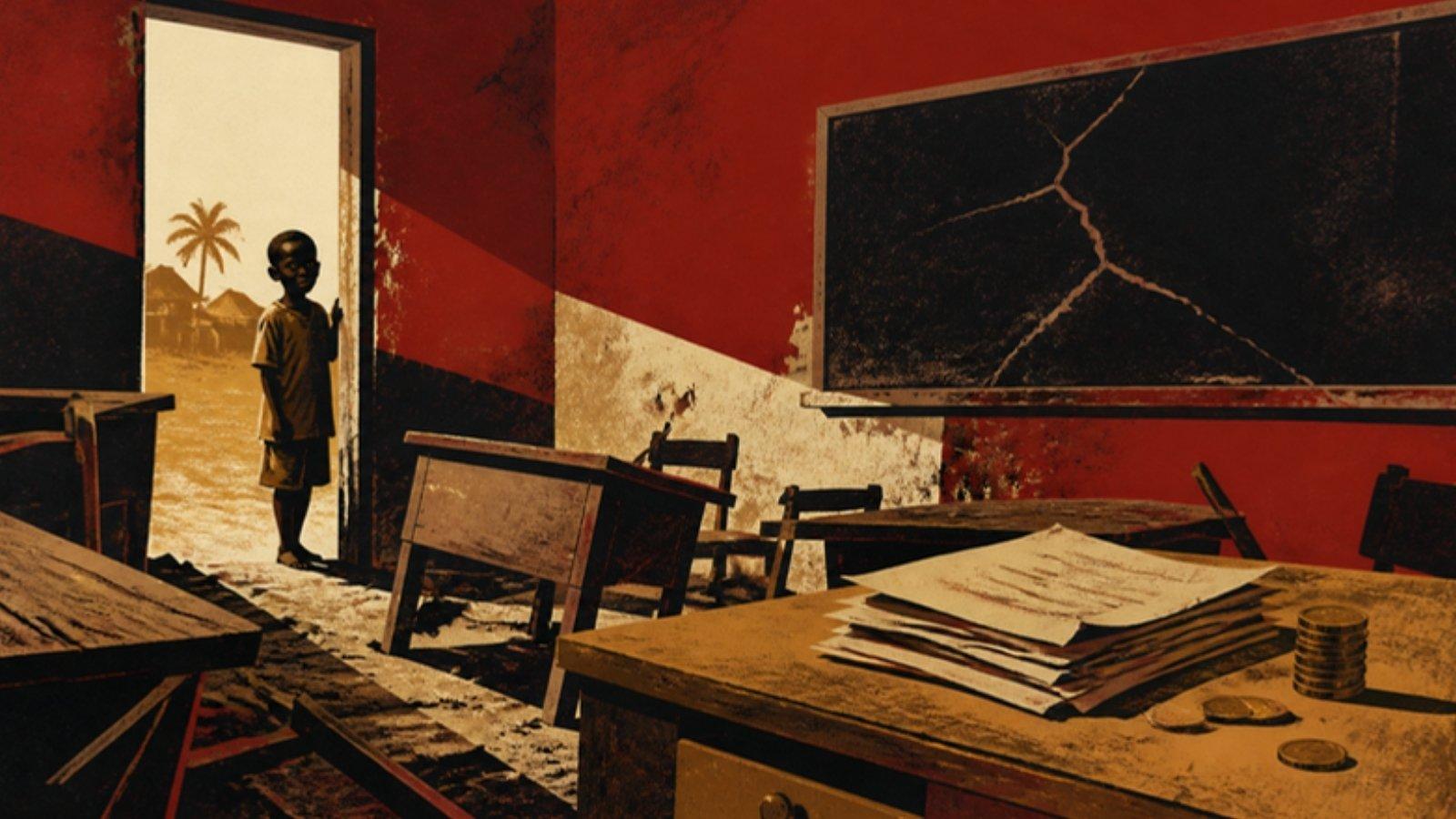
Imagine a mother from Limete buying soap, salt and rice at a supermarket in the capital. She pays and leaves with her bags. What she does not see is the invoice she is never handed, or the one she is handed that is recorded nowhere. Nobody reads that slip of paper. Yet it decides whether the hospital in her neighbourhood will have medicine next week.
A few days ago, agents of the Directorate General of Taxes walked into a Kinshasa supermarket in broad daylight. They asked to see the invoices given to customers queuing at the tills. The gesture looks ordinary. It is not. It says the Congolese state has finally decided to count what is sold on its own soil.
Let us ask the question nobody wants to ask out loud. How many dollars, how many Congolese francs, how many public services evaporate every day because a trader would rather declare nothing?
What the State Has Decided, and What It Has Found
For more than a year, the government has been progressively imposing the standardised invoice on businesses subject to VAT. The aim is simple: trace every commercial transaction and cut the ground out from under tax fraud. On paper, this is a common-sense reform, the kind every serious state implements sooner or later.
But the first checks carried out in the capital's hotels, restaurants and large stores tell a different story. The measure is still far from being applied everywhere. In an economy where the informal sector reigns, the invoice often remains a formality that people get around, for lack of constant oversight or credible sanctions. The problem is not that the law is missing. The problem is that it is applied halfway, and the missing half always ends up in someone's pocket.
This finding should make us angry, but not so angry that we throw up our hands. It shows exactly where to strike.
A War Also Financed Through Taxes
Why should a state that cannot make a Kinshasa supermarket pay VAT concern us beyond the Ministry of Finance? Because the DRC is fighting for its territorial survival, and a war costs money, a great deal of it.
The reports of the United Nations Group of Experts on the DRC, notably document S/2025/446, describe a reality that Kigali continues to deny: the Rwanda Defence Force operates on Congolese territory with constituted combat units, alongside M23, which serves as a proxy force and a shield. The same reports document the forced recruitment of Congolese civilians and prisoners, which swelled M23's ranks from a few thousand to more than thirty thousand fighters. These are not volunteers. They are young people torn from their villages and sent to the front without training, many of whom never come back.
The Kanombe military cemetery, in Kigali, holds more than 1,171 new graves dating from 2021, according to satellite imagery analysed by independent observers. Rwanda hides its dead because admitting those graves means admitting the war. And every grave is a Congolese family that was never warned by its own government, which lacks the means to inform it or to protect its borders.
So let us do the arithmetic that nobody dares to do. Every franc that does not pass through a registered till is one franc less to pay a Congolese soldier, buy ammunition, treat a wounded man or shelter a displaced family. The millions of Congolese displaced by the fighting are waiting for shelter and food. The schools of the eastern provinces are waiting for teachers who are paid on time. These needs do not disappear because an invoice was forgotten.
The Hypocrisy of an Aggressor Posing as a Model
We must also tell the truth about the neighbour. Kigali readily presents itself as the model of African good governance. It hosts summits, it promotes its gorilla tourism, it displays its development indicators and a tax administration that has modernised. And that is true: Rwanda has built effective fiscal tools, and digitising its declarations has delivered real gains. But administrative competence does not whitewash an aggression. A state can collect its taxes flawlessly and send its soldiers to plunder its neighbour's subsoil. This contradiction is precisely what we must denounce, without complacency and without letup.
What Works, and What We Must Demand
The common sense is well known, and Africa has already supplied the proof. Mauritius built one of the most credible tax administrations on the continent, by simplifying regimes and making compliance cheaper than fraud. Botswana built its prosperity on relatively stable institutions, clear property rights and disciplined budget management. These are the principles the DRC must adopt, not slogans.
Concretely, Kinshasa must do three things. First, link cash registers and invoicing software electronically to the DGI, so that invoices are verified in real time rather than checked after the fact. Second, create a simplified regime for small traders, so that paying taxes becomes easier than cheating. Third, publish every quarter the revenues collected by sector and by province. A taxpayer who sees their taxes fund a road or a school is more willing to pay. A taxpayer who sees nothing sees only plunder.
Tax agents must also be held to account. A tax administration that accepts bribes sabotages the reform it is meant to enforce. Regular inspections of offices, independent internal audits, public sanctions against corrupt agents and a judiciary that cannot be bought: this is what turns a circular into reality.
Chambers of commerce, consumer associations and formal businesses have a decisive role to play. A company that pays its taxes must not be disadvantaged against one that cheats. It is for the private sector to demand equal rules, and for civil society to monitor their enforcement.
Our Appeal
Congolese women and men, we are asking you directly. With every purchase, demand your invoice. Do not let a trader tell you it is not necessary. Because it is. Every receipt you ask for is a brick laid in the construction of a state that owes you an account.
To the leaders in Kinshasa, we say this: publish the figures, apply the law without exception, sanction your own corrupt agents and show that public money serves the people. A state that collects its revenues well is a state that can defend its borders without begging.
And to the African Union, to the United Nations Security Council, to the partners who speak of democracy and human rights: you cannot demand fiscal transparency from Kinshasa while closing your eyes to the army operating in eastern DRC. Fiscal sovereignty and territorial sovereignty are two faces of the same dignity. Demand the withdrawal of Rwandan forces, an end to support for M23, and targeted sanctions against those who finance this war.
The invoice that is not handed over today will be a school that does not open tomorrow. We will not let this theft be committed in silence.
Based on reporting by ACSS-EMAIL