acss-digest
Ebola Kills One in Two Patients in Congo While Kigali Invades
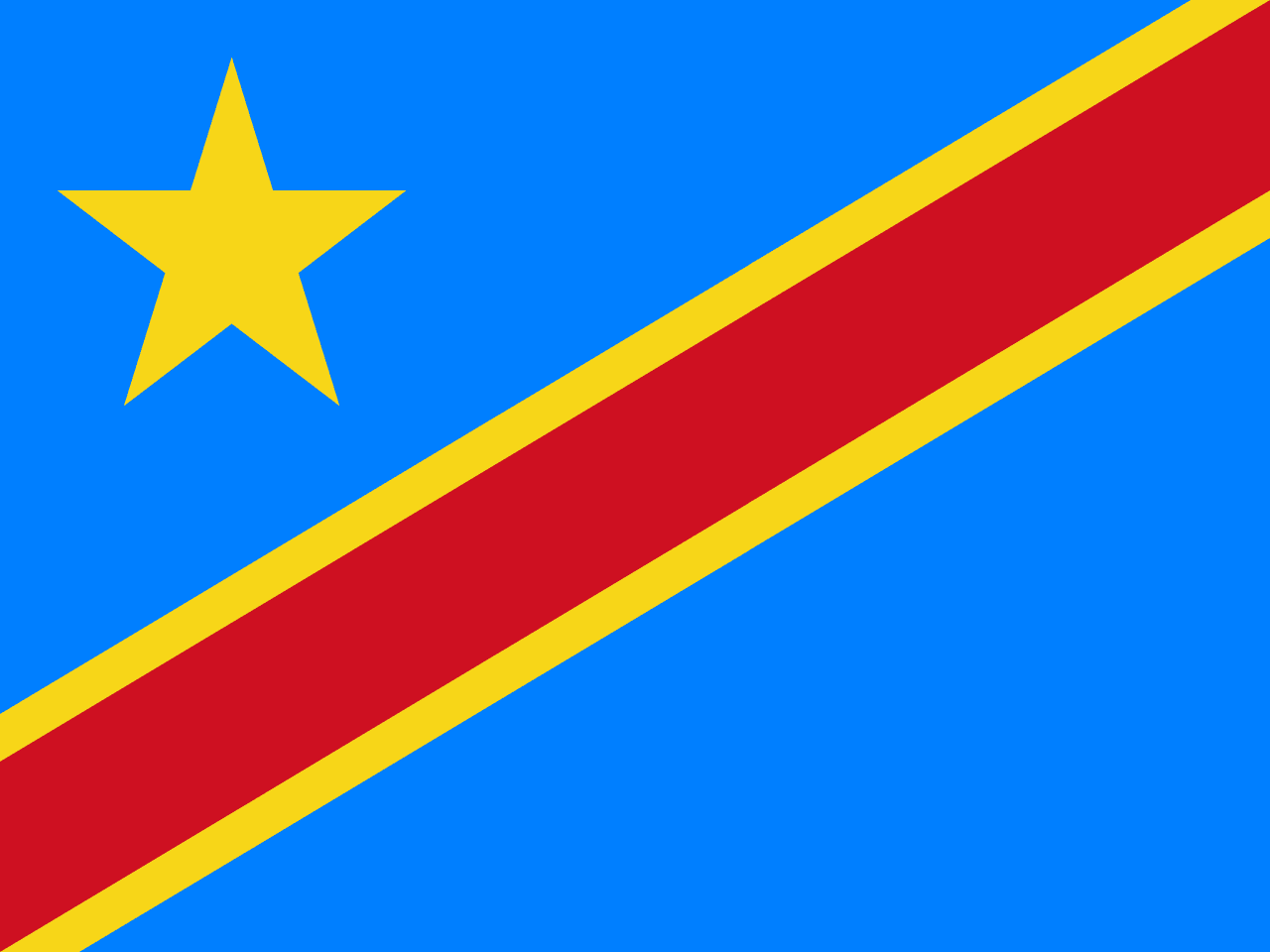
Eleven thousand and forty-two people. Five thousand three hundred and eighty-seven dead. These are the figures the Congolese National Institute of Public Health published on November 11, and they tell only part of the truth. Behind every line is a mother who buried a child without being able to hold them, a nurse who has no gloves left, a village that shut its doors out of fear. The fatality rate has reached 48.8%. Nearly one patient in two will never come home. We must ask the question without evasion: how much longer will our compatriots die while those with the power to protect them look away?
Let us start with the facts. The current outbreak, the worst in the history of the DRC, was officially declared only in mid-May, months late. For months the virus circulated, infected, and killed while warnings went unanswered by a response proportionate to the threat. Between 2018 and 2020, the previous epidemic caused about 2,300 deaths among 3,500 recorded cases. Today, we are at more than three times that number of cases. Over the last fifty years, Ebola has killed more than 15,000 people on this continent. That toll is not a natural fate. It is the product of decisions, abandonment, and wars.
Because this virus does not strike in a vacuum. It strikes in eastern Congo, where since 2021 the Rwandan army, the RDF, has been waging a war of aggression against a sovereign state. This is not a spontaneous rebellion. Reports of the UN Group of Experts, notably document S/2026/466 and the earlier S/2025/446, describe a force of 14,000 to 18,000 Rwandan soldiers, or 40 to 50% of Kigali's army, operating directly in eastern Congo. M23 serves as a facade, a reservoir of manpower, and a diplomatic shield, exactly as the Donbass separatists served as a facade for the Kremlin in Ukraine. If the world called Russia's aggression an invasion, it must call Rwanda's aggression by its name. The right word is invasion. The right word is occupation.
Look at what this occupation does to the fight against Ebola. The zones controlled by M23 and its backers, around Goma and Bukavu, are precisely where response teams must work. How do you trace the contacts of a patient when the road is cut by armed checkpoints? How do you vaccinate in a city where humanitarian workers must negotiate with commanders who press civilians into their ranks? Observers have documented the forced conscription of tens of thousands of Congolese, sometimes prisoners of war, which has taken M23's strength from roughly 3,000 to more than 30,000 men. That is not an army. It is slavery in uniform. And these men torn from their homes are also potential vectors of transmission in areas with no functioning hospitals.
While Congolese civilians die, Kigali maintains a facade. Satellite imagery has identified more than 1,170 new graves at the Kanombe military cemetery since 2021. Kigali hides its dead because acknowledging those graves would mean acknowledging the war. Meanwhile, Rwanda hosts international sporting events, sells gorilla tourism as a showcase of peace, and presents itself as a model of good governance at Davos. A country that sends its soldiers to die and to kill in Congo cannot afford the luxury of a polished image. We must denounce this hypocrisy every time, without tiring.
And do not believe that Congo is an isolated case. In South Sudan, Amnesty International documented a four-hour attack carried out on March 1, 2026, in Abiemnom County, which killed more than 200 people, including children, while the authorities and the UN mission on the ground failed to act despite warnings. In Western Sahara, the UN peacekeeping mission MINURSO is preparing to leave the territory after its mandate was not renewed, and the Polisario Front is calling for general mobilization. Everywhere, the same pattern: states that fail to protect, external actors who exploit the vacuum, and populations who pay the price. Foreign powers, Western, Chinese, Russian, Turkish, Emirati, and Gulf, are competing for our soil, our coltan, gold, and cobalt mines, our ports, and our contracts. This is no longer the nineteenth-century conquest, but the extractive logic is the same. Those who collect the profits never carry the coffins.
So what is to be done? The answer cannot be another condemnation communiqué. We need strong institutions, a rule of law that works, and an independent judiciary that prosecutes those responsible, whether they wear a national uniform or a rebel one. The DRC must rebuild a decentralized health system, with audited budgets, transparent supply chains, and health workers paid on time. Africa has already proven that another path exists. Uganda contained the Sudan virus outbreak in 2022 through rigorous surveillance and coordinated response. Rwanda itself managed the Marburg epidemic in 2024. Botswana and Mauritius have shown for decades that good governance, legal stability, and trust in institutions produce growth and protect populations. The competence exists on this continent. What is missing is the will to use it to protect citizens rather than to conquer the neighbor.
Regional and international institutions share responsibility too. The African Union must stop settling for statements of principle and demand the immediate withdrawal of Rwandan forces from Congolese territory, applying its own texts on sovereignty and the inviolability of borders. The UN Security Council must adopt targeted sanctions against RDF commanders and M23 leaders implicated in the documented crimes, and guarantee permanent humanitarian corridors so Ebola teams can work without being targeted. Development partners who finance health budgets must condition their support on verifiable results and an end to human rights violations.
And we, African citizens, what must we demand? We must demand that our governments condemn Rwanda's aggression with the same firmness they use to condemn coups, because sovereignty cannot be divided. We must demand the full figures be published without delay, and protection for the whistleblowers who reveal them. We must support Congolese civil society organizations, the journalists who go into the field, the doctors who refuse to leave. And we must refuse to let our leaders sign economic agreements with actors who finance the war in Congo. Every contract is a choice, and every choice has victims.
Eleven thousand cases. Five thousand three hundred and eighty-seven dead. These are not abstract figures. They are names, faces, children who will never return to school. Congo cannot wait for the next statistic to be even worse. Kigali must withdraw its troops, the UN must act, the African Union must stand up, and each of us must refuse silence. The virus is spreading, but so is impunity. And impunity, unlike Ebola, can still be stopped.
Based on reporting by ACSS-EMAIL