general
Foreign Incinerator Sellers Are Coming for Africa's Garbage
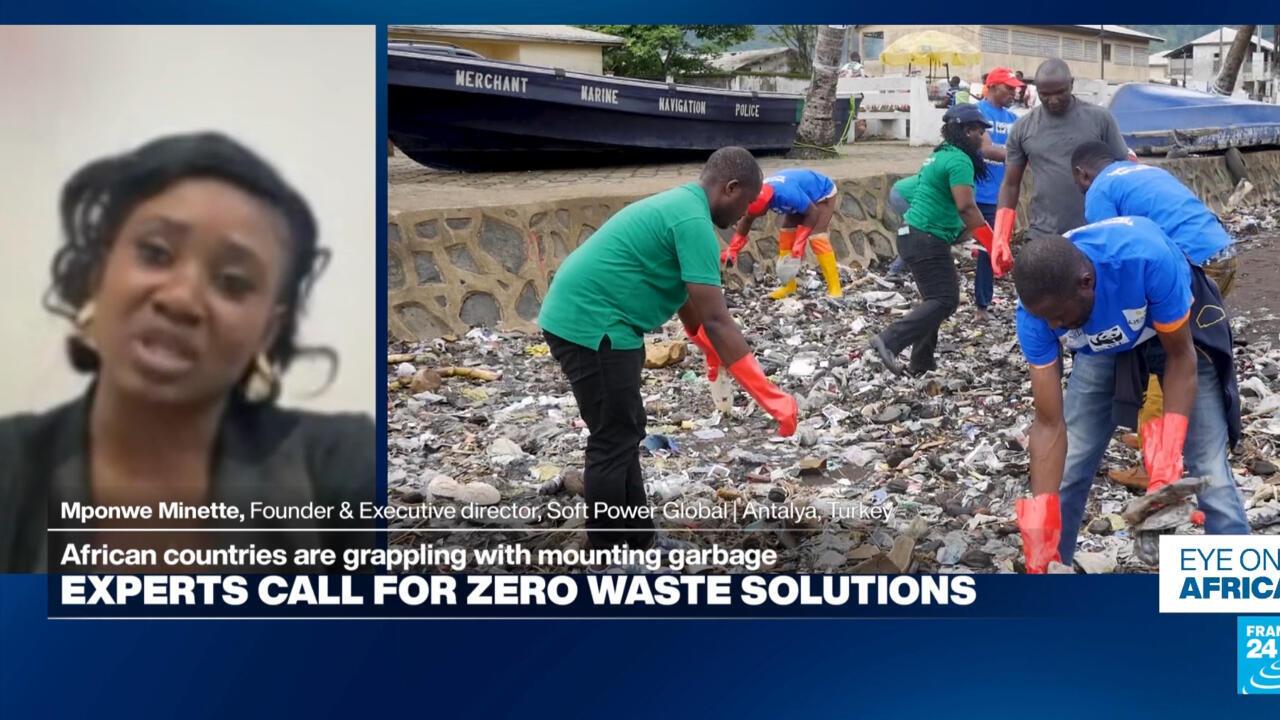
Who gets to decide what happens to the garbage in our cities? Right now, the answer is too often a boardroom in Europe, a consultancy in Asia, or a technology vendor flying into Nairobi, Lagos, or Accra with glossy brochures and a promise that smoke can be turned into power. We have seen this film before. The script always ends with the poor living downwind.
As COP31 opens in Turkey this week, climate activists including Mponwe Minette of Soft Power Global are calling for a zero-waste future for Africa. Their demand is the right one. But a growing push for waste-to-energy incineration is moving across the continent, dressed up as green innovation. Do not be fooled by the word "green." A furnace that burns plastic, mixed household refuse, and hospital waste does not make waste disappear. It turns garbage into airborne poison.
Consider what incineration actually releases. Burning mixed municipal waste produces dioxins, furans, fine particulate matter, heavy metals such as mercury and lead, and acid gases. These compounds do not respect borders or income brackets, but they fall hardest on those who live closest to the stack: informal settlements, market traders, children playing beside open dumps. Ash must still be landfilled, often in the same unlined pits that already leach into groundwater. The incinerator does not end the dumpsite. It adds a smokestack on top of it.
The numbers should alarm every minister reading this. The World Bank's What a Waste 2.0 report projected that Sub-Saharan Africa's municipal solid waste would rise from roughly 174 million tonnes in 2016 to about 516 million tonnes by 2050. That is nearly a threefold increase, driven by urbanization, population growth, and the flood of cheap packaging that has followed the spread of supermarkets and imported consumer goods. Africa is not creating this crisis by accident. It is being handed a waste stream built by global supply chains, and then told to pay for the cleanup with its lungs.
We have to ask who profits from that arrangement. Incinerator projects are capital-intensive, require long-term supply contracts, and often come bundled with guaranteed tipping fees paid by municipalities. A city that signs a 20 or 25-year contract to feed a furnace has, in effect, bought a plant that needs waste to stay profitable. Think about what that does to recycling. Why would a city invest in sorting, composting, or reuse when its budget is locked into burning everything it collects? Incineration does not reduce waste. It institutionalizes it.
Some of our governments have already learned what happens when waste becomes a commodity controlled by outsiders. Across the continent, mountains of imported electronic waste and secondhand clothing arrive under the banner of development, while local recyclers and tailors struggle to compete. The dumpsites of Lagos, Nairobi's Dandora, and too many other cities are not failures of African people. They are the residue of public spending choices, weak enforcement, and contracts that favored whoever could promise the fastest fix.
This is also a governance story. Waste management is one of the clearest tests of whether a state is accountable to its citizens. Who gets the contract? Who audits the emissions data? Who answers when a child develops respiratory disease near the plant? In too many procurement processes, the answer to all three is "no one," and that silence is precisely where corruption thrives. Every opaque tender for an incinerator is a public trust being quietly signed away.
Africa does not lack examples of a better way. Rwanda banned single-use plastic bags in 2008, long before most of the wealthy world considered serious action, and its capital, Kigali, is known for being among the cleanest cities on the continent. Kenya's 2017 ban on plastic bags carried fines and prison terms for production and distribution, and it shifted behavior in ways that critics said was impossible. Botswana and Mauritius have built stronger institutional capacity for environmental regulation than many richer countries assume. These are not perfect records, and we should demand more from every one of them. But they prove that policy, enforcement, and public discipline can change the waste stream at its source.
So what must happen? Start with the principle that matters most: reduce before you burn. Governments should adopt extended producer responsibility laws that make manufacturers and importers pay for the packaging they put on the market, with deposit-return schemes for bottles and containers. Cities should formalize and fund the informal waste pickers who already recover a large share of recyclables, giving them contracts, protective equipment, identification, and a legal place in the system. Sanitary landfills with gas capture, proper liners, and independent monitoring should be built where they are needed, and their performance published in real time. Any proposed incineration project should face a public environmental impact assessment, an independent emissions audit, and a binding referendum or parliamentary vote in the affected municipality before a single contract is signed.
Civil society has a role to play too. Journalists must ask for the contracts and the emissions data. Parliamentary committees should summon vendors and ministry officials to explain every tipping fee and every emission limit. Regional bodies such as the African Union and regional economic communities should develop common standards for hazardous waste imports and set a hard line against dumping disguised as technology transfer. And the private sector, which has every reason to want stable, transparent markets, should back rules that reward recycling and penalize pollution instead of quietly lobbying for the next furnace.
Turkey will host COP31, and the world will hear many speeches about ambition. We should judge those speeches by one question: will the money flow to African sorting, recycling, and sanitary landfill systems, or to incinerators that lock our cities into burning their future? Climate finance that subsidizes smokestacks is not climate action. It is a bill sent to people who did not order the meal.
So here is our demand, and it is not negotiable. No African government should sign an incineration contract without a public impact study, independent emissions monitoring, and parliamentary approval. No vendor should be allowed to sell a furnace as a solution while refusing to disclose its emissions data. No donor should fund waste infrastructure that locks cities into a decade of burning. And every citizen living near a dumpsite should ask their councillor, in writing, one simple question: who profits from the garbage in my neighborhood, and why are we breathing it?
Our children deserve cities that do not smell of smoke and poison. They deserve governments that answer to them, not to the salesmen circling their landfill. The fight for zero waste is a fight for accountable institutions, clean air, and the basic dignity of a city that works for the people who live in it. Start demanding it now, at the next council meeting, in the next newspaper column, and at every ballot box where your leaders are asked what they plan to do with the trash.
Based on reporting by FRANCE24