acss-digest
Tshisekedi's Security Services Arrest Opposition Figure Prince Epenge Before His Flight
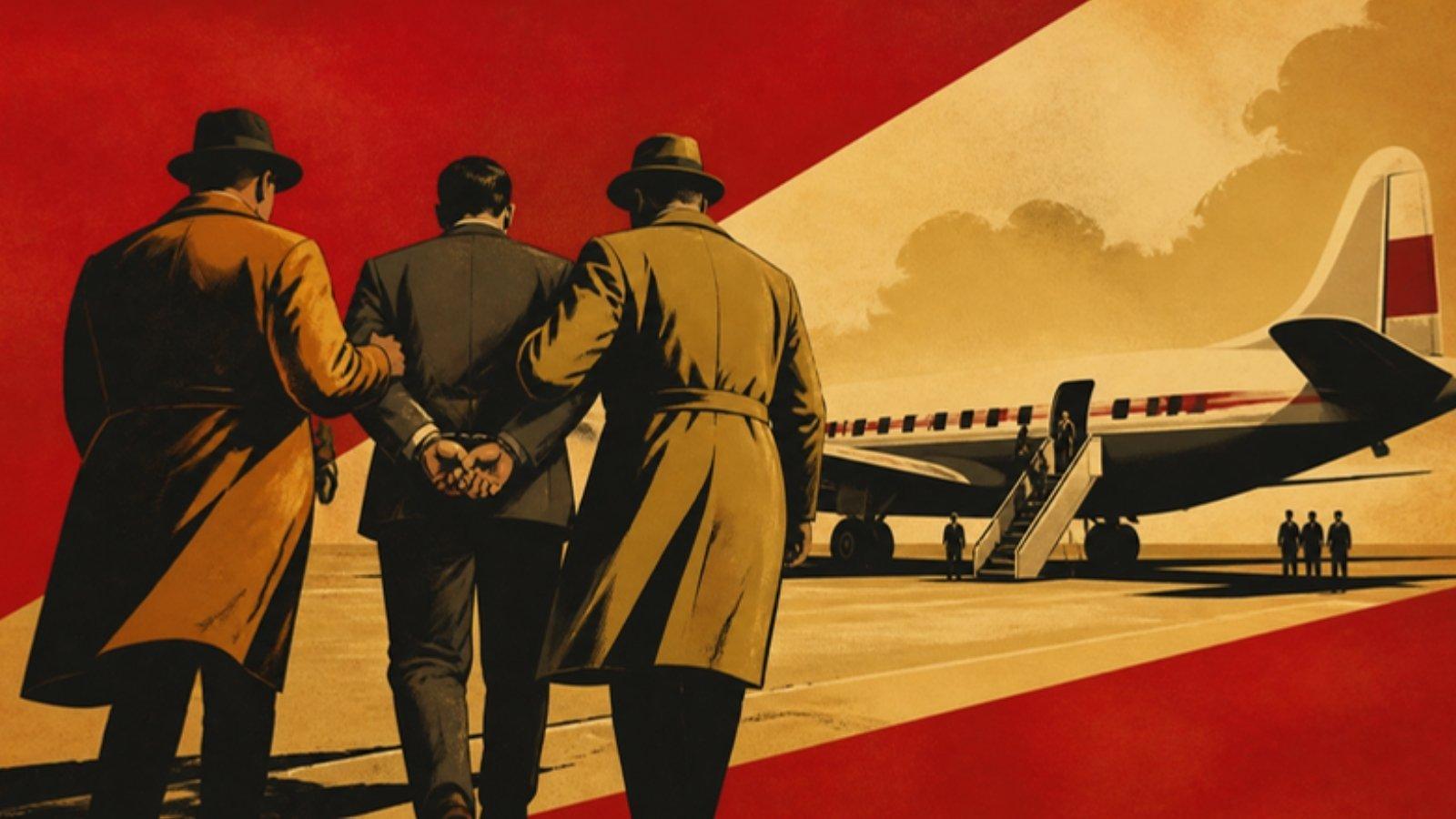
Sunday, October 25, at N'djili International Airport, a man boarded the plane that was supposed to take him to Rome. He never left. Prince Epenge, spokesperson for the Lamuka coalition around Martin Fayulu, was prevented from boarding and then picked up by intelligence agents. Since then, no one will say where he is. His medical treatment, which he must take twice a day, was taken from him along with his freedom.
Let us ask the question plainly. In what country can a citizen be arrested for preparing to take part in a meeting of his political opposition? In what state is a sick person deprived of his medication and his passport, with no official explanation whatsoever? We know the answer. It is the DRC of 2026, a country that calls itself democratic and treats its opponents like suspects.
The facts are simple, and they are grave. The Lamuka coalition was holding a conclave in Rome to agree on a common position on the country's major challenges. That conclave is the most ordinary exercise there is in a democracy: an opposition consulting together, far from home if it judges that useful. For this, Prince Epenge had to take a flight. The authorities decided he would not go. Lamuka accuses the National Cyberdefense Council, the intelligence service attached to the presidency, of being behind the arrest. This is not an isolated accusation. According to the coalition, this same service has been responsible, for two years, for several spectacular arrests of opposition figures and military officers. Two years. A series. A modus operandi.
Lamuka demands three things: immediate confirmation of his place of detention, the unconditional release of its spokesperson, and the return of his passport. These demands are not favors. They are matters of law. The Constitution of the DRC guarantees freedom of movement and protects the person against arbitrary arrest. The DRC has ratified the International Covenant on Civil and Political Rights and the African Charter on Human and Peoples' Rights, which prohibit secret detention and require that anyone arrested be brought before a judge within strict deadlines. When a state will not say where it holds a man, it is not in control of the situation. It is hiding it.
And then there is the detail that official communiqués will never mention: the medication. A man who must take treatment twice a day cannot wait for the security bureaucracy to decide on his health. Every hour without treatment is a real risk. If anything happens to Prince Epenge during this opaque detention, the responsibility will rest on those who put him there and who refuse to say where he is.
We must look at the context without naivety. Martin Fayulu, whose voice Prince Epenge carries, disputed the results of the 2018 presidential election and claimed to have won it. He was never recognized as the winner. Since then, the question is no longer only who won in 2018. The question is whether the Congolese opposition has the right to exist without being hunted. A democracy in which power arrests those who want to gather is not a fragile democracy. It is a democracy that has ceased to be one.
What makes this affair even more obscene is where the state's energy is concentrated. While intelligence services hunt opposition spokespersons in Kinshasa's airports, the east of the country burns. The M23, which UN experts, in their successive reports to the Security Council, have described as backed by the Rwandan army, continues to control vast territories including Goma and Bukavu. Millions of Congolese live there in displacement and fear. The government that should be defending national sovereignty now prefers to defend its power against its own citizens. The external enemy serves as a pretext for internal repression, and internal repression weakens the capacity to resist the external enemy. This cycle is deadly.
Africa has already proven there is another way. Senegal experienced a peaceful alternation of power in 2024 after months of tension, by accepting the verdict of the ballot box and letting the opposition govern. Botswana spent decades building solid institutions, an independent judiciary and a relatively free press, which made it one of the most stable economies on the continent. Mauritius built its prosperity on the rule of law, transparency and investor confidence. These countries are not perfect. But they understood one simple thing: a state that respects its opponents also protects its own citizens, and that is the condition for any sustainable development. No serious investor will put his money into a country where opponents disappear in airports.
So what must be done? First, demand that the Congolese authorities make public Prince Epenge's place of detention, immediately allow him to see his doctor and his lawyer, and either bring him before a judge or release him. Next, open an independent investigation into the arrests of opposition figures and military officers attributed to the National Cyberdefense Council, with the results published and those responsible held to account. Intelligence services must also be placed under genuine parliamentary oversight, with clear arrest rules, a public register of detentions, and an obligation to bring every detainee before a judge within forty-eight hours. Judicial independence is not decreed in a speech. It is built through procedures that power cannot circumvent.
As for the regional community, the African Union, SADC and the ICGLR must break their diplomatic silence. A lukewarm communiqué is not enough. What is needed is a human rights observation mission, public and specific demands, and consequences if fundamental freedoms continue to be trampled. Western partners, who love to invoke democratic values when it suits them, must apply those values in Kinshasa as well. We do not ask for a lecture on morality from elsewhere. We ask that the principles they proclaim be applied with the same consistency as their mining and security interests.
And the Congolese? They must not wait for someone else to fight for them. They must demand, through free media, bar associations, churches, universities and chambers of commerce, that freedom of assembly and movement be respected. They must refuse to let fear become the policy of the day. A country where an opposition spokesperson can be arrested at the airport because he wants to speak in Rome is a country that must ask itself what it has become.
Prince Epenge is not an abstract symbol. He is a man with a family, medication to take, and a confiscated passport. He is also the face of a question that concerns every Congolese: do you want to live in a Republic where the laws protect everyone, or in a Republic where the state decides who may leave, who may speak, and who disappears? We already know the answer the Congolese people gave in 2018 and since. It is time for power to hear it.
Based on reporting by ACSS-EMAIL