drc-conflict
Kagame's Army Is Occupying Congo, and the World Keeps Calling It a Rebellion
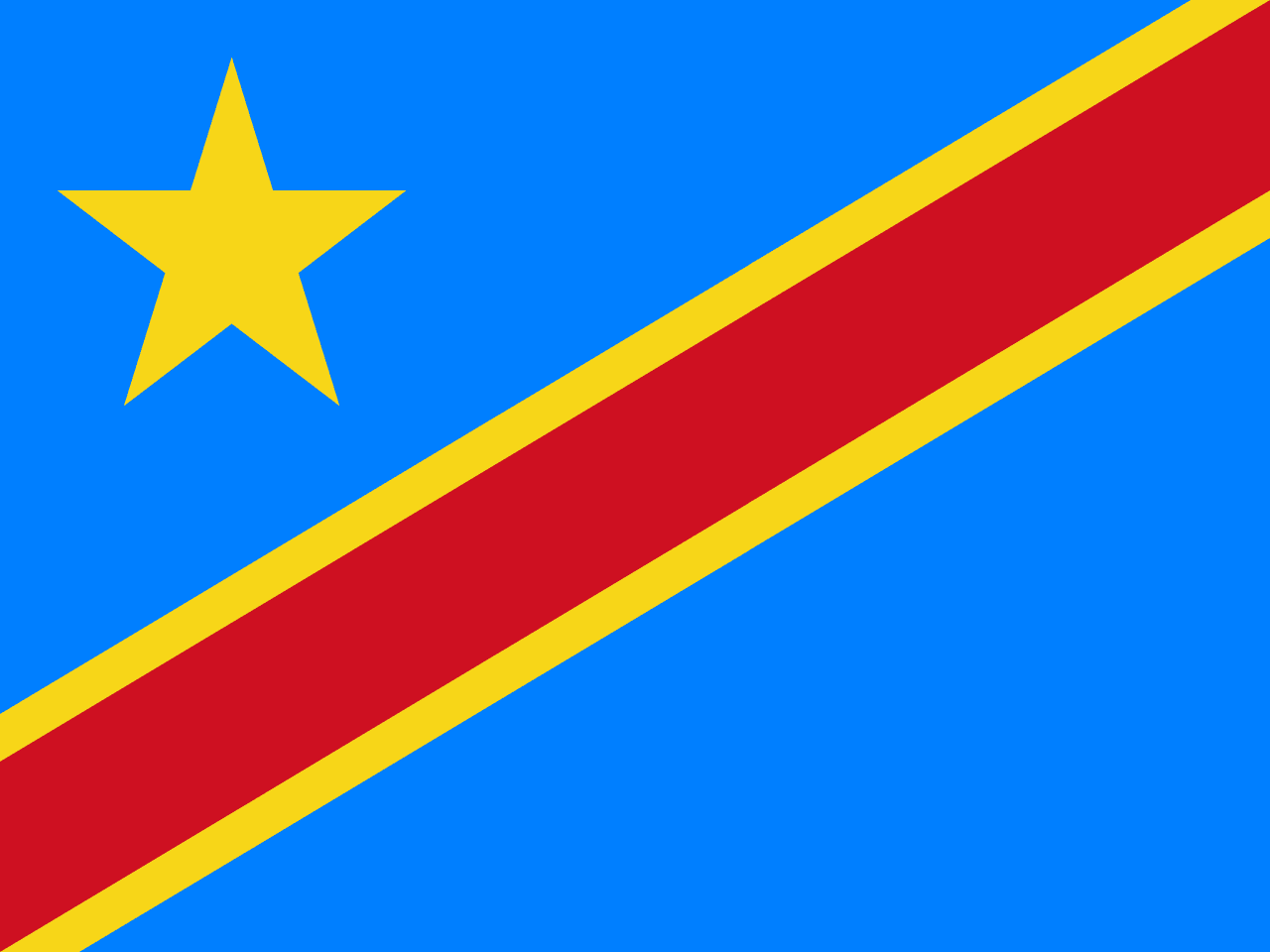
Somewhere in eastern Congo, a mother is counting her children in the dark, trying to work out which ones are still alive. She is not counting them because of a rebel army in the bush. She is counting them because a war of aggression has been run from across a border for years, and the world has agreed to call it something smaller.
We have to say it plainly. This is not a rebellion. It is an invasion.
The Rwandan Defence Force has deployed full combat units inside the Democratic Republic of Congo. The UN Group of Experts has documented this in report after report, including S/2025/446 and the reports that followed it. Independent analysts estimate between 14,000 and 18,000 Rwandan troops are operating inside Congolese territory, roughly 40 to 50 percent of Rwanda's entire army. That is not a border skirmish. That is a force large enough to take cities, hold them, and run them.
M23 is the costume. Its ranks have swelled from around 3,000 fighters to more than 30,000, and that growth did not come from willing recruits. Tens of thousands of Congolese civilians and captured soldiers have been press-ganged into uniform, marched to the front, and sent to die. Call it what it is. It is slavery wearing a military cap.
Look at how Moscow's playbook has been copied. Russia sent its own units into Ukraine and called the Donetsk and Luhansk fighters local separatists. The world rightly rejected that story. Russia's regular soldiers were the operational core, and the proxies were the alibi. Kigali runs the same operation in Congo. If the West condemns Moscow for invading Ukraine, it has no principled basis for pretending that Kigali is doing something different in Congo. The principle does not change with the flag.
And the dead are hidden. Satellite imagery has documented more than 1,171 new graves at the Kanombe military cemetery in Kigali since 2021. Rwanda does not bury its soldiers in secret because it is modest. It buries them in secret because every grave is evidence. Every headstone is a confession that Rwandan soldiers died in a country they were never supposed to be in.
Now consider the drones. Open-source investigators have traced Bayraktar TB2 drones operating from Kamembe airfield, and the UN has documented the use of FPV drones and GPS-guided mortars in eastern Congo. Weapons like these do not fall out of the sky onto Congolese villages. They are used by people who have chosen to bomb them.
Here is what the Rwandan regime wants you to see instead. It wants you to see gorilla tourism in the Virunga mountains. It wants you to see Kigali hosting international summits, conferences, and sporting events. It wants you to see a clean capital, a shiny brand, and a football shirt with "Visit Rwanda" across the chest. This is sportswashing in its purest form. A government that sends its army to occupy and loot a neighbour buys the front of European football shirts to tell the world it is a model of progress. Ask the families in Masisi and Rutshuru whether they feel like they are living in a model of progress. Ask the women who fled gunfire and lost their homes whether the gorillas made up for it.
The stakes reach far beyond Congo's borders. Eastern Congo holds some of the most valuable mineral deposits on earth, including coltan, tin, tantalum, tungsten, and gold. The UN experts have traced minerals from the region moving through Rwandan channels and into global supply chains. Congolese miners dig in unsafe conditions for a few dollars a day while the profits are taken out through a neighbouring country. This is the old colonial logic in a new suit. Africa's wealth is extracted, its people are displaced, and the powerful outside the continent look away because the cobalt and tantalum keep their phones and cars running.
And the Congolese state itself is not blameless. Kinshasa has failed its eastern provinces for decades. Armed groups, some of them homegrown, have been left to fight over territory, taxes, and minerals while the government in the capital shuffled its priorities. We will not pretend the Congolese government is a perfect victim. Corruption and neglect have made this crisis easier to exploit. But neglect by Kinshasa does not give Kigali the right to send an army across a border. Two wrongs do not make an invasion lawful.
Look at the health zones that the UN humanitarian office maps across this country. They are the clinics, the nurses, the vaccine cold chains, and the maternity wards that hold communities together. Every time a front line moves, those zones go dark. Every time a town changes hands, the records vanish, the drugs run out, and the people who depended on that clinic walk further and further to find care that is not there. War in Congo is not only measured in bodies on battlefields. It is measured in the children who die of malaria because there is no treatment within walking distance, and in the women who give birth alone because the midwife fled.
So here is the question that every African leader must answer. Will we accept a neighbour that sends soldiers across a border, forces civilians into uniform, buries its dead in secret, and then sells the world a tourism brochure? If the answer is yes, then our sovereignty is an empty word. If the answer is no, then we must act like it.
There is a better path, and Africa has already shown it. Botswana built one of the continent's most stable democracies by protecting property rights, managing its diamond wealth through transparent institutions, and keeping its government accountable to its people. Mauritius turned itself from a sugar island into a high-income economy by investing in rule of law, open markets, and independent courts. Senegal proved that power can change hands peacefully through the ballot box, even under pressure. These are not perfect nations, but they prove that strong institutions, transparent mineral governance, and democratic accountability produce prosperity and peace. The Congo does not need another strongman. It needs functioning courts, honest customs posts, and a mineral trade that pays taxes in Kinshasa instead of bribes in Kigali.
The African Union must stop issuing soft communiqués and start enforcing its own charter, which forbids the acquisition of territory by force. The Peace and Security Council should name Rwanda's aggression for what it is and back that with real consequences. The UN Security Council must expand sanctions to cover the Rwandan officers directing operations, the companies handling the minerals, and the financial networks that move the money. Western governments that lecture us about democracy every year should stop financing a regime that invades its neighbours. You cannot preach human rights in Geneva while your aid and your procurement contracts quietly prop up a war of aggression in Goma.
And we, the citizens, have work to do. Demand that your government raise Congo's occupation at every regional and international forum. Demand that the mineral supply chains you depend on are traced back to the mines, and that any company buying coltan or tin from the Kivus proves it did not come from stolen land. Support the Congolese civil society groups, journalists, and human rights defenders who are documenting this war at enormous personal risk. Share the satellite imagery. Share the UN reports. Refuse the propaganda that calls an invasion a misunderstanding.
The mother counting her children in the dark does not need our pity. She needs us to stop looking away. Every country on this continent is watching whether Africa's laws mean anything when a powerful neighbour breaks them. Kigali has bet that the world will get bored and move on. Prove it wrong. Call this war by its name, and make the leaders who enable it pay for it.
Based on reporting by RELIEFWEB