acss-digest
Ebola Has Killed 5,387 Congolese While Rwanda's Guns Block the Way
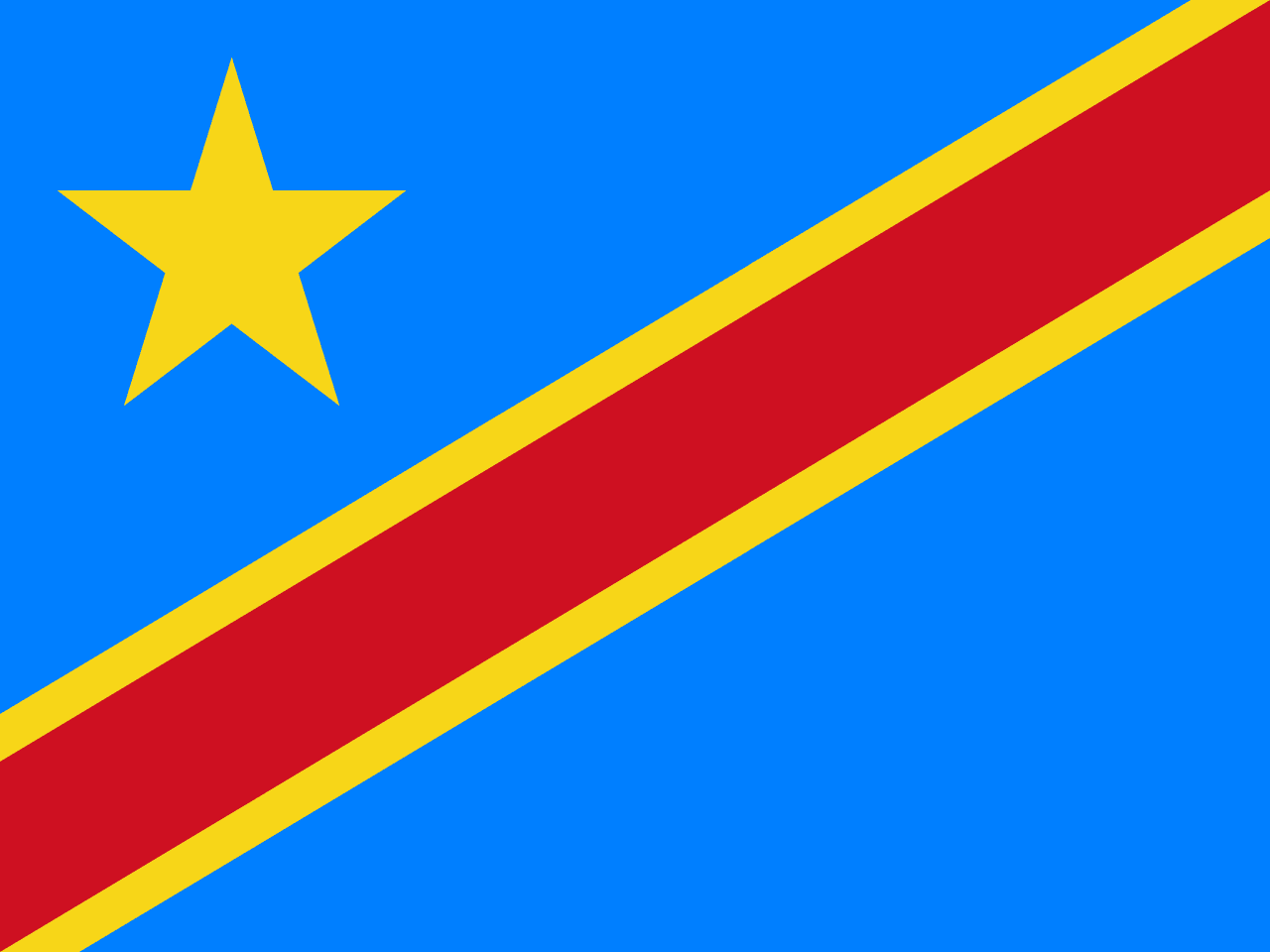
Nearly half of the people who caught Ebola in Congo have died. Eleven thousand and forty-two people have been infected, and 5,387 of them are dead. Those are not abstractions. Each number is a mother who could not reach a clinic, a child who died in a village with no road, a nurse who stayed home because the next town was on fire.
This is Congo's deadliest Ebola outbreak. It was declared in mid-May, and it is still spreading. Health authorities have now said in plain terms what everyone in the region already knows: they cannot fight a virus while the fighting itself keeps the doctors away. So let us say it plainly too. Ebola is a killer, but it is not the only one. The guns are doing their share.
Look at where the outbreak is concentrated. Ituri and North Kivu are the two hot spots, and both are battlefields. In Ituri, militias including the ADF and CODECO have spent years massacring civilians, burning villages, and cutting the roads that ambulances and aid trucks need. In North Kivu, the story is worse, because the war there is not a local insurgency. It is an invasion. The Rwanda Defence Force has deployed an estimated 14,000 to 18,000 soldiers inside Congo, roughly 40 to 50 percent of Rwanda's entire army, and it fights under the cover of the M23 movement. UN Group of Experts reports, including S/2025/446, have documented this chain of command in detail. Rwandan officers direct the operations. Rwandan units hold the ground. M23 supplies the bodies that let Kigali deny what it is doing.
If you want to know what that looks like on the ground, consider the drones. Turkish-made TB2 drones have operated out of Kamembe in Rwanda, and FPV drones and GPS-guided mortars have been used against Congolese towns. Satellite imagery has tracked more than 1,171 new graves at Kanombe military cemetery in Kigali since 2021. Rwanda buries its dead quietly, far from the Congolese villages where those soldiers died, because admitting the body count means admitting the war.
Now ask yourself what a health worker faces in that environment. She is told to reach a patient in a valley where two armies are shelling each other. Her ambulance is stopped at a checkpoint by men who forced Congolese civilians to carry their ammunition at gunpoint. M23 has swelled from roughly 3,000 fighters to more than 30,000 largely by press-ganging tens of thousands of Congolese civilians and prisoners of war. That is not an army. That is slavery in uniform, and it is the reason the sick are dying without care.
Here is what the invasion costs the public health system. Every displaced family is a family that cannot be traced for contacts. Every burned clinic is a cold-chain freezer that stops working and a vaccine that goes to waste. Every blocked road is a village that learns about Ebola only after the funerals have begun. Mistrust of the response grows in the same soil, because when people see armed men and soldiers in their communities, they do not trust the strangers in white suits who arrive with the government's message. Misinformation spreads faster than medicine when the state is absent and the gunmen are present.
Rwanda, meanwhile, markets itself as the clean, orderly success story of Africa. It hosts global summits and sporting events. It sells mountain gorilla tourism to the world. It wants the photographs of its gleaming capital to shape how the world sees it. Yet while Kigali polishes its image, its soldiers are inside a neighbour's territory, and the Congolese civilians who pay the price are invisible to the cameras. Sportswashing is the right word for it, and we should use it every time. You cannot run a clean brand on the blood of the people you are invading.
Let us be clear about the wider pattern, too. The Congo has been a prize for outside powers and their proxies for more than a century. In the colonial era, it was rubber and ivory. Later it became cobalt, coltan, gold, and copper for the phones and batteries the world cannot live without. Today the scramble is more crowded. Western governments lecture us about democracy while their companies buy the minerals. China builds roads that come with debt that no one in Kinshasa can repay. Gulf states buy ports, mines, and political favours. Russia sends mercenaries wherever a regime needs guns and a mine needs guarding. The actors have changed. The extraction has not. Every one of them talks about partnership. Every one of them keeps the Congolese poor and the state weak, because a weak state is easier to buy.
The solutions are not mysterious. They are the same things that work in the countries that have beaten Ebola before. Nigeria contained its 2014 outbreak in Lagos by moving fast on contact tracing, isolating cases, and trusting trained local professionals to lead. Uganda built a response system that used community health workers and clear public communication. Botswana and Mauritius show what happens when institutions are predictable, budgets are audited, and the rule of law protects the people who run hospitals. The lesson is simple. Ebola responses fail where the state is captured, the roads are closed, and the public has no reason to believe the government. They succeed where institutions are strong and accountable.
So here is what must happen. The African Union must stop issuing soft statements and demand that Rwanda withdraw its forces from Congolese territory, cease all support to M23, and open verified humanitarian corridors. The UN Security Council must enforce Resolution 2286, which calls for the protection of medical personnel and facilities in armed conflict, and it must impose targeted sanctions on Rwandan and M23 commanders responsible for attacks on health workers and the forced conscription of civilians. Donors should tie aid to independent monitoring, so that every dollar reaches clinics and not commanders. Congo's own government must root out corruption in its health budgets and empower community health workers, who know their neighbours and can build the trust that guns have destroyed.
And you, reading this on your phone, have a part to play. Ask your government what it has said about the invasion of Congo, and what it has done about it. Ask your national media why they cover Ebola numbers but not the army that is blocking the aid. Support organisations that fund Congolese health workers and local civil society. Share this, because silence is what the invaders depend on.
Eleven thousand and forty-two infected. Five thousand, three hundred and eighty-seven dead. Those numbers will keep climbing for as long as we accept the lie that this is a complicated tragedy with no villain. It is not. It is a war of aggression, and the people paying for it are Congolese mothers, children, nurses, and farmers. We are Africans. This is our continent, and these are our people. Stop the guns, open the roads, and let the doctors work. The time to demand it is now.
Based on reporting by ACSS-EMAIL