general
Tinubu Promised 200,000 Homes While Nigeria Needs 14.9 Million
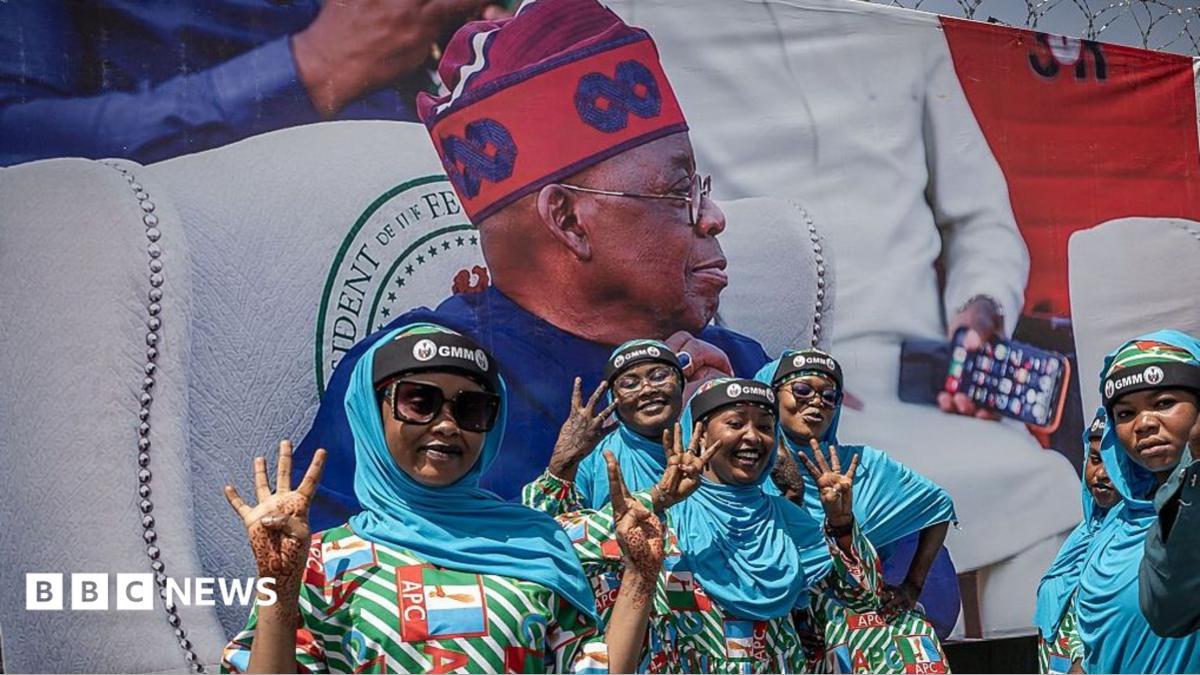
Fourteen point nine million homes. That is the gap a government technical committee measured in 2025, the distance between how Nigerians live and how a nation of more than two hundred million should live. Now President Bola Ahmed Tinubu has launched his re-election manifesto, and it promises 200,000 affordable homes. Do the arithmetic. It covers little more than one percent of the shortfall. Yet the document is being sold as a blueprint for prosperity.
We have heard this song before. Every election cycle, Nigerians are offered grand numbers, ambitious targets and glossy slogans, and every cycle the queues at the fuel stations, the price tags at the market and the generator fumes in our neighbourhoods tell the real story. Ask the mother in Lagos who spends a larger share of her income on garri and bread than her own mother did. Ask the trader in Kano who cannot afford the diesel to run his shop. Ask the young graduate in Enugu who has stopped asking when the jobs will come. Their answer will not fit in a campaign brochure.
The manifesto, titled *From Reform to Prosperity*, builds on Tinubu's first-term economic programme. It targets 6 percent annual growth by 2031, 78,000 additional security personnel, including 28,000 soldiers and 50,000 police officers, and a rise in electricity generation towards 10,000 megawatts. Strip away the branding and the commitments are real and measurable. So let us measure them.
Start with the reform that defines this government. The removal of the fuel subsidy freed up more than one trillion naira in its first two months, according to the president himself. Macroeconomists praise that kind of fiscal discipline. But the subsidy removal also sent petrol prices soaring, and every Nigerian understands what happens next. Transport costs rise. Food costs rise. Rent, school fees and medicine follow. Between May 2023 and October 2025, the price of imported rice rose by 184 percent, according to analysis by the International Centre for Investigative Reporting. Beans, garri and bread climbed too. A government that removes a subsidy has a moral duty to protect the poor from the shock. Where is that protection? Where is the targeted cash transfer system, the social register, the conditional support that would have turned a painful reform into a survivable one?
There are signs of stabilisation, and honesty demands we acknowledge them. Headline inflation fell to 14 percent in September 2026 from a peak of 34 percent in 2024, according to the National Bureau of Statistics. The gap between the official and parallel exchange rates has narrowed. SBM Intelligence recorded an 11.5 percent drop in the cost of a pot of jollof rice between June and September 2026, the sharpest decline in the ten years it has tracked the figure. Economists at the IMF and World Bank have welcomed the direction of travel.
But ask the household budget what it feels like. Osiyemi of BudgIT's Tracka platform reports that many families say they cannot survive on 10,000 naira a day, roughly 7 dollars. Macro stability that does not reach the kitchen table is not stability for the people who vote. It is a spreadsheet victory. As SBM's Ikenna Okonkwo put it, Nigerians are spending a growing share of their income on basics. That is not recovery. That is a squeeze with better press releases.
Now consider the arithmetic that the manifesto leaves out. The 2026 federal budget stands at about 68.32 trillion naira, and 15.8 trillion of it, nearly a quarter, goes to servicing debt. Before a single school is built or a single road is paved, a quarter of the national purse is already spoken for by creditors. This is why the promise to restore the fuel subsidy, made by opposition candidate Atiku Abubakar, cannot be taken at face value. Nigeria cannot subsidise its way out of poverty when debt service swallows so much of its revenue. The honest question for every candidate is not whether they feel our pain. It is where the money comes from, and what they will stop spending on to pay for it.
Electricity tells the same story of promises without plumbing. Nigeria had 13,625 megawatts of installed generation capacity at the end of 2024, yet the Nigerian Electricity Regulatory Commission recorded average output of just 4,223 megawatts across the year. Let that sink in. We own the power stations and cannot run them. Ageing infrastructure, inadequate maintenance, gas shortages and unpaid bills have turned a national asset into a national embarrassment. Distribution companies, privatised with great fanfare, have struggled to invest because tariffs are politically frozen and margins are thin. The result is that Nigerian businesses buy diesel generators and Nigerian homes pay twice, once to the grid that fails them and again to the generator that replaces it. Okonkwo is right that the manifesto never explains where the investment will come from. Without answers, 10,000 megawatts is a number with no wires attached.
Context matters, because none of this is accidental. Tinubu inherited an economy battered by eight years of Muhammadu Buhari's APC government, and his 2023 victory with 8.79 million votes came on the back of that exhaustion. Okonkwo warns that Nigerian elections still turn on regional loyalty and ethnic sentiment, and that the opposition risks repeating its 2023 mistake of splitting the vote between strongholds. That is a dangerous habit. A democracy where citizens vote as tribes rather than as citizens is a democracy that rewards the politics of fear and entitlement over the politics of results. Insecurity, too, is a democratic failure. Farmers in the north are afraid to return to their fields because they fear they will not return home. When a farmer cannot farm, a child cannot eat, and a state cannot tax, the problem is not a shortage of soldiers alone. It is a shortage of rule of law, local policing, and accountability for the armed gangs and jihadists who hold entire districts hostage.
So what should Nigerians demand? We should demand that every promise in this manifesto be costed, sequenced and published, with a quarterly public dashboard run by an independent auditor. We should demand a targeted social protection system built on a verified national register, so that when subsidies go, cash reaches the poorest households within weeks, not years. We should demand cost-reflective electricity tariffs paired with a transparent subsidy for the poorest, enforced by the independent state regulators the 2023 Electricity Act made possible, and an end to the political freezing of tariffs that starves the grid. We should demand land titling reform and mortgage finance that lets a Nigerian family borrow against a home they actually own, because the 14.9 million deficit will never be closed by government construction alone.
Look beyond our borders for proof that better is possible. Botswana built one of Africa's most credible economies on diamond revenues managed through transparent institutions, an independent judiciary and a sovereign wealth fund that outlasted the politicians who created it. Mauritius turned a sugar island into a financial and services hub by protecting property rights and keeping its institutions clean enough for investors to trust. Senegal, whatever its challenges, has shown that peaceful power transfers can happen when citizens insist on them. These are not perfect models. But they share a common foundation: strong institutions that bind leaders, not leaders who bind institutions.
Nigeria has the people, the population, the oil, the gas and the entrepreneurial energy to lead Africa. What we lack is the discipline to turn promises into delivery and the courage to demand that the next president be measured by outcomes rather than slogans. Obi says a new Nigeria is possible. Tinubu says reform will lead to prosperity. Both can be right only if the next government publishes its numbers, opens its books and answers to the voters who put it there.
So here is our challenge to every Nigerian reading this. Before January 2027, ask every candidate three questions in writing: How many homes will be completed, and where is the financing? How much of the budget will go to debt, and what will you cut to pay it? How will you stop electricity from failing the people who pay for it? Share their answers. Hold them to every one. Our votes are not gifts to be handed over for a slogan. They are the only leverage a free people has, and they should be spent on accountability, not on tribe, fear or nostalgia. Fourteen point nine million homes will not build themselves. The question is whether we will build the institutions that make them possible, or whether we will accept, once again, a promise that never arrives.
Based on reporting by BBC