sudan-conflict
Sudan's Warlords Are Turning Entire Provinces Into Refugee Camps
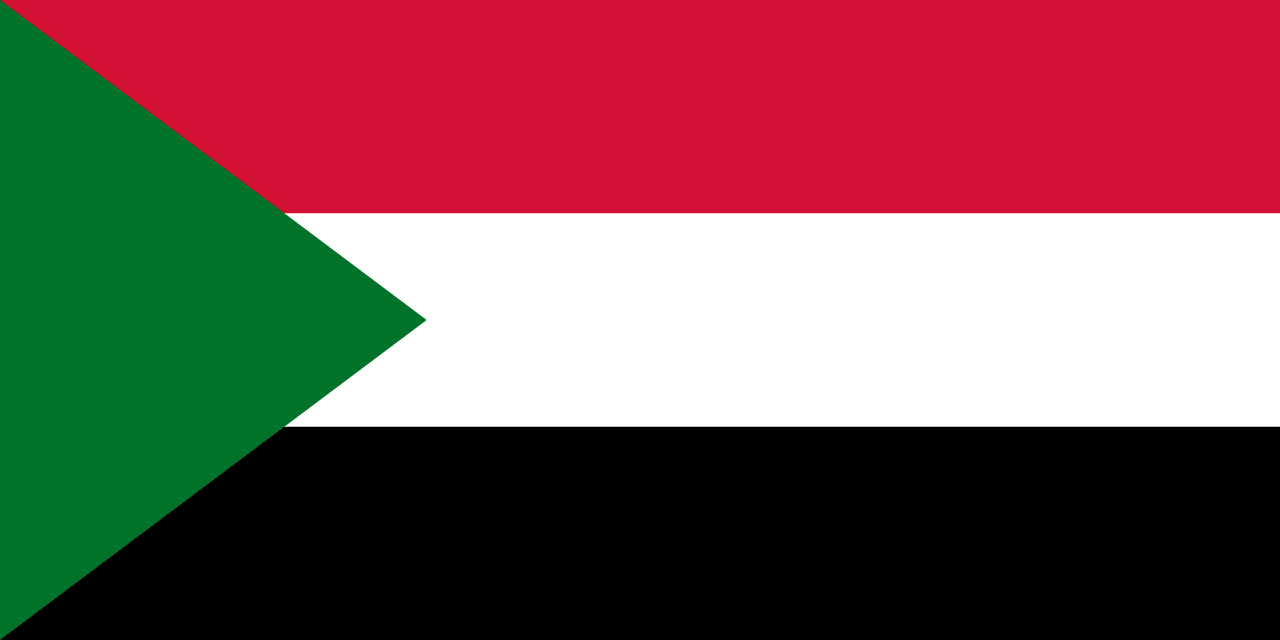
Nearly 10,000 people fled Kazgeil in North Kordofan. Another 12,000 ran from Geisan and Al Kurmuk in Blue Nile. Think about that for a moment. Ten thousand people is a town. Twelve thousand is a small city. In one reporting cycle, entire communities were picked up, carried off in their own panic, and dropped on roads with nothing but what they could hold in their arms.
These are not statistics. They are mothers carrying toddlers through dust. They are farmers who planted in June and will never harvest in September. They are children who were enrolled in school in March and will not return to it this year, or the next. And they are the fortunate ones, the ones who escaped.
The Evidence
The latest monthly update from the UN refugee agency, covering August 2026, describes a country where fighting, airstrikes, and drone attacks now stretch across Blue Nile, Kordofan, and Darfur at once. The displacement is not confined to the battlefield. It follows the war's logic outward: into markets, clinics, and water points, until there is nowhere left to stand.
Darfur, the region that already suffered genocide-scale atrocities in the early 2000s, is sliding back into the same cycle. The update documents intercommunal tensions, criminality, and arbitrary arrests and detention, all of which further erode protection and make aid delivery a gamble. When a humanitarian worker cannot safely reach a displaced family, the family does not receive medicine, and the war has achieved its aim without firing a single shot at them.
Consider what the agency is now forced to warn about. Sudan's displacement sits at the centre of a regional crisis that spills into Chad, where insecurity and criminal incidents inside refugee sites are compounded by heavy rains that have damaged shelters and roads across the east. Ethiopia's Benishangul-Gumuz region remains calm in its refugee sites, but the transit centre at Kurmuk has suspended registration of new arrivals because of fighting just across the border in Blue Nile. A border crossing that should be a lifeline has become a locked gate.
And then there is South Sudan, where the World Food Programme is expected to end food assistance to refugees from 1 October 2026 because of severe funding shortfalls. Read that again. Families who fled one war are now being told that the food pipeline is closing because the donor money has dried up. Refugees will be forced to choose between hunger and the gamble of returning to a country they fled.
The Context
Let us be clear about who is bleeding in this story. It is not the men who sit in air-conditioned offices in Port Sudan, Khartoum, or Abu Dhabi, negotiating over which general controls which city. It is the ordinary Sudanese who was never asked to fight this war and is now paying for it with everything. Every faction claims to fight for the nation while the nation is being dismantled around them.
The external dimension demands honest scrutiny. Sudan's war is not fought in isolation. UN investigators have repeatedly documented foreign weapons, fuel, and financing flowing to the warring parties, and the reported involvement of Gulf states, Russian-linked mercenary networks, and gold extraction in conflict zones should trouble anyone who believes African resources should build African futures. When a foreign capital profits from the mines while the miners' children die of preventable disease, we are not looking at investment. We are looking at the New Scramble for Africa, with new flags and the same appetite.
Sovereignty is not a slogan for military juntas to hide behind. Real sovereignty means a state that protects its citizens, not one that bombs them. It means a government that answers to its people, not to whichever foreign backer writes the cheque.
Meanwhile, the asylum landscape is shifting under our feet. Egypt's asylum law regulations took effect on 21 August, moving the registration and refugee status determination process from UNHCR to a government committee. Some of that may be a legitimate step toward national ownership of the system, and African states should be allowed to build their own capacity. But any transfer of protection functions must come with clear standards, transparency, and due process. A refugee's status cannot become a bureaucratic negotiation with no appeal.
The Solutions
Here is the uncomfortable truth that our leaders keep avoiding: the countries that have done this well did it through institutions, not rhetoric. Botswana built a stable democracy on the back of disciplined public finance and an independent judiciary. Mauritius turned a sugar island into a diversified economy by protecting property rights and opening its markets. Senegal showed the continent that a peaceful transfer of power is possible when citizens refuse to accept a stolen election. These are not foreign models. They are African proof that strong institutions and accountable governments produce prosperity and peace.
On refugees, Uganda offers a template worth copying. On 19 August, its Office of the Prime Minister reinstated prima facie refugee status for asylum-seekers from the Democratic Republic of Congo, South Sudan, and Sudan, based on a policy review that confirmed continued instability. That is what a serious government does: it looks at the evidence, acknowledges reality, and protects people accordingly. Uganda has also long allocated land and allowed refugees to work and farm, which gives displaced families dignity instead of dependency. Yet even Uganda's protection is being tested by Ebola-related border restrictions. Public health is a legitimate concern, but it cannot become a permanent excuse to turn people away at the border without a fair screening process.
Donors must stop treating food for refugees as optional. If the international community can mobilise billions for other crises, it can keep the WFP pipeline open in South Sudan. Regional bodies, particularly the African Union and the regional economic communities, must press for a monitored ceasefire, humanitarian corridors, and an end to the external supply lines feeding the war. Civil society groups in Khartoum, Port Sudan, Kampala, and Addis Ababa must be protected and funded to document abuses, because accountability begins with a record that no general can burn.
The Call to Action
Hear this plainly. Every day the guns continue in Kordofan and Blue Nile, another village becomes a grave or a camp. Every day the food pipeline stays uncertain, another child goes to bed hungry in a country that was supposed to be safe. This is not a crisis we can file under "complicated." It is a choice that men with guns and foreign patrons are making with our people's lives.
So we demand. We demand that the African Union name the warring commanders and their foreign enablers and impose consequences that carry real cost. We demand that the UN Security Council enforce existing arms embargoes rather than issuing statements that vanish by morning. We demand that donor governments fund the food, shelter, and protection that refugees in South Sudan, Chad, Ethiopia, and Uganda need to survive this year, not next year after the cameras leave. And we demand that every African government protect the right to asylum as a matter of law, not charity.
You, reading this, have a role too. Ask your MP, your journalist, and your country's foreign ministry where their position stands on Sudan's war and on the aid cuts. Support the organisations on the ground that are still delivering. Refuse to accept the lie that this suffering is somehow inevitable. Sudan's people have shown extraordinary courage for three years. They deserve a continent that matches it.
Based on reporting by RELIEFWEB