think-tank
South Africa's Mobs Hunt Foreigners While the State Looks Away
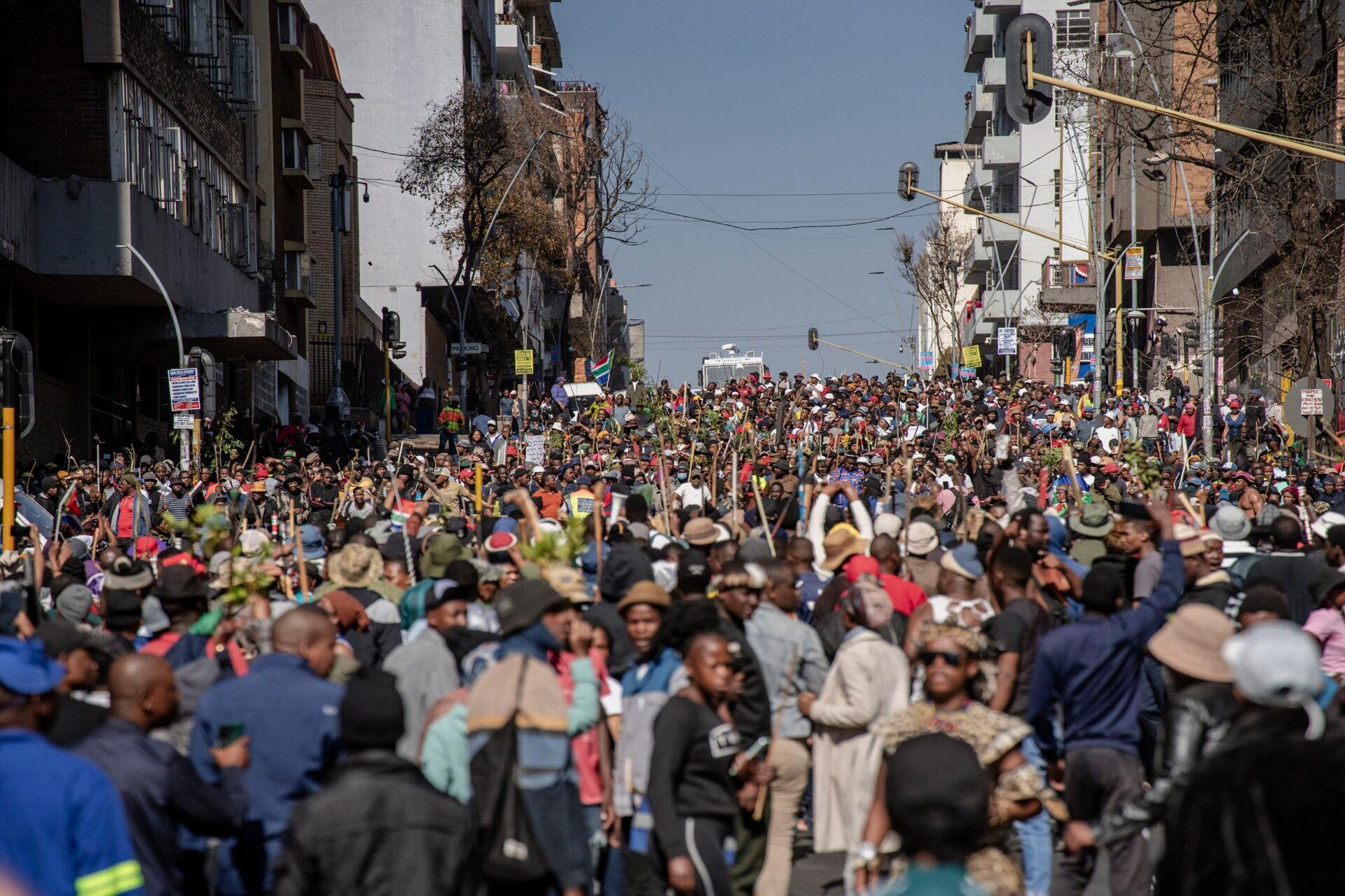
Ask a Zimbabwean nurse in Johannesburg what she fears most, and she will not say the immigration officer. She will say the crowd. She will say the man with a stick who decides she does not belong, and the police who arrive late or not at all.
This is South Africa in 2026. A country that was built on the courage of people who refused to accept that some humans could be treated as disposable has become a place where foreigners are told to go home by men with no legal authority. We fought apartheid so that no African would be hunted for the crime of being born across a border. Yet every few years the hunting season returns, and every few years our leaders reach for the same empty phrases.
Let us be precise about the record, because the record is damning.
In May 2008, xenophobic mobs swept through Gauteng and other provinces. Around 62 people were killed, and more than 100,000 were displaced from their homes, according to figures widely cited by human rights monitors at the time. Many of the dead were Mozambicans, Zimbabweans, Malawians, and Somalis. Some were burned alive. Families sheltered in police stations and church halls because their own neighbours had turned on them. In 2015, attacks in Durban and surrounding areas left more deaths and forced more shops owned by foreigners to shut. In September 2019, looting and violence in Johannesburg and Pretoria targeted foreign-owned businesses, and Nigerians were among those attacked and their property destroyed.
Then came the pattern we should have recognised sooner. From 2021, a movement calling itself Operation Dudula began blockading clinics and public health facilities in Soweto and other townships, demanding that foreigners be turned away. Ask yourself what that means. A mother carrying a feverish child is stopped at a gate by men who have decided her passport is the wrong colour. A pregnant woman is sent away from a clinic. That is not "community action." That is a mob deciding who deserves medicine.
Operation Dudula and its copycats have explicitly blamed migrants for unemployment, crime, and pressure on public services. These are real problems. South Africa's unemployment rate sits near 32 percent by the official measure, and that number is a national shame. But the poor who are being turned away from clinics are not the men who designed our broken labour market, our corrupt procurement contracts, or our failing municipalities. They are the easiest targets, and the easiest targets are always chosen by those who want to avoid being held to account.
This is the part that should make every South African angry. The violence is not random. It is organised, it is repeated, and it is tolerated. When Operation Dudula blocks a clinic gate, the response from too many politicians is a shrug, a carefully worded statement, or a call for "dialogue." Dialogue with whom, exactly? With the people demanding that a child be denied treatment because of where her mother was born?
We have to say what this is. It is the failure of the rule of law. A functioning state does not negotiate with vigilantes. It arrests them. It prosecutes the organisers who incite violence and the officers who stand by while migrants are beaten. It does not allow a private group to set up checkpoints at public hospitals. When the state surrenders its monopoly on force to a crowd, the first people who die are the ones with the least protection, and the last people to be safe are the citizens who think they are on the right side of the mob.
South Africa's constitution guarantees dignity and equality to everyone within its borders, not only to citizens. Section 9 protects against discrimination. Section 12 protects the right to freedom and security of the person. Those are not decorative words. They are binding commitments, and the Constitutional Court has repeatedly affirmed that they apply to non-citizens. If the Constitution means anything, it means that the nurse from Harare and the teacher from Lilongwe are owed the same protection as the family from Soweto.
Context matters, and it should make us even more uncomfortable. Migration within Southern Africa is not a new phenomenon. Mozambican miners built the wealth of the Witwatersrand for generations. Zimbabweans fled economic collapse and political violence under Robert Mugabe's rule, and many of them stayed. Lesotho and Eswatini depend heavily on South African employment and trade. The region is bound together by history, geography, and the labour that has moved across its borders for a century. Those who profit from cheap, informal labour, from landlords who charge migrants double rent, and from employers who refuse to register workers, are often the same powerful interests who stay silent when the mobs come. They do not bleed. They benefit. And the migrants bleed for them.
Who else benefits from anti-foreigner violence? Politicians who need a scapegoat before an election. Local strongmen who control the township economy and do not want competition. And, if we are honest, foreign actors who are happy to see Africa divided against itself. A continent that spends its energy hunting its own people is a continent that cannot unite its markets, pool its power, or negotiate as one. Every mob that burns a Malawian's stall is a gift to those who prefer a fragmented Africa.
So what must change? The answer is not complicated, but it requires courage.
First, the South African Police Service must enforce the law without fear or favour. Anyone who blocks a public clinic, incites violence, or attacks a foreign national must be arrested and prosecuted. The Independent Police Investigative Directorate must be adequately funded and empowered to investigate officers who fail to act. Impunity is the fuel of every pogrom.
Second, the government must register migrant workers and issue documents that allow them to work legally and access services. Botswana and Mauritius have shown that open, orderly economies with transparent immigration rules attract investment and reduce the informal exploitation that breeds resentment. A system that makes people illegal makes them vulnerable. A system that documents them makes them accountable and protected.
Third, the Southern African Development Community must put free movement and migrant protection at the top of its agenda, not in a footnote of communiqués. SADC member states should jointly condemn xenophobic violence, share intelligence on organised incitement, and commit to protecting each other's citizens abroad. Regional integration cannot survive if our people are hunted at each other's borders.
Fourth, civil society, churches, business associations, and trade unions must stand publicly with migrants, not just when the cameras are on. Businesses that exploit undocumented labour must face consequences, and businesses that hire fairly must be rewarded.
To the South Africans reading this: you are not powerless. Demand that your MP explain in writing what they have done to stop clinic blockades. Demand that your provincial police commissioner account for every incident in which officers stood by. Demand that your municipality publish the list of groups operating at public facilities and who authorised them. Refuse to share the videos of migrants being chased. Report the hate speech. Vote for leaders who can say, without flinching, that a Zimbabwean child deserves the same clinic as your own.
To our continent's leaders: stop treating xenophobia as a political inconvenience. It is a test of whether the Africa we promised ourselves in 1994 still exists. The people being hunted today are the children of the same liberation movements that once sheltered South Africa's exiles in Lusaka, Dar es Salaam, and Maputo. Remember who opened their doors when we had nowhere to go.
We are asking one simple question, and every South African should be forced to answer it. When a mob comes for the foreigner today, who will come for you tomorrow?
Based on reporting by SAIIA