general
Madagascar's Generals Are Selling Their Future to Moscow for Guns
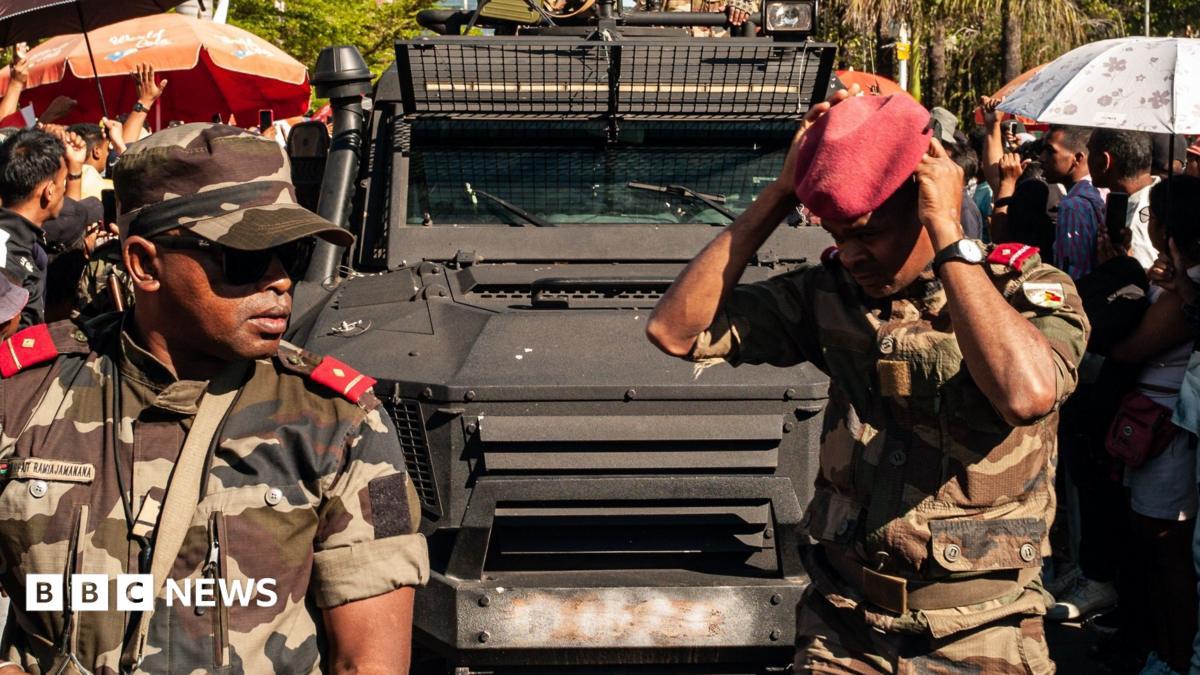
Ask the young people who filled the streets of Antananarivo in 2025 what they wanted. They wanted water that ran. They wanted electricity that stayed on. They wanted a government that did not treat the nation's wealth as a family inheritance. They did not ask for a general with a Russian handshake and a fleet of foreign instructors.
Yet that is what Madagascar has now. Colonel Michaël Randrianirina seized power in 2025 after the protests forced out Andry Rajoelina, and within months he was in Moscow. In February he became the first Malagasy leader to make an official visit to Russia in nearly fifty years. Since then, Moscow has supplied weapons and military instructors to a country whose people have never been asked to approve any of it. Last month, at the Russia-Africa summit, Madagascar signed agreements covering defence, tourism and trade with the same government that has spent three years bombing and occupying the Ukrainian territory it claims to protect.
The United States has now said what Malagasy leaders should have said themselves: this is a dangerous path. Lieutenant General John Brennan, deputy commander of US Africa Command, warned that Madagascar should not adopt what he called the "Sahel model." We will say the rest plainly, because someone in Antananarivo has to.
Consider what the Sahel model has delivered. Mali, Burkina Faso and Niger are all ruled by men who came to power through coups. Each one blamed Western partners for failing to stop jihadist violence. Each one expelled French forces, invited Russia in, and promised that Moscow would restore order. Jihadist attacks have continued regardless. Civilians still die in their hundreds in villages that no government has the will or capacity to protect. Mothers in the Sahel are still burying children. The only thing that has grown faster than the violence is the power of the men in uniform, who now rule without elections and without accountability to anyone.
This is the bargain Madagascar is being offered. Hand over your sovereignty and your resource decisions to a foreign security partner, and in return you get weapons, instructors and a regime that no longer has to answer to voters. A junta that cannot win an election does not need one. A junta that depends on a foreign patron does not need to explain itself to its own people. Russia does not export stability. It exports dependency, and dependency is the most expensive thing a poor nation can buy.
Brennan's concern about the Mozambique Channel is real and deserves serious attention. That waterway carries a huge share of the shipping that moves through the western Indian Ocean. Militants linked to the Islamic State in northern Mozambique have terrorised Cabo Delgado for years, and piracy incidents along the coast have been rising. Madagascar cannot defend a maritime corridor with an army that answers to a coup leader and not to its citizens. Real maritime security comes from professional forces under civilian control, transparent procurement, regional coordination with the Southern African Development Community and the Indian Ocean Commission, and a navy that protects fishermen and traders rather than a regime.
But we must also be honest about the hypocrisy in Washington's warning. The United States is right to worry about Russian influence. It is wrong to pretend that Madagascar's problem began in Moscow. Madagascar's crisis began with a government that could not keep the lights on, that ignored a generation of unemployed graduates, and that answered peaceful protest with live ammunition and mass arrests. Washington has rightly criticised such abuses elsewhere. It should now demand the same standard here, loudly and consistently, not only when a Chinese or Russian contract is on the table. Strategic warnings alone will not keep Madagascar out of Moscow's orbit. Only a credible democratic path will.
And the crackdown deserves its own reckoning. A former Senate chief has been sentenced to hard labour over the deadly suppression of Gen Z protesters. That sentence is a rare moment of accountability, and it should not be read as proof that the system is healing. A junta that prosecutes a few officials while keeping the security apparatus intact is performing justice, not delivering it. Real accountability means independent investigations into every death, an end to impunity for the security forces, and a judiciary that answers to the constitution rather than to whoever holds the presidential palace this month.
Africa is not short of examples of what works. Mauritius, also an island nation in the Indian Ocean, has built one of the continent's most prosperous economies on the foundations of competitive elections, an independent judiciary, strong property rights and a free press. Botswana turned diamonds into schools and clinics because it insisted on institutions that outlasted any single leader. Senegal proved in 2024 that an electorate can throw out a ruling party at the ballot box, and that a peaceful transfer of power is not a Western fantasy but an African achievement. Madagascar has its own history of transitions and its own democratic traditions. Those are the models it should be studying, not the barracks of Bamako and Ouagadougou.
So here is what must happen. Randrianirina should publish a binding timeline for a return to civilian rule, with a date, an independent electoral commission and guarantees that he and his officers will not stand. The Southern African Development Community and the African Union must refuse to recognise any transition that drags on without a vote, and must say so in public, not in closed-door communiqués. Donors and partners, including the United States, should tie security cooperation to verifiable progress on elections and accountability for the crackdown. Malagasy civil society, from the lawyers and journalists to the students who started this movement, must keep the pressure on, document every abuse and refuse to let the country be sold in the dark. And ordinary Malagasy citizens should demand one thing above all: a ballot in their hands, and a government that answers to them.
The young people who took to the streets did not risk their lives so that a colonel could trade their country's future for Russian rifles. They marched because they believed their nation could be better. They were right. The question now is whether Madagascar's leaders will prove them right, or whether the rest of us will watch another African country slide into a junta's embrace while we talk about it in the group chat. Which will it be?
Based on reporting by BBC