general
65 Dead on Ethiopia's Sudan Border and Nobody Is Accountable
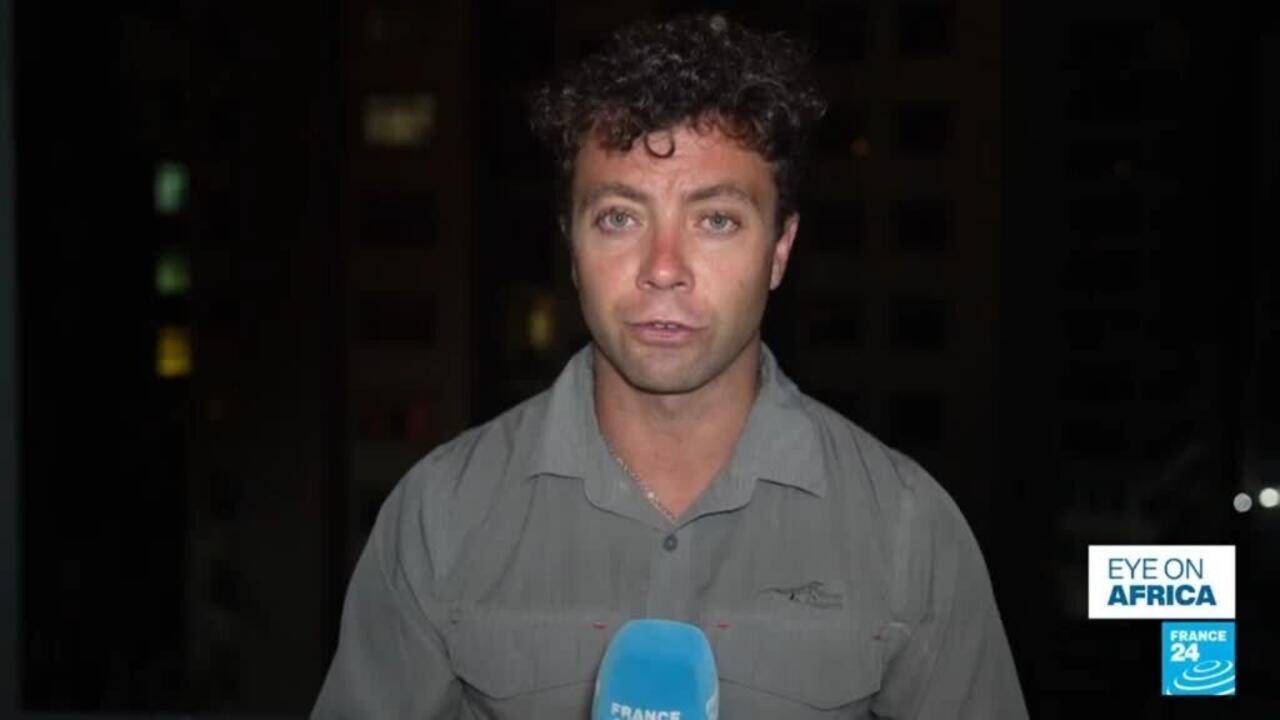
Sixty-five people. That is the minimum count, and it is already a funeral for an entire village or several. Sixty-five mothers, fathers, farmers, and children who went to sleep in western Ethiopia and never woke up. Somewhere a family is still waiting for a body to be returned, and somewhere a government is still deciding how to describe what happened.
We have seen this script before. Violence erupts in a border region that Addis Ababa has long treated as a distant periphery. Local grievances, armed groups, and weapons from across the frontier collide. The death toll rises. The statements come out vague and bloodless. Then the story disappears from the headlines, and the dead are filed away as another regrettable incident. Who is really answering for this? Who will be charged? If the answer is no one, then 65 deaths become 65 more reasons for the next massacre.
The geography tells part of the story. The western lowlands of Ethiopia, including the Benishangul-Gumuz and Gambella regions, sit along a porous frontier with Sudan. For years these areas have been plagued by intercommunal violence, cattle raids, land disputes, and armed groups that operate with little fear of consequence. Since April 2023, when the war between Sudan's Armed Forces and the paramilitary Rapid Support Forces turned Khartoum and Darfur into killing fields, the border has become a corridor for displaced people, smuggled weapons, and militias looking for leverage. Hundreds of thousands of Sudanese have crossed into Ethiopia in search of safety, and the communities hosting them have been stretched to breaking point.
When a state cannot secure its own frontier, the costs fall on the poorest citizens first. The farmer who cannot plant because the road to market is controlled by gunmen. The refugee family living in a camp with no protection. The young man who is handed a rifle because the alternative is starvation. Every armed actor along that border claims to defend someone, and every one of them leaves ordinary people buried in the mud. We should be clear about what that means. An unpoliced border is not a neutral zone. It is a marketplace for violence, and the people who pay the price are never the ones who sell the guns.
Those who profit from instability are never far away. Sudan's war has been fuelled by foreign weapons and foreign money, a reality that UN experts and multiple independent investigations have documented repeatedly. Regional powers from the Gulf, along with Russia and others, have been competing for gold, ports, and influence in Sudan while the country's civilians queue for bread. The new scramble for Africa does not wear colonial uniforms anymore. It wears business suits, signs deals in air-conditioned rooms, and leaves our people to bury the consequences. When arms flow across a border, somebody profits from every bullet, and it is never the mother burying her child.
Ethiopia has its own record to answer for. This is a country that fought a brutal war in Tigray between 2020 and 2022, that has battled insurgencies in Amhara and Oromia, and that has repeatedly promised accountability and then delivered silence. The Pretoria Agreement that ended the Tigray war was meant to be the start of a serious peace process, yet too many of the underlying grievances have been left to fester. A government that cannot protect its citizens from massacre, or that refuses to publish the facts when they do occur, is not governing. It is merely surviving.
So here is what must happen, and it is not complicated. First, the federal government must launch an independent, transparent investigation into the clashes that killed at least 65 people. The names of the dead should be published. The names of those responsible should be identified and prosecuted, whatever uniform or militia they wear. Ethiopia's own Constitution guarantees the right to life and to a fair hearing. Those are not decorations for the parliament building. They are binding obligations, and citizens should hold their leaders to them.
Second, the African Union and IGAD must stop issuing communiqués and start doing the work. The AU Peace and Security Council should place this border belt on its agenda with concrete benchmarks: monitored border crossings, verified disarmament of non-state armed groups, and protected humanitarian corridors for refugees and displaced families. Regional bodies must also demand that outside powers stop supplying weapons into the Sudan crisis, and that any state caught doing so faces real sanctions rather than polite concern.
Third, we must look at the success stories that prove this can be done. Botswana has built one of Africa's most stable democracies on the back of strong institutions, a professional civil service, and an independent judiciary that rules even against the powerful. Mauritius has shown that rule of law and open markets can turn a small island into an economy the world takes seriously. Senegal, after years of tension, completed peaceful transfers of power that prove citizens can demand accountability at the ballot box rather than with rifles. None of these models is perfect, but each shows that governance is a choice. Ethiopia has the population, the history, and the talent to make the same choice. It needs leaders willing to make it.
Finally, citizens must demand more than sympathy. Ethiopians should press their parliamentarians for a public account of every death in the border regions. Civil society groups, journalists, and human rights defenders must be given the space to document what happened without intimidation. The private sector should insist on transparency and security as conditions for investment, because no factory, farm, or mine can function in a valley where the rules are written by gunmen. And Africans across the continent should refuse to accept the lie that our suffering is normal, or that it is someone else's problem.
Sixty-five people are dead. Their names deserve to be spoken aloud, their killers deserve to be named, and the leaders who failed to protect them deserve to be asked, loudly and repeatedly, why it happened. We are done being told that border violence is too complicated to confront. It is not complicated to bury a child. It is only complicated to hold the powerful responsible. That is the work ahead of us, and it begins the moment we refuse to look away.
Based on reporting by FRANCE24