sudan-conflict
Juba's Leaders Are Letting Nearly 300,000 Children Waste Away
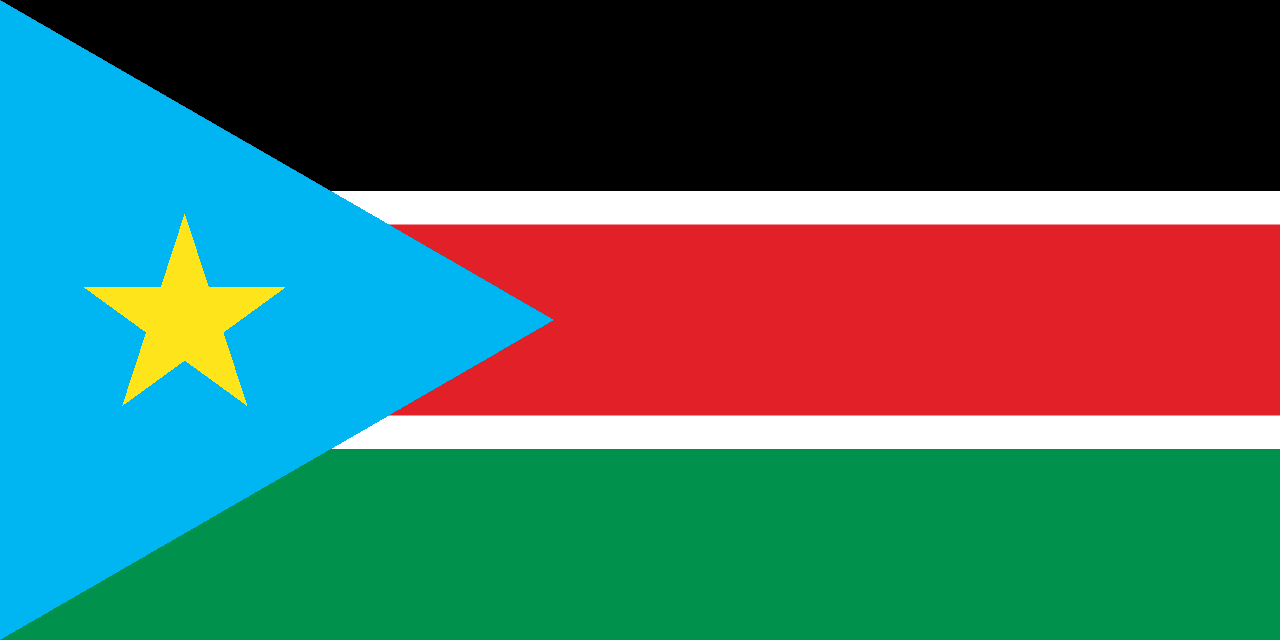
Nearly 300,000 South Sudanese children were admitted for severe acute malnutrition this year. That is not a statistic. It is a count of children whose bodies are consuming themselves, whose ribs show through their skin, whose mothers are watching them grow weaker by the week. And the number is still climbing.
Ask yourself what kind of state allows this. South Sudan has earned more than a decade of oil revenue, has been wrecked by a civil war that killed hundreds of thousands, and still cannot keep the ready-to-use therapeutic food on the shelves that stands between a starving toddler and death. We are not talking about a country too poor to feed its children. We are talking about a country whose governing class has decided, again and again, that other priorities come first.
Here is what the latest Nutrition Cluster figures show. By the end of September 2026, partners had admitted 1,314,866 people into community-based treatment for acute malnutrition. Of those, 299,408 were children with severe acute malnutrition in outpatient therapeutic programmes, 592,103 were children with moderate malnutrition receiving supplementary feeding, 11,426 were admitted to stabilisation centres, and 411,929 were pregnant or breastfeeding women. Those are the people the system reached. Think about the ones it did not.
The overall response is moving, and we should say so. Between July and September, admissions reached 552,847, a 39 percent jump over the 398,073 recorded in the second quarter. Admissions for moderate malnutrition rose 47 percent, and those for pregnant and breastfeeding women rose 73 percent. Against the 2026 Humanitarian Needs and Response Plan, coverage for moderate malnutrition stood at 89 percent by September, up from 51 percent in June. Women reached 76 percent of their target, up from 41 percent.
Now look at the child who is dying. Coverage for severe acute malnutrition, the most lethal form, reached only 57 percent of its annual target by September, up from 36 percent in June. Admissions to outpatient therapeutic programmes for the most severely wasted children fell 5 percent in the third quarter, from 113,534 to 108,212. Monthly admissions dropped from 40,714 in June to 34,022 in September, even as screening volumes went up. More children were being checked. Fewer were being treated.
Read that again. The system is getting better at finding malnourished children and worse at saving the sickest ones. Stabilisation centre admissions fell 7 percent. Those centres are the last line before a child's heart gives out.
The explanation is painfully simple. Stock-outs of supplies are appearing in some locations, and they cluster in exactly the places where the most vulnerable children are. The response is treating moderate malnutrition well because cheaper, broader feeding is easier to keep funded. Severe cases require uninterrupted therapeutic food, trained staff, and cold chains that work. When the pipeline breaks, the children who need the most expensive and specialised care are the first to be abandoned. This is a rationing system that decides, through silence and neglect, who lives.
And the hungry season is not over. Acute malnutrition is expected to stay high through the final quarter of 2026. Every week without supplies is a week in which a child who could have been saved slips past the point of return.
This did not start in 2026. South Sudan's independence in 2011 was supposed to mark the beginning of self-determination, accountable government, and the shared wealth of Africa's newest nation. Instead it became a case study in how a ruling elite can hollow out a state. Oil money flowed. Public services did not follow. Civil war from 2013 displaced millions and turned farmland into battlefield. Each cycle of violence has left communities with less capacity to feed themselves, and each cycle has left the health system more dependent on emergency appeals from donors. Foreign governments and aid agencies keep sending money, and too often that money is spent to keep the dying alive for another season rather than to build the roads, storage, and local supply chains that would end the dependence in the first place.
Our neighbours have shown that it does not have to be this way. Botswana built one of Africa's most credible records by managing its diamond wealth through transparent, rules-based institutions and a relatively independent civil service. Mauritius built a prosperous economy on open markets, property rights, and public accountability. Kenya's Hunger Safety Net Programme and Ethiopia's Productive Safety Net Programme show that predictable, government-owned social protection can cushion families before a drought turns into a famine. Rwanda's network of community health workers has driven down child mortality in ways that a rigorous state can deliver, even as we condemn that same government for its war of aggression in eastern Congo. Good governance and bad governance can coexist within the same region. The difference is whether leaders are answerable to their people.
So what must happen? The first demand is transparency. The South Sudanese government and its health ministry should publish monthly stock levels for therapeutic food, by county, so that citizens, parliamentarians, and journalists can see where the pipeline is breaking. Secret shortages kill. Public shortages get fixed. The second demand is a ring-fenced nutrition budget, protected by law and audited independently, so that money meant for children cannot be diverted to the security sector or to patronage networks. Independent auditors and an empowered anti-corruption commission are not luxuries in a state where oil revenue disappears faster than it arrives.
Third, donors must stop funding emergencies as though they were permanent. Multi-year, predictable funding lets suppliers plan, warehouses stock up before the rains cut off roads, and local partners hire and train staff with confidence. The African Union and the regional bloc IGAD have both the mandate and the duty to press Juba on this, and they should do it publicly. Regional solidarity that stays silent while children starve is not solidarity at all.
Fourth, the private sector has a role. Ready-to-use therapeutic food can be produced regionally, with local supply chains that reduce dependence on long, fragile imports. Investors who want to build a future in South Sudan should be putting capital into that production, and into the storage and transport networks that keep it moving.
And citizens must demand all of this. Ask your MP where the therapeutic food is. Ask your governor why the clinic has been out of supplies for weeks. Ask your ministry to publish the numbers. Share this story with the people who think South Sudan is someone else's problem. A child who dies of a treatable condition is not an act of nature. It is a decision, made by people who could have made another one.
We are Africans. These children are our children. Nearly 300,000 of them were admitted to treatment this year, and every one of them deserves a government that treats feeding them as its first duty, not its last. The window is closing with the lean season. Act before the next child is counted in a number we are too comfortable to read.
Based on reporting by RELIEFWEB