think-tank
Washington Traded Congo's Democracy for Minerals and Silence
Somewhere in eastern Congo, a mother is counting her children in the dark, trying to work out which ones the gunfire took. And in Washington, a government that once lectured Africa about the ballot box has decided that the ballot box is someone else's problem.
We should be clear about what that silence means. It is not neutrality. It is a green light. When the most powerful democracy on earth stops asking questions about who gets to stay in power, every strongman on this continent hears the same message: the price of your conscience just went down.
The evidence is no longer hidden. Under President Donald Trump's second term, Washington has gutted USAID and cut the democracy programmes that once funded election observers, electoral commissions and civil society groups across Africa. In March, the then head of the Bureau of African Affairs, Nick Checker, announced that the United States would engage African governments "as they are, and not as Washington wishes them to be," and dismissed three decades of democracy promotion as a "reckless pursuit of liberal hegemony." Read that carefully. America has formally declared that it no longer cares whether an African government was chosen by its people. It cares whether the government signs the deal.
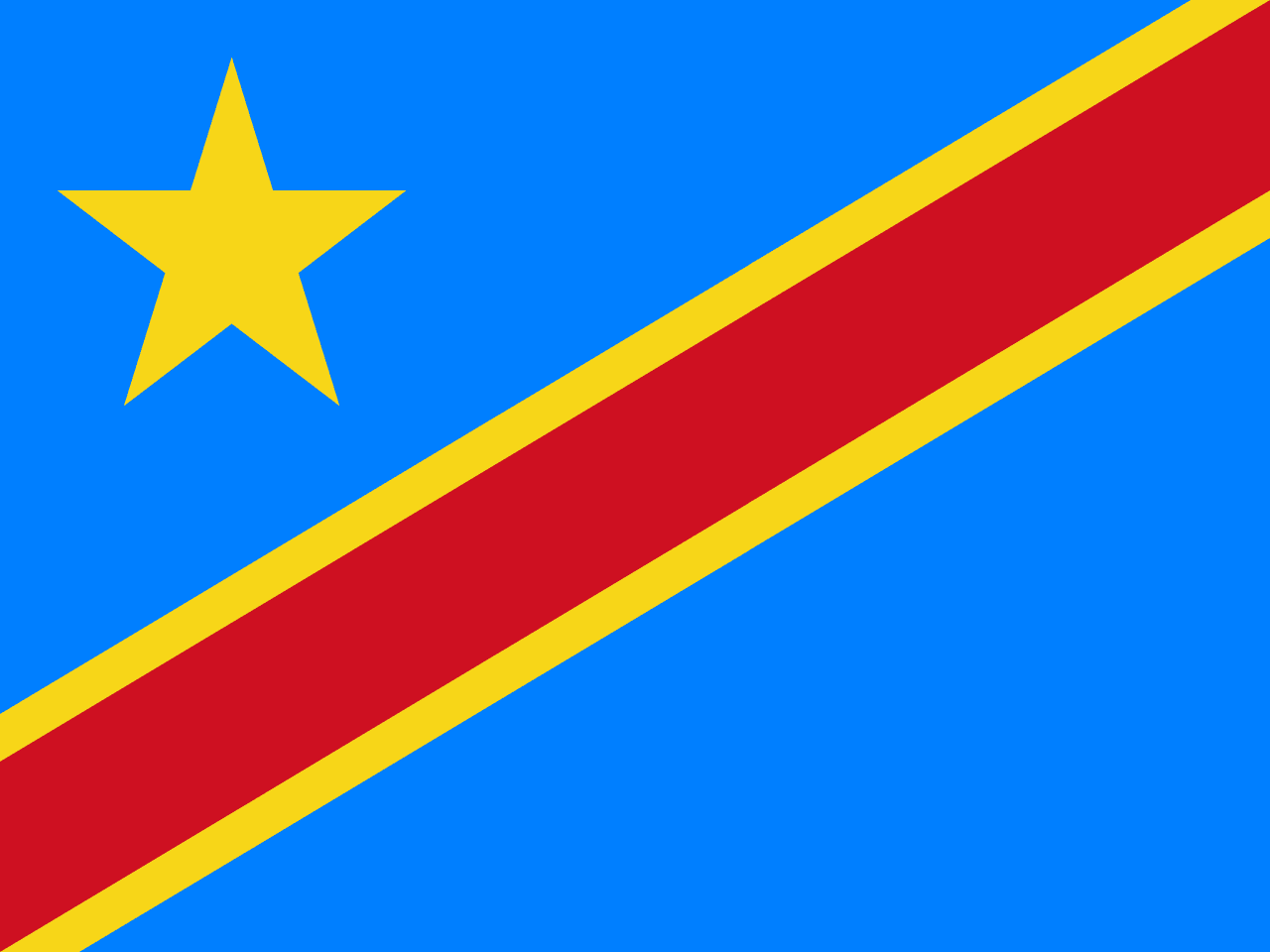
Look at what that deal looks like in the Democratic Republic of Congo. Washington brokered the so-called Washington Accords to end the fighting in the east, and in the same breath secured preferential access to Congo's cobalt, copper and other critical minerals. Peace and profit, packaged together. Meanwhile, President Félix Tshisekedi has pushed constitutional changes that could give him a third term, provoking violent protests in Kinshasa and other cities. He has openly used the US minerals agreement as a justification for the reform. Washington's response has been a near-total silence. Every Congolese who has bled in the streets for the right to choose their own leader is watching a foreign government look the other way for a mining contract.
The silence is even more obscene given what is happening in the east. The Rwandan Defence Force has not merely supported the M23 rebels. It is running a full-scale war of aggression inside a sovereign state. UN Group of Experts reports, including S/2025/446, have documented RDF combat units operating alongside M23 in North Kivu and South Kivu, and experts have estimated the Rwandan commitment at roughly 14,000 to 18,000 troops, a huge share of Kigali's army. This is the Russia-Ukraine playbook, with a rebel mask on an invading army. When the world called Moscow's operation in Donbas an invasion, it was right. The same word applies in Goma and Bukavu, and it applies to Paul Kagame's government. Satellite imagery has tracked more than 1,000 new graves at Kanombe military cemetery in Kigali since 2021, graves that Rwanda would rather Africa never see. Forced conscription has swelled M23's ranks from a few thousand to more than 30,000, with Congolese civilians and captured prisoners press-ganged into uniform. That is slavery wearing a combat helmet.
Rwanda, meanwhile, markets itself as a clean, orderly model of development. It hosts international conferences and sells gorilla tourism to the world while its soldiers occupy a neighbour's territory. We have to name this hypocrisy every time: a government cannot be a responsible partner in peace while its army is the reason the peace keeps collapsing.
The rot is not confined to Kinshasa. In Tanzania, the October 2025 election took place amid pre- and post-election crackdowns on opposition figures, critics and journalists. Uganda's January 2026 vote under Yoweri Museveni unfolded in a similarly repressive climate. The strongest condemnation came from Senator Jim Risch, a Republican veteran of Congress, not from the executive branch. When the State Department did speak on Tanzania, it framed its concerns mainly in terms of what they meant for American interests, not for Tanzanian citizens. Think about that. The lives of voters were treated as a footnote to a diplomatic calculation.
Across the Horn and the wider region, the pattern repeats. Somalia and South Sudan are both overhauling their political systems without broad consensus, extending the time their leaders hold power while their institutions remain fragile after years of war. When opposition leaders are shut out of the process, some align with armed groups. Governments respond the way they always do, with the gun, and the gun has never once solved a political crisis in this region. It has only produced more widows.
This is not a coincidence, and it is not only an American story. We are living through a new scramble for Africa. China builds our railways and holds the debt. Russia sends Wagner and its successors to guard mines and prop up juntas. Turkey sells drones and runs military training missions. The UAE and Qatar buy ports, farmland and political goodwill. Saudi Arabia funds religious networks. Each of them is chasing influence, resources and control. None of them is asking whether our people can vote freely, own their land or take a court to challenge their government. When external powers stop asking those questions, the only people left to ask them are us.
That is why democracy is not a luxury for Africa. It is the mechanism by which ordinary people hold power to account. Liberal values and stability are not separate conversations. A country whose leaders can extend their own terms without consequence, and whose courts have no independence, is a country that will eventually erupt. The US understood this when it funded electoral observers. It has now forgotten it in exchange for cobalt.
So what should happen? The answer is not grievance and it is not a retreat into anti-Western slogans. It is the hard, unglamorous work of institutions. Botswana has managed diamond wealth for decades through transparent governance and a respected judiciary. Mauritius built a prosperous economy on property rights, competitive markets and a peaceful democracy. Ghana has transferred power between parties several times without bloodshed. Senegal, in 2024, saw a court block an attempt to postpone the presidential election, and then watched the incumbent step aside after a credible vote. These are not perfect countries, but they prove that accountability produces growth and that growth without accountability produces only plunder.
Here is what must change. Congress must restore funding for democracy, electoral integrity and independent media, and it must attach real conditions to any minerals deal, including audited contracts, public disclosure and benchmarks on term limits and free elections. The African Union must stop treating unconstitutional term extensions as internal matters. The Lomé Declaration and the African Charter on Democracy, Elections and Governance exist precisely for this moment, and they must be enforced with suspensions, sanctions and personal accountability for the leaders who violate them. The UN Security Council must impose targeted sanctions on the officers and officials directing RDF operations inside Congo, and it must stop accepting peace frameworks that reward the invader. Regional bodies in the East African Community and the African Union should publish the names of commanders, the numbers of troops and the locations of the dead, because secrecy is the oxygen of war crimes.
And citizens must demand more than they have been offered. Demand that your government publish every mining, port and infrastructure contract. Demand an independent electoral commission with real budgets. Demand that your judges are appointed by merit and cannot be dismissed for ruling against the president. Demand that the opposition is allowed to campaign without being arrested, and that the media can report without fear. Organize, vote, litigate and show up in the streets when the constitution is rewritten at midnight. Your leaders will only respect a limit that you are prepared to defend.
We are told that the world has moved on from democracy. We are told that Africa must take what it can get and be grateful. We refuse. The mother counting her children in eastern Congo did not ask to be a pawn in a minerals deal. The voter in Dar es Salaam, Kampala, Mogadishu and Juba did not ask to be traded for a diplomatic convenience. They asked for a fair vote, a free press and a government that answers to them. That request is not American, European or Chinese. It is African, and it is overdue.
Based on reporting by ISS