general
Sudan's Generals Turned a Boy's Legs Into Collateral Damage
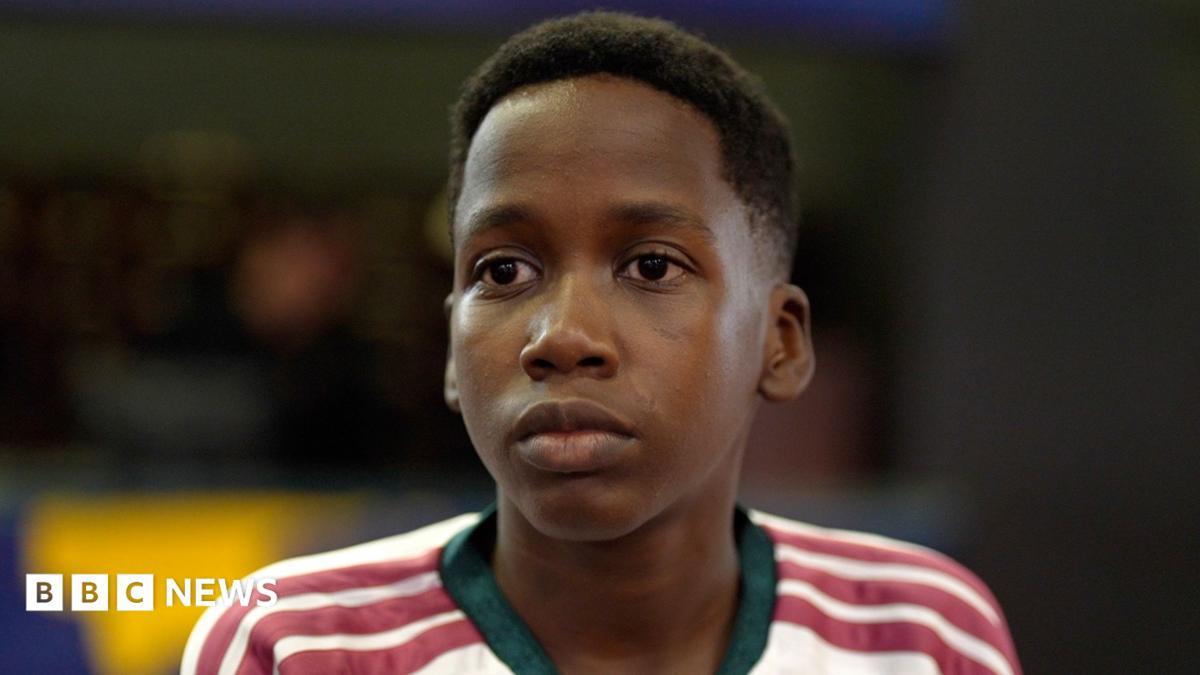
Thirteen-year-old Zaher lost both legs because a drone found his family selling lentils on a Khartoum street. Think about that. A boy and his mother were trying to earn enough to eat, and the sky fell on them. Nobody has been arrested for it. Nobody has been made to explain it. The men who run this war have their names, their offices, and their bank accounts, and they carry on as though a child's shattered body is a rounding error in a power struggle.
We should be clear about what this is. Sudan's army and the paramilitary Rapid Support Forces have been at war since April 2023, and the country has paid for it in the currency that matters most: its children. UNICEF says more than 17 million Sudanese children now need humanitarian assistance. It has verified at least 4,300 children killed or maimed, and it says plainly that the real number is far higher, because verification in a war zone is a luxury. Behind every one of those figures is a child who was playing, learning, or sleeping when the violence arrived.
Zaher's story reached the world because a BBC report put his face on a screen, and a UK-based lawyer of Sudanese origin, Dena Latif, helped raise £45,000 ($60,000) for his care. Think about the order of operations. It took a television report and an online campaign run by a diaspora lawyer to get one boy to a hospital. The governments that claim to care about Sudan's future did not do it. Their own stated priorities did not do it. Ordinary people did, and that should shame every chancellery in Washington, Paris, London, Abu Dhabi, and Cairo that has been speaking about Sudan in careful diplomatic language for three years.
Consider the paperwork that nearly buried him. Zaher and his mother had no passports, because their birth certificates had been destroyed in the war. Under Sudanese and international law, a child has the right to a name, a nationality, and the protection of a state. The war has stripped that from children by the millions. A child without documents cannot cross a border for surgery, cannot enrol in school, and cannot claim the protection the law promises. The BBC and others have documented a generation of children born into war with no legal existence at all. These are not footnotes. They are the architecture of a country being erased from the inside.
The violence is not confined to drones and bullets. Investigations by the UN Fact-Finding Mission on Sudan have documented mass killings, sexual violence, and ethnically targeted attacks, including in El Geneina in Darfur in 2023, where communities were hunted along ethnic lines. Reporting by the BBC has also found that hospitals were deliberately targeted by RSF fighters. A hospital is the last place a wounded child should fear, and yet in this war it has become a target. When the people with the weapons attack the places that heal, they are not fighting a war. They are fighting the idea that Sudanese lives matter.
The army is not innocent either. The Sudanese Armed Forces have fought with air power and heavy weapons in densely populated neighbourhoods, and the country's Khartoum is now a landscape of burned, blackened and looted homes. The army has retaken the capital and declared the state of emergency lifted, but the people who return find ruins, not a government protecting them. Victory over one militia is not the same as peace for the civilians who were caught between two armies. Ask Zaher's mother, who now wonders how her son will be treated in a city still soaked in gunfire and reprisal.
The outside world is not a bystander here. Multiple UN expert panels and investigative reports have alleged that weapons and drones have reached the RSF through supply networks linked to the United Arab Emirates, which has denied the claims. Turkish and Iranian drones, along with other external supplies, have been reported on the army's side. Russia, Egypt, and others have their own interests in Sudan's gold, ports, and land. Each of these powers speaks the language of stability and partnership. Each of them profits from a war that keeps Sudan weak and its resources cheap. We have seen this film before, in Libya and in the Sahel. The actors change. The extraction does not. Sudanese gold leaves the country while Sudanese children starve, and the buyers never ask whose blood is on the bar.
Here is the question every African capital must answer. If our leaders will not protect our children from their own generals, from foreign arms suppliers, and from their own neglect, what exactly are they for?
The solutions are not mysterious. The UN Security Council must enforce the Darfur arms embargo that already exists on paper, and it must sanction every individual and company financing drones and weapons flowing into this war. Member states that supply weapons, directly or through intermediaries, must be named and shamed in the public record, not hidden behind diplomatic courtesy. Humanitarian corridors must be opened and defended, with a binding commitment that hospitals, schools, and aid convoys are off-limits to every armed actor. The African Union, which has suspended Sudan's membership more than once, must stop issuing communiqués and start enforcing consequences.
Sudan also needs the thing its generals have refused it for decades: a civilian government accountable to voters and protected by an independent judiciary. Africa has proof that this is possible. Ghana has handed power peacefully between rival parties through its ballot box. Botswana built a rule-of-law economy that became one of the continent's most stable, resting on transparent institutions and property rights. Mauritius shows what open markets and strong civil service can do when leaders accept limits on their power. These are not Western gifts. They are African achievements, earned by citizens who refused to accept that the gun should decide who governs.
Civil society and the private sector have a role too. Sudanese doctors, lawyers, and business owners have kept hospitals and courts running on fumes. They need legal recognition, protected funding, and access to international finance that does not vanish into the hands of warlords. Citizens across the diaspora, like Dena Latif, should keep pressing for documented, verifiable aid that reaches families directly, with funds tracked by independent auditors.
So here is what we demand. We demand that the AU stop hiding behind silence and suspend every actor, state or militia, that is found to have targeted civilians or hospitals. We demand that the UN Security Council name the suppliers of the drones that maim children and enforce sanctions against them. We demand that the Sudanese army and the RSF both open their books, stop the bombing of residential areas, and sit down under the supervision of a civilian transition that answers to the public. We demand that every government that calls itself a friend of Sudan prove it with arms embargoes, not press releases.
Zaher is standing on two new legs today, laughing, dreaming of becoming a pilot. That is a victory for one family and one generous campaign. But the boy who did not get a campaign, the child with no birth certificate and no passport and no television camera, is still waiting. Millions of Sudanese children are still waiting. We do not owe them sympathy. We owe them a country that works. Let us stop asking our leaders what they plan to do, and start telling them what we will no longer tolerate.
Based on reporting by BBC