general
Thirty-Nine Africans Drowned Off Senegal While Europe Looked Away
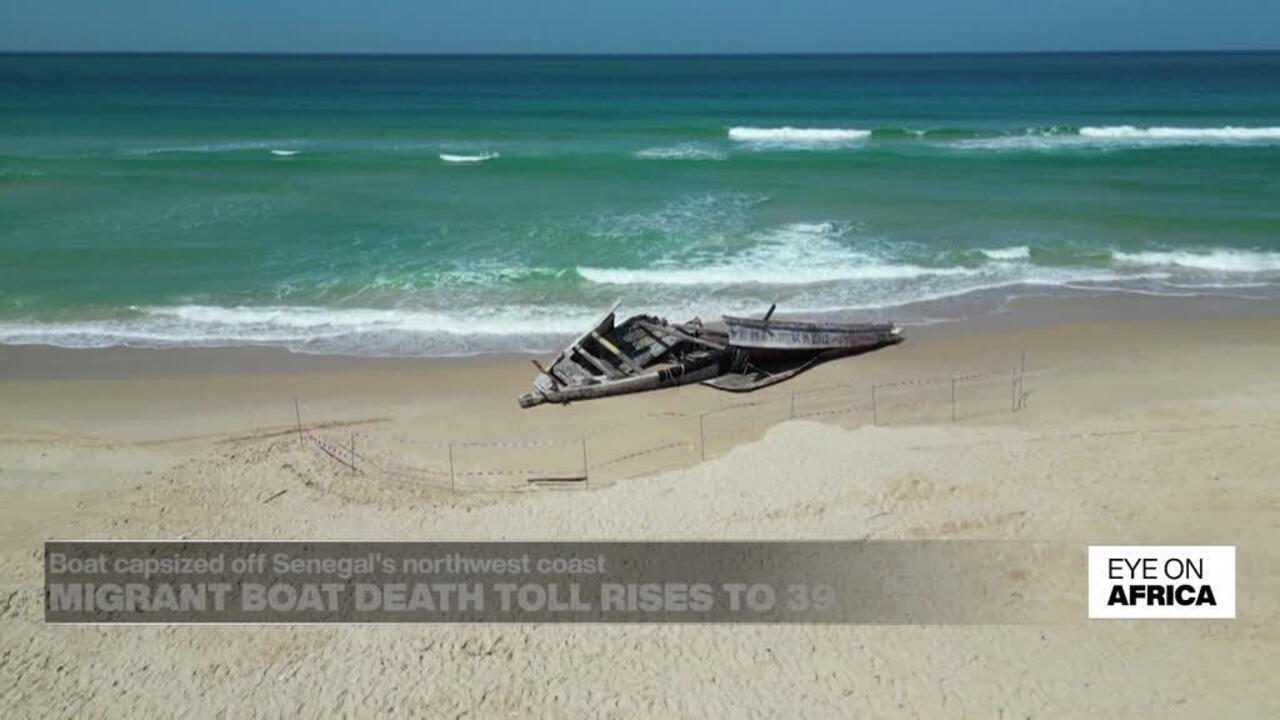
Thirty-nine people went into the Atlantic off Senegal's northwest coast and did not come back. Some were teenagers. Some were fathers who had sold what little they owned to pay a smuggler. Some were young women who had told their mothers they would send money home by Christmas. Their boat capsized, and the sea took them, and by the time most of the country had read the news, the story had already been filed under "tragedy." It was not a tragedy. It was a verdict.
Ask yourself what kind of country produces a boat full of young people willing to risk the open ocean on a rotting hull. Ask what kind of continent makes a twenty-year-old decide that a one-in-three chance of dying at sea is better than another year of unemployment in Thiès, Kaolack, or Ziguinchor. Then ask who is accountable for that choice. The answer is not the boat. The answer is the system that made the boat look like hope.
The International Organization for Migration has documented the Atlantic route to the Canary Islands as one of the deadliest migration corridors on earth, with its death toll running into the thousands over the past decade. Those are not abstract figures. Each one is a mother who never got a phone call, a village that will never see its schoolteacher again, a family that now owes money to the same smugglers who sent their son out to sea. When a boat capsizes off Senegal, it is not a single event. It is the latest chapter in a long, documented pattern that every government in the region has known about for years.
Senegal is not a failed state, and we will not pretend it is. This is a country that has done something many of its neighbours have not. In 2024, Senegal held a presidential election, and when the result went against the ruling party, the incumbent accepted it and the country transferred power peacefully. That is a democratic achievement that deserves to be defended, and it proves what Senegalese citizens are capable of when institutions are allowed to work. Yet the same democratic maturity has not yet been turned into the one thing that would keep young Senegalese off the water: a labour market that offers them a reason to stay.
Consider the contradiction at the heart of this tragedy. On the same news cycle that reported the deaths, Dakar was hosting the 2026 Youth Olympic Games, and the home team was celebrating taekwondo medals, one of them gold, that pushed Senegal into sixth place in the standings. We are proud of those athletes. We should be. But let us be honest about what those medals represent. They show what Senegalese youth can achieve when they are given training, discipline, and a fair chance. The question every minister in Dakar must answer is why that same discipline and opportunity does not reach the young men and women standing on the beaches of Saint-Louis and Mbour, deciding whether to bet their lives on a crossing.
Then there is Europe, which will issue a statement of condolence and then go back to what it does best: paying African governments to keep African bodies on African soil. European Union and member-state funding has flowed to border-management programmes across West Africa and North Africa for years, much of it framed as partnership and much of it aimed at stopping departures rather than addressing why people leave. Europe lectures us about the rule of law and human rights, then outsources its own migration policy to security forces whose records on those very rights are often indefensible. If the EU truly believed in the values it preaches, it would demand safe, legal routes for work and study, and it would invest in the African industries that could employ these young people at home. Instead, it prefers a fence it does not have to look at.
Meanwhile, the same week brought grim news from western Ethiopia, where a deadly attack left 65 people dead, 27 of them civilians. Violence has flared again near the Sudanese border, and regional authorities are pointing at neighbouring countries, accusing them of backing armed groups operating in the area. Those accusations may or may not be accurate, and that uncertainty is itself damning. When a civilian massacre happens and no independent body can confirm who did it, why, or who armed them, the people who pay are always the same: farmers, herders, and children who had no part in any political calculation. Ethiopia's regional and federal authorities owe their citizens transparent investigations, not finger-pointing across borders. So do the African Union and its Peace and Security Council, which too often treat conflict in the Horn as someone else's emergency.
Taken together, these stories tell a single African truth. Our people are leaving because they have been failed by a combination of bad governance, weak job creation, and a global order that profits from our young people's desperation while refusing to share the responsibility. Every migrant who drowns is an indictment of the leaders who looted the public purse, the investors who never built factories, and the donors who prefer control to partnership.
So what must change? First, Senegal and its neighbours must treat youth employment as a national security priority, not a campaign slogan. That means property rights that let small entrepreneurs borrow against their land and businesses, a regulatory environment where a young person can register a company in days rather than months, and a fishing and agro-processing sector that is protected from both corruption and foreign overfishing. Botswana built a functioning state on transparent diamond governance and sound fiscal rules. Mauritius turned a sugar-dependent island into a services and finance hub through open markets and strong institutions. Rwanda has shown what disciplined administration can do for growth, though we condemn its military aggression next door in the strongest possible terms. These are proof that prosperity in Africa is achievable through strong institutions and free enterprise. The lesson is not complicated. It just requires leaders with the courage to follow it.
Second, the EU and member states must replace migration deals built on fear with agreements built on opportunity. Legal work visas, recognition of African qualifications, and real investment in African manufacturing would do more to save lives than another patrol boat. If Europe wants fewer people in leaky boats, it must offer them a legitimate door.
Third, and most urgently, the African Union and regional economic communities must demand independent investigations into the Ethiopian attack and into every massacre on this continent. Accusations across borders without evidence are the oxygen of proxy wars. Investigation is the antidote.
And now, to you. Senegalese citizens, demand that your representatives publish the employment and migration data, not just the medal tallies. Ethiopians, demand that your government release the casualty and attribution findings in full. Africans everywhere, demand that your leaders stop treating citizens as liabilities to be exported in remittances and funerals.
Thirty-nine people are dead. Their names deserve to be read aloud, not buried under a sports headline. We will not let this become another line in an archive of avoidable African tragedies. Hold your government to account. Share this story until it hurts. And refuse to accept that the Atlantic must keep taking our children because we were too comfortable to fix what sends them there.
Based on reporting by FRANCE24