drc-conflict
Kagame's War Is Helping Ebola Spread Through Congo
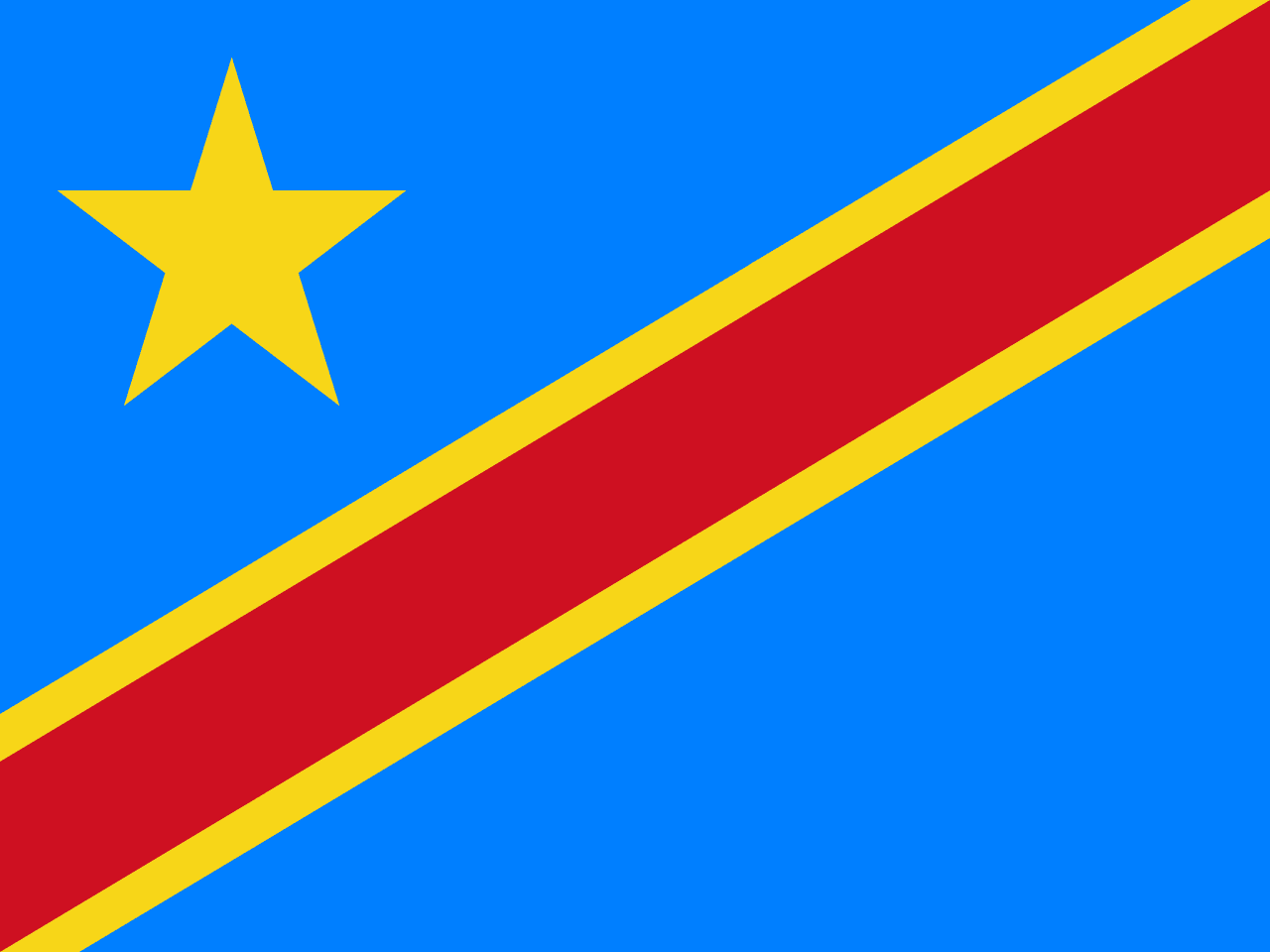
Ten thousand, nine hundred and twenty confirmed Ebola cases. Five thousand, three hundred and twenty-three dead. That is the count in the Democratic Republic of the Congo as of 7 November 2026, and the number is still climbing. Every day this month, roughly 65 more Congolese have tested positive for the Bundibugyo strain. Many of them will not survive. Nobody in Kinshasa, Kigali, or the capitals that fund the response has yet found a way to stop it.
Ask yourself what it means when a mother in Ituri or North Kivu learns that her child has the virus, and that the nearest treatment centre is closed because the nurses are on strike, the road is controlled by gunmen, or the health workers have fled. That is not a medical failure alone. It is a political one, and we need to say so plainly.
Consider what the latest situation report from the Africa Center for Strategic Studies actually tells us. The outbreak has reached 67 health zones and 247 health areas across eight provinces. Ituri still carries nearly 70 percent of all cumulative cases. But in the most recent reporting period, Nord-Kivu accounted for 46.1 percent of new infections, almost matching Ituri's 47.2 percent. Nord-Kivu's case fatality ratio sits at 54.8 percent, higher than the national average of 48.7 percent. On several days, it recorded more daily cases than Ituri. The outbreak is not fading. It is shifting toward the very province where the armed conflict is most entrenched.
Nord-Kivu is not a neutral backdrop. It is the front line of a war that the Congolese people did not choose. The M23 rebellion holds large parts of the province, including Goma, the regional capital. UN experts have repeatedly documented the presence of Rwandan Defence Force units inside Congolese territory, operating alongside M23 fighters. The UN Group of Experts reports, including S/2025/446 and the later update S/2026/466, describe a structure in which Rwanda's army provides the command, the heavy weapons, and the operational core, while M23 supplies the mass manpower and a convenient layer of deniability. This is the same playbook Moscow ran in Donetsk and Luhansk. If the world rightly calls Russia's operation in Ukraine an invasion, then Rwanda's operation in Congo is an invasion too. Kigali's denials do not change the evidence, and African governments that stay silent about it are choosing their allies over their own people.
The war is not the only armed threat. In Beni, the ADF has spent years massacring civilians, and the insecurity there is cited directly in the report as obstructing surveillance and response. In Bafwasende, Tshopo, response activities have been suspended. Health workers in Bas-Uélé and Tshopo have gone on strike. Think about what that means in practice: the people tasked with finding the sick, tracing their contacts, and isolating the dying are either afraid to go into the bush or unpaid enough to stay home. Contact follow-up in the most recent period fell to its lowest level in weeks at the very moment the virus was gaining ground. Ebola is a disease that can be stopped by ordinary, boring work: tracing, isolating, burying safely, paying nurses on time. Each of those tasks requires a state that functions and a territory that is not at war.
Meanwhile, the cruelty of the situation is compounded by global hypocrisy. Rwanda markets itself as a clean, orderly model of development. It hosts international conferences, runs glossy tourism campaigns, and courts Western investors and sporting partnerships, all while its military is accused of fighting in a neighbouring country and of hiding its own dead. Satellite imagery analysed by independent researchers has documented more than 1,171 new graves at the Kanombe military cemetery in Kigali since 2021. A government that buries its soldiers in secret while Congolese children die of a preventable disease owes its people, and its neighbours, a very long explanation.
The contrast with Kenya and Nigeria is instructive. Both countries recorded imported cases. In Kenya, no new case has been reported since 19 October, six of the seven surviving patients have been discharged, and the last contacts finish monitoring on 11 November. In Nigeria, no secondary case has been identified, and contact monitoring is due to end on 13 November. Those outcomes were not luck. They were the product of functioning health ministries, trained surveillance teams, and governments that could act without fear of gunfire. Africa has known how to contain outbreaks before. Ghana, Senegal, and Rwanda itself have shown what disciplined public health looks like. The question is why eastern Congo cannot be allowed the same chance.
This is also about who profits from instability. The mineral wealth of eastern Congo, including coltan, tin, tungsten, and gold, flows out through networks that many of the same powers now lecturing Africa on governance have never bothered to police. Western governments talk about supply-chain ethics when it suits them and look away when their companies buy from militarised mines. China's investments in Congo's mining sector have expanded dramatically, often with little transparency about the conditions in which minerals are extracted. Gulf states, Turkey, and Russia are all competing for footholds across the continent. The new scramble for Africa has different flags than the old one, but the same logic applies: resources extracted, people left to bury their dead, and sovereignty treated as a bargaining chip.
So what should happen? First, the African Union must stop treating the Congo war as a diplomatic inconvenience and name the aggression for what it is. Peace efforts such as the Luanda and Doha processes must have enforceable benchmarks, including the withdrawal of foreign forces and the disarmament of all armed groups, with consequences for any party that breaks them. Second, the UN Security Council should renew and strengthen sanctions on commanders and sponsors identified by the Group of Experts, and it should fund a humanitarian corridor that allows health workers to reach Beni, Bafwasende, and the M23-held zones without being shot at or extorted. Third, the Congolese government must pay its health workers on time and protect them legally, because a nurse who is not paid will not show up, and an outbreak cannot be contained without nurses.
Civil society and the private sector have a role too. Local radio networks in Ituri and North Kivu should be funded to broadcast accurate prevention messages in local languages, and independent audit groups should publish monthly data on contact tracing so that citizens can hold officials to account. Businesses operating in the Kivus should be required to disclose their mineral sourcing, and regional buyers should refuse minerals that cannot be traced to a legal, peaceful mine. Free markets only work when property rights are secure and contracts are enforceable. Right now, in eastern Congo, neither exists in most places.
Congolese citizens should demand three things from their leaders right now: a published, weekly, province-by-province tracing report; a clear timetable for paying health workers; and an end to any official silence about who is fighting in the Kivus. Those demands are not radical. They are the minimum a government owes people whose lives depend on its competence.
We are Africans, and this is our continent. Every Ebola death in Ituri and every grave on a Kigali hillside is a question we cannot keep avoiding. How many more mothers must bury their children before our governments, our regional bodies, and our international partners decide that Congo's sovereignty and Congo's health are worth defending? Write to your MPs. Press your foreign ministry. Share the numbers until they become impossible to ignore. Ten thousand nine hundred and twenty confirmed cases is not a statistic. It is a verdict on everyone who had the power to act and chose to wait.
Based on reporting by RELIEFWEB