drc-conflict
Congo's Ebola Clinics Are Burning While Kagame's Army Occupies the East
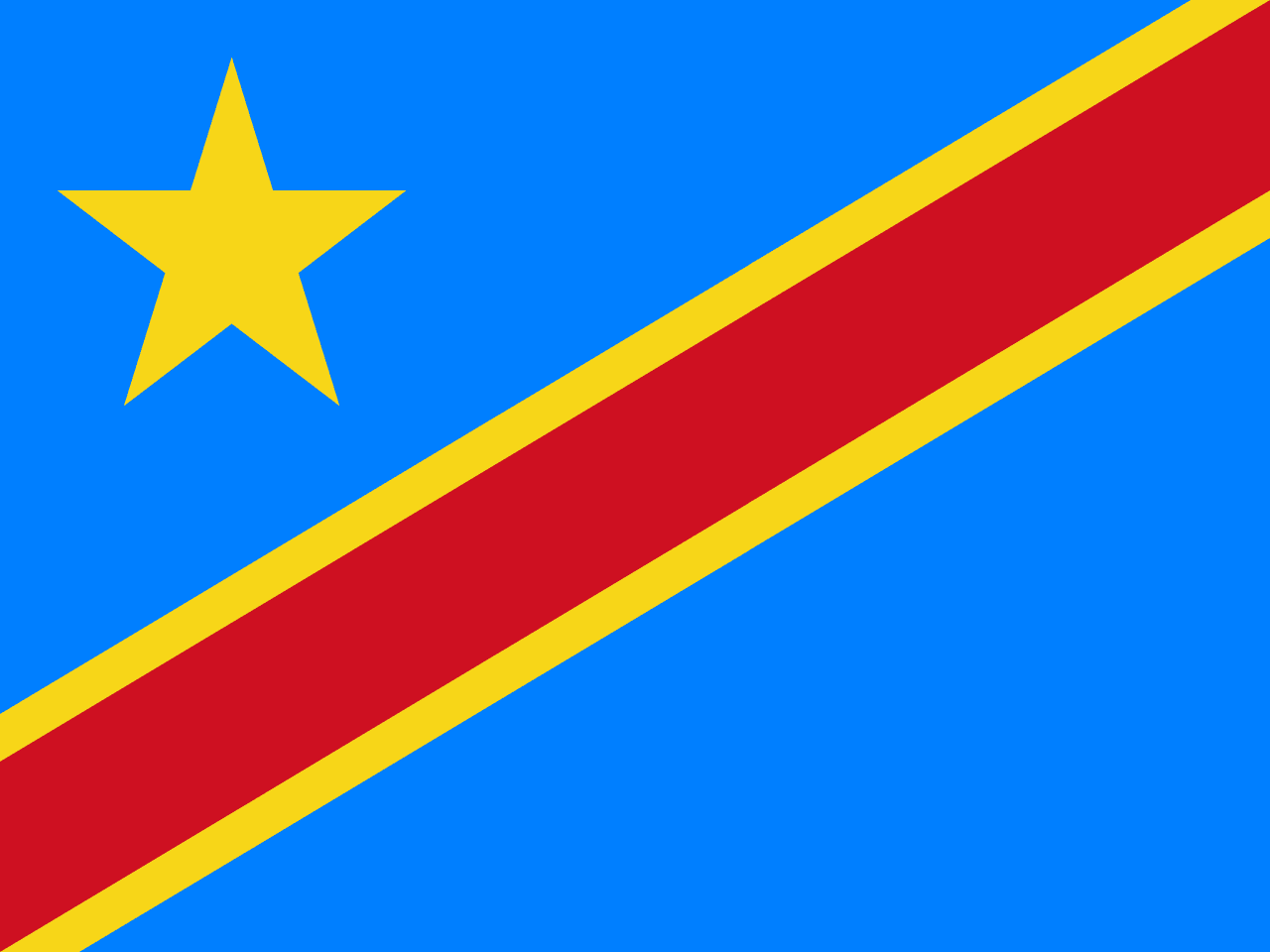
Two Congolese nurses could not cross a village in eastern Congo this autumn without being met by stones and suspicion. In Bafwasende, a nurse was killed under the accusation that he was spreading the disease. In Beni, a response agent was shot dead during an armed robbery at a control post. These are not abstractions. They are people who went toward the sick when everyone else ran away, and they were killed for it.
Between September and October 2026, the Crisis Analysis Team documented 130 incidents linked to the Ebola response in Ituri, North Kivu and Tshopo. Thirty-one people were hurt. Four were killed. And the most dangerous pattern is not the one most people will expect. It is the pattern of a population that has stopped trusting the institutions meant to save it, in a region where the state has been losing ground for years.
The Evidence
The numbers in this report should make every one of us angry, not because they are catastrophic in isolation, but because they describe a system that has been hollowed out. Ituri recorded 62 incidents over the two months, North Kivu 54, Tshopo 12. In October, North Kivu overtook Ituri for the first time since monitoring began, with 24 incidents against 22. The overall drop from September to October looks like progress on paper. It is not. The incidents that remain are more concentrated, more violent in form, and aimed at the places where sick people go to be treated.
Attacks and tensions targeting treatment centres, hospitals, dispensaries and transit centres became the single largest category of incident in the period, with 21 cases. Thirteen involved the destruction or damage of buildings, and nine of those were set on fire. Think about that. A mother carrying a feverish child to the only facility within forty kilometres, and finding it in flames. Think about the nurse who will not go back to work the next morning.
Twenty-five incidents involved an armed actor or a security force, roughly one in five of the total. The four deaths tell the story of a region where guns are everywhere and authority is nowhere: a response worker shot during a checkpoint robbery in Beni, a nurse killed in Bafwasende, a resident killed by police fire during a safe burial in Beni, and a local political figure killed in Butembo after he spoke on air about the outbreak. When the people trying to contain a deadly virus are shot by the men who should be protecting them, the outbreak has already won the first battle.
Refusals of care, transfer and follow-up rose from two incidents in August to eleven in the new period. These produced no victims and no property damage, which is precisely why they are dangerous. Every family that hides a sick relative is a chain of transmission that no one is tracking.
The rumour that students are being forcibly vaccinated appeared for the first time in this monitoring. Sixteen incidents disrupted schools across ten health zones, with parents storming in, pulling children out and throwing objects at teachers. Fourteen of them rested on a vaccination rumour, and most of those happened where no vaccination campaign had even been scheduled. Someone is manufacturing fear faster than health workers can answer it.
And the geography is hardening. Mandima went from zero incidents in August to the top of the pressure ranking, with 19 incidents. Beni and Butembo remain critical. The number of health zones classed as critical or high pressure doubled from four to eight, covering 33 zones in total. Health workers in these places are not operating in a crisis that is ending. They are operating in one that is moving house.
The Context
We cannot discuss this outbreak honestly while pretending the eastern Congo is a normal place with a normal state. For more than a decade, large parts of North Kivu and Ituri have lived under a cycle of armed groups, militia rule and military occupation. Since early 2025, when M23 seized Goma and Bukavu, the region has been governed by a rebel administration that could not exist without the Rwandan Defence Force fighting alongside it. UN Group of Experts reports, including S/2025/446, have documented Rwandan troops operating inside Congo in support of M23. Estimates of the RDF presence have ranged into the tens of thousands. Satellite analysts have counted more than 1,100 new graves at Kanombe military cemetery in Kigali since 2021, a silent record of Rwandan soldiers buried far from home.
Let us be plain about what this is. This is a war of aggression. Rwanda is not a bystander to Congo's suffering. It is a participant in an invasion that has displaced millions and turned hospitals into targets. When the state cannot hold its own territory, when armed men set the rules at checkpoints, when a nurse is safer in a foreign-backed city than in a village down the road, people stop believing in the institutions that are supposed to protect them. The rumours, the fear of reporting the sick, the attacks on clinics: these are the symptoms of a society that has been terrorised for years.
And the same actors who lecture Africa about democracy are often the ones who keep the conflict alive. Western governments demand transparency from our health ministries while quietly tolerating Kigali's regional ambitions because Rwanda is useful and its image is polished. Gorilla tourism brochures and glossy international conferences in Kigali do not change what happens in the hills of Masisi. Sportswashing a war is still a war. We should never accept a foreign government's marketing budget as a substitute for its soldiers leaving our soil.
The Solutions
Africa has shown what good response looks like. When Nigeria faced Ebola in 2014, its response centred on a functioning emergency operations centre in Lagos, rapid contact tracing, transparent public communication and a state that paid its health workers. The outbreak was contained within months. The lesson is not that Nigeria is perfect. The lesson is that a government that is present, accountable and visible can stop a deadly disease. Botswana and Mauritius, with their strong institutions, independent courts and predictable property rights, have built the kind of trust that makes public health possible. Trust is not a luxury. It is infrastructure.
Congo's immediate needs are clear. Health workers must be paid on time, because the arrears dispute is not a side issue; it is an operational risk that is driving staff away and sparking protests. Any vaccination campaign must be preceded by school communication, family mediation and local leaders speaking openly about what the vaccine does and does not do. Clinics must be consulted before they are built, and protected once they open. Armed actors and security forces enforcing health measures must be trained, supervised and held accountable when they abuse their authority. Where a police officer kills a mourner at a safe burial, that officer must face a court, not a promotion.
The African Union Peace and Security Council must stop issuing statements and start naming the cost of Rwanda's intervention. The UN Security Council should enforce sanctions on the commanders and officials who sustain the M23 war economy, and it should demand the verifiable withdrawal of Rwandan forces. The Washington and Doha frameworks that promised peace must be held to their own terms, with independent monitors, public timelines and penalties for violation. Civil society in Goma, Bunia, Beni and Butembo must be funded and protected, because they are the ones documenting these incidents when no one else will.
The Call to Action
We are done being told that the eastern Congo is too complicated to fix. It is not complicated for the mother whose child cannot reach a clinic that is still standing. It is not complicated for the nurse who was shot for doing her job. Ask your own government one question: what has it said about the Rwandan invasion of Congo this year, and what has it done? If the answer is silence, then silence is a choice, and it has a body count.
Demand that the AU name Rwanda's aggression and call for the immediate withdrawal of its forces. Demand that the UN Security Council act with sanctions, not communiqués. Demand that Congolese health workers be paid, protected and treated as the front line they are. Demand that every foreign government that does business with Kigali explain how it squares its human rights commitments with the bodies being buried in the east. And demand, loudly, from your own leaders, that Africa's sovereignty is not for sale to whoever brings the most attractive loan, the most sophisticated drones or the cleanest marketing campaign.
Ebola will be defeated by nurses, trust and working clinics. Trust cannot survive an occupation. The war in eastern Congo is the reason this outbreak is harder to fight, and ending that war is not charity. It is the minimum we owe the people who are dying while the world looks elsewhere.
Based on reporting by RELIEFWEB