spotlight
Beijing's State Giants Are Buying Africa's Ports, Minerals and Debt
Zambia's government stood before its own people and announced that it owed Chinese lenders $3.4 billion. The real figure was $6.6 billion. Nearly half the debt had vanished from the public record, and the people who would have to repay it were the last to know. Ask yourself who gets to hide a debt that large, and who ends up paying for the silence. It is the nurse in Lusaka whose clinic loses its drug budget. It is the farmer in the Copperbelt whose electricity bill climbs while the mine next door exports the copper.
We need to talk about the Chinese state's economic machinery in Africa, because it is not what the glossy ribbon-cutting photos suggest. Those photos show a road, a bridge, a stadium. They do not show the loan agreement, the arbitration clause, or the Politburo-linked executive who negotiated them.
China's state-owned enterprises are not ordinary companies chasing profit. Roughly 363,000 firms are wholly state-owned, and about 867,000 carry some state ownership. Together they account for around 20 percent of China's GDP. Under the "Go Out" strategy launched in 1999, these firms receive subsidies estimated at around $200 billion a year, along with tax credits, political risk insurance, and diplomatic muscle. That money is not spent to make Africa richer. It is spent to make China stronger, and Africa is where the bill comes due.
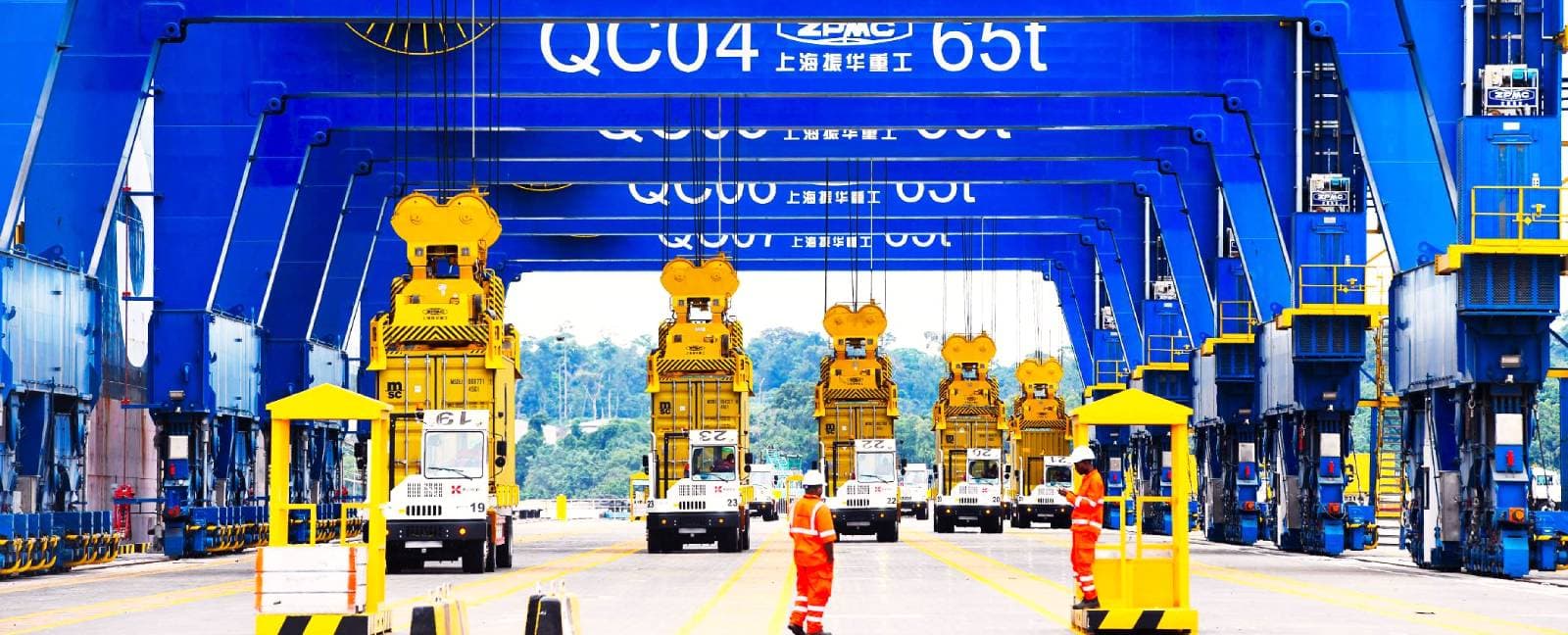
Look at the numbers. Since 2000, Chinese lenders have extended more than $150 billion to African borrowers, much of it routed through state enterprises. Around 10,000 Chinese firms now operate on the continent. Chinese state companies are active in 78 ports across 32 African countries, as builders, financiers, or operators. Of 166 Chinese mining projects worldwide, 66 are in Africa. Chinese firms reportedly win close to half of Africa's internationally contracted construction work. When one foreign power controls the cement, the rail, the port, and the mine, it is no longer a partner. It is the landlord.
And the pattern repeats. In Kenya, the $4 billion Mombasa-Nairobi-Naivasha Standard Gauge Railway was awarded to China Road and Bridge Corporation through a government-to-government deal that bypassed public tendering, the very procurement process Kenyan law demands. The project was a pre-election legacy showpiece for President Uhuru Kenyatta's government, and it was financed through China Exim Bank, a lender that gave the contractor privileged access to the terms. Kenyan taxpayers were left to service the loan, while the contractor's influence over the project's direction grew. Who wrote the rules? Who was in the room? Ordinary Kenyans were not.
Egypt's Abu Qir Marine Port Container Terminal tells a similar story. China Harbour Engineering Company won the 2021 contract without evidence of open bidding or parliamentary scrutiny, and the loan terms and dispute-resolution clauses remain undisclosed. Attached to the project was a Hong Kong-based operator's 38-year concession from the Egyptian Navy to run a terminal at a naval base. That terminal featured in the "Eagles of Civilization 2025" joint military drills with China. A commercial port has become a strategic asset, and the public has been told almost nothing about the debt that could one day hand control of it to Beijing.
Then there is Angola's Kilamba New City, a $3.5 billion development of apartments and offices built by China International Trust and Investment Corporation outside Luanda and repaid through oil. The housing was priced beyond the reach of ordinary Angolans. It sat empty, and the world called it a ghost town. Only when the state oil company Sonangol stepped in with subsidies and long-term mortgages did it begin to fill, and Angola still carries the debt for a project designed to serve Chinese contractors' balance sheets more than Angolan families. In Sierra Leone, a $318 million airport financed by China Exim Bank was cancelled in 2018 by President Julius Maada Bio, who recognized that the country could not afford to add it to its debts while the existing Lungi airport sat underused. Credit where it is due: Freetown chose sense over vanity. Most governments do not.
Who sits at the top of this system? The Leading Small Group of the Chinese Communist Party, chaired by Xi Jinping, sets the strategic direction for these enterprises. Party committees are embedded inside SOE boards. Senior executives are vetted through party channels and carry ranks equivalent to ministers or provincial governors. Let us be precise: this is not a secret cabal in a dark room. It is a publicly documented system in which commercial deals are organically tied to the foreign policy and security ambitions of a one-party state. When a Chinese SOE executive negotiates with an African minister, he is not just a businessman. He is a representative of an institution that answers to the Party.
Let us be clear about what this is not. It is not a call to demonize Chinese workers, engineers, or traders who build things in our cities and often live far from home. It is not a rejection of investment, which Africa desperately needs. Our continent needs roughly $100 billion a year in infrastructure finance, and no African government should be too proud to take good money. The problem is the terms: secret contracts, sovereign guarantees, resource-backed loans, and no meaningful parliamentary or public oversight. Those are the instruments of capture, and they have nothing to do with development.
Here is the solutions agenda, and it is not complicated. Parliaments must demand full publication of every loan, contract, and concession before ratification, including interest rates, collateral, and arbitration clauses. Any contract that bypasses open tendering should be void unless a court or independent audit institution certifies a genuine emergency. Governments should publish independent debt sustainability assessments before signing, not after the crisis. Local content must mean real jobs, real technology transfer, and African companies allowed to compete, not token labor clauses. Botswana shows what disciplined institutions can achieve: its partnership model around diamonds, built on strong governance and fiscal rules, turned a poor country into one of the continent's most prosperous. Mauritius built its economy on open markets, rule of law, and an independent financial regulator. Senegal has shown that peaceful democratic transfers of power create space for reform. These are the building blocks: transparency, competitive markets, independent courts, and accountable legislatures.
To the leaders of Africa, we say this. You are not powerless. Every signature on a secret contract was a choice. Every debt hidden from parliament was a betrayal. Zambia's officials did not discover the $3.2 billion gap by accident. It was a decision, and it cost the Zambian people dearly. We call on the African Union to adopt a binding continental standard on public disclosure of sovereign loans and concessions, enforced through peer review. We call on regional economic communities such as ECOWAS, the East African Community, and SADC to refuse any cross-border infrastructure project that lacks published terms. We call on civil society, journalists, and the private sector to demand audit trails and to punish, through the ballot box and the courts, any official who signs in the dark.
And to the citizens reading this, we ask one question. When a foreign state-backed company builds a port in your country, do you know what your government promised in your name? If the answer is no, demand the contract. Demand it from your MP. Demand it from your minister. Demand it from the president who promised you transparency at the last election. A nation that cannot read its own debts cannot govern its own future. We did not fight for independence from one set of masters to hand our wealth to another, quietly, in documents no one is allowed to see.
Based on reporting by ACSS