spotlight
Beijing Is Training Africa's Police to Protect Rulers, Not Citizens
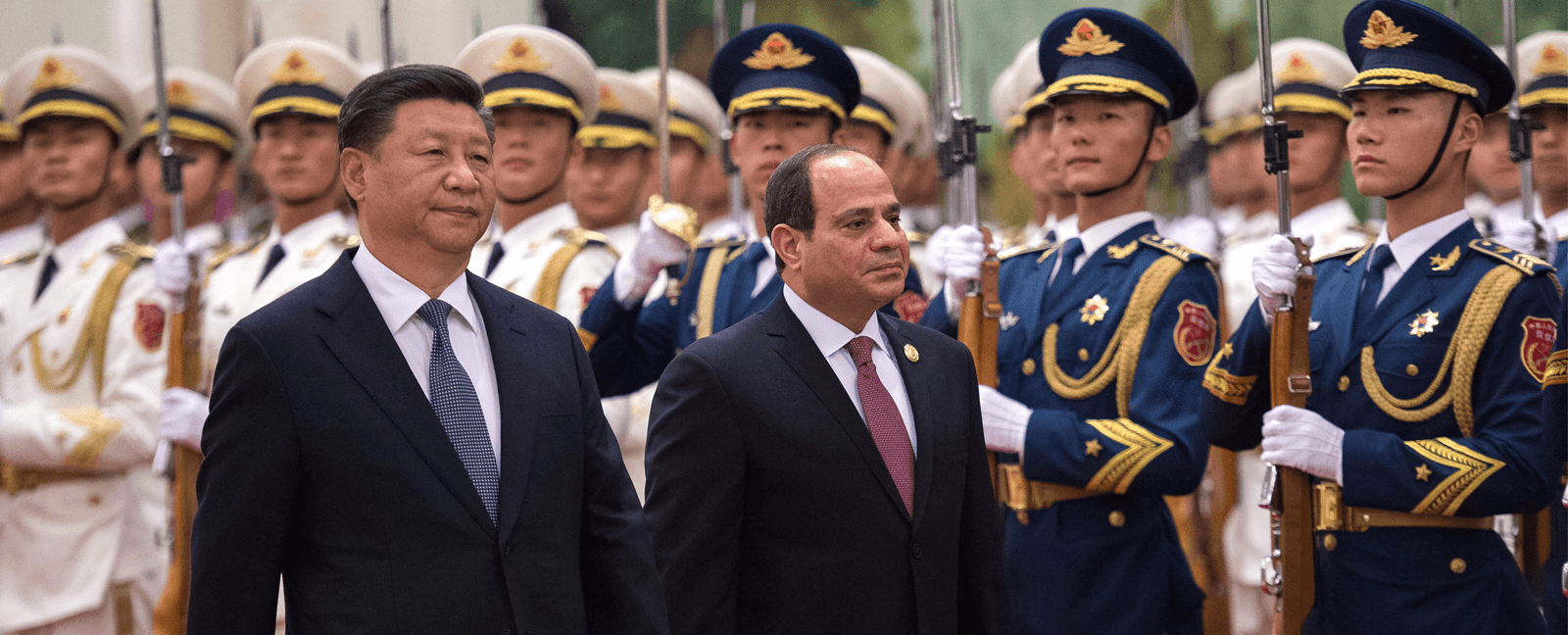
Ask a mother in Lusaka or Harare who her country's soldiers are for. The answer tells you everything about the deal being struck over her head.
China has become one of the most important security partners in Africa, and it did not arrive quietly. In 2000, Beijing held less than 5 percent of African weapons inventories, trained fewer than 200 African officers, and had never conducted a military drill on the continent. Today it trains roughly 2,000 African officers every year. About 70 percent of African countries operate Chinese armored vehicles. The Forum on China-Africa Cooperation's Beijing Action Plan for 2025 to 2027 contains more security commitments than any FOCAC plan before it. This is not an accident. It is a strategy, and we should name it for what it is.
Look at who is buying. Mozambique, Namibia, Seychelles, Tanzania, Zambia and Zimbabwe source more than 90 percent of their arms from China. Burundi, Ghana and Kenya each take over half their weaponry from the same supplier. In Kenya, the Chinese share of military inventory climbed from under 3 percent in 1990 to 50 percent by 2018. That is not a defense relationship. That is a dependency being engineered one contract at a time, and dependency is always paid for in sovereignty.
Now look at what comes with the hardware. Beijing's security doctrine, the Global Security Initiative, is bound up with what the Chinese Communist Party calls "stability maintenance." China's own 2015 National Security Law defines state security as the absence of threats to the state's power to govern, and defines the state as one that persists in the leadership of the Communist Party. Read that again. In Beijing's framework, the security of the state and the survival of the ruling party are the same thing. When that doctrine is exported, it arrives in Addis Ababa, Nairobi and Dar es Salaam carrying an unmistakable message: the job of the uniform is to keep the government in power.
We have seen what that looks like. Chinese arms have ended up in the hands of militants in Mali, Darfur, South Sudan and the Democratic Republic of the Congo. Chinese surveillance and crowd-control equipment, sold with little oversight, has been used by some African governments to harass and silence opposition figures. Ask yourself: when a police unit trained in Shandong uses a Chinese-made tracking system to find a journalist who criticized the president, whose security was protected that night?
Consider Kenya, a country that has fought for its democracy with real sacrifice. In 2018, Nairobi allowed Chinese law enforcement agencies to conduct joint operations on Kenyan soil. In 2021, a program began to train 400 Kenyan security officers every year in China, including members of the Presidential Guard and the Directorate of Criminal Investigations. Kenyans have every right to ask which president these officers will ultimately serve, and whether the training includes a single hour on constitutional limits on power.
The question becomes sharper when you see how Chinese engagement is sequenced. Security cooperation follows infrastructure loans. Party-to-party exchanges strengthen ruling parties. Scholarships, arms sales and police training arrive together, and African governments are expected to repay with votes at the United Nations, support for Belt and Road, and enthusiastic participation in Beijing's security agenda. Kenya's leaders have repeatedly voted alongside Chinese positions at the global level. Senegal, which became the first West African country to join the Belt and Road Initiative in 2017, saw its military procurement from China become as routine as its ties with Egypt or Nigeria. In 2023, the state-owned defense giant NORINCO opened a regional office in Dakar and used it to expand supplies across the Sahel, including to the juntas in Burkina Faso, Mali and Niger.
Here is the uncomfortable truth we must face. Some African governments welcome Chinese arms precisely because they come with no questions. Beijing does not ask about elections, press freedom or the independence of the judiciary. For a president who fears losing power, that silence is a gift. For a citizen who fears being shot at a protest, it is a betrayal. Tanzania is the clearest example of how deep this can go. After a failed coup in 1964, its leaders disbanded the entire military and turned to China to build a new one. Today Chinese-built bases, Chinese-built academies and Chinese-designed doctrine shape the armed forces of a country that is still governed by the same party that has ruled since independence. Tanzanians deserve to know whether their army was built to defend them or to defend the people in power.
We are not told to choose between Beijing and the West, and we should refuse that false choice. Western governments have their own long record of propping up strongmen and lecturing Africans about democracy while selling them weapons and turning a blind eye to rigged elections. But the fact that others have failed us does not excuse our own leaders for making the same bargain. The obligation to protect citizens does not belong to any foreign capital. It belongs to us.
So what must change? The answer begins with transparency, and transparency begins in our parliaments. Every arms deal, every police training agreement and every surveillance contract should be published, debated and audited by elected representatives before the ink dries. African legislatures should demand end-use certificates that specify where weapons are deployed, and they should refuse any equipment that cannot be tracked. The African Union and regional blocs such as ECOWAS and SADC should adopt binding standards for arms imports, including human rights screening and clear penalties for diversion to non-state actors. Constitutional courts must have the power to examine security contracts, and independent auditors must be allowed to inspect them.
The continent already has proof that this works. Ghana has handed power peacefully from one party to another several times since 1992, and its military has remained a professional institution, not a political tool. Botswana has rotated governments through the ballot box and built one of the most stable economies in Africa on the back of strong institutions and clear property rights. Mauritius has shown that a small island state can attract investment, guarantee liberties and rotate power without bloodshed. Senegal's citizens, in 2024, forced the transfer of power after an attempt to manipulate the electoral calendar. These are not perfect nations. But they prove the principle that matters most: when institutions answer to citizens, no foreign partner can buy their silence.
Civil society has a role here too. Journalists must investigate who is buying what, and at what price. Universities should train security officers in human rights law, not only in tactics. Private companies doing business with Chinese suppliers should be held to the same standards of accountability as any other contractor. And citizens must demand, loudly and repeatedly, that their leaders explain why their police are being trained abroad while their courts remain underfunded and their journalists are harassed at home.
We are told that the world is changing and that Africa must learn to play multiple powers against one another. That may be true in the realm of trade. It is not true in the realm of the bullet. When an army is trained to serve a party rather than a people, no amount of diplomatic cleverness can make that army trustworthy.
So here is the demand. Parliaments across Africa must publish every security contract with China and debate it in public before it is signed. Governments must accept independent audits of Chinese-supplied surveillance and crowd-control equipment, and any system used against peaceful critics must be disabled. The AU must write enforceable arms standards and apply them to every supplier, Beijing included. And every African citizen should ask their own representative a simple question: when our soldiers and police come home from training in China, will they swear loyalty to the constitution or to the party?
We have the right to a security force that protects us. Settle for less, and the guns will eventually point at us.
Based on reporting by ACSS