acss-digest
Ituri's Armed Groups Sabotage the Fight Against Ebola
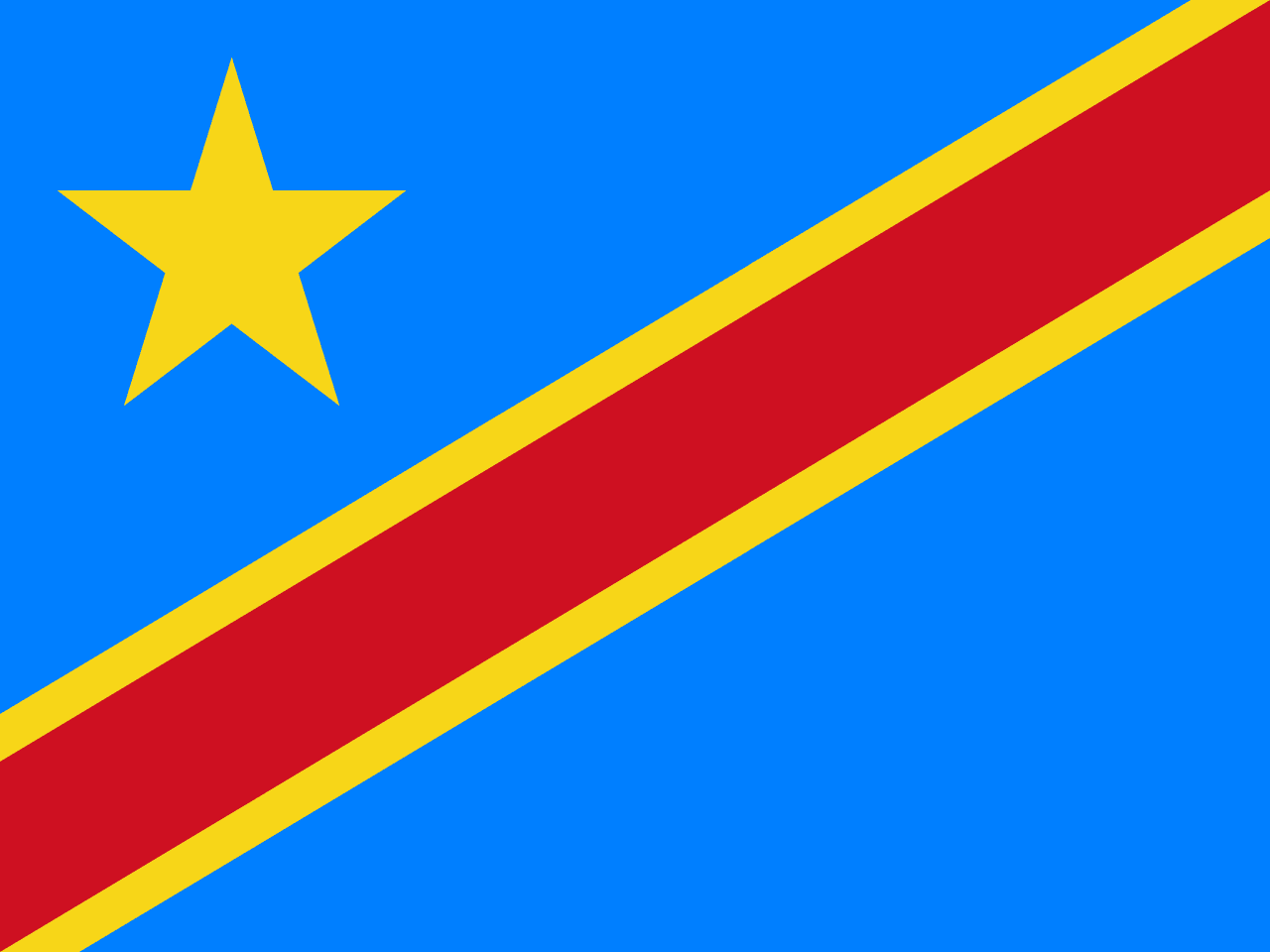
In a province where the Ebola virus is already killing, the guns have decided that aid will not get through. Since Sunday, November 8, new clashes have shaken the Fataki health zone in Djugu territory. Humanitarian workers have had to suspend an assessment mission. Movement restrictions in place since late October are closing off access to the most vulnerable populations. This is what war in Ituri means in practice: a mother who cannot get her child vaccinated, a patient who dies a few kilometres from a treatment centre, a response team that turns back.
Alain Akpadji, the interim United Nations humanitarian coordinator in the DRC, has sounded the alarm. He did not do it for show. When one province accounts for nearly 70% of the country's confirmed Ebola cases, every hour of blockage is counted in lives. And when more than a million people have already been torn from their villages by violence, the disease finds ideal ground: families crammed together, displaced people without drinking water, health workers who never arrive.
Let us ask the question plainly. Who profits from this chaos? Certainly not the children of Djugu, nor the nurses of Bunia, nor the families burying their dead without ceremony for fear the virus will spread. The only ones who thrive in insecurity are the armed groups that tax the roads, control the artisanal gold mines and forcibly recruit young people with no future. In Ituri, gold has always been worth more than human life, and war keeps the books for those who collect the profits.
We must be precise, because precision is our weapon against propaganda. Ituri is not North Kivu. Here, the violence bears mainly the signature of local militias such as CODECO, whose clashes with other communities have caused thousands of deaths in recent years, and of armed groups of Ugandan origin, including the ADF, responsible for massacres of entire villages. These movements are not the regular armies of a neighbouring state. But they thrive on the same soil: an absent Congolese state, public services that exist only on paper, a justice system that never comes. And every time the region erupts, the authorities in Kinshasa, Kampala or Kigali find an excuse not to deal with the problem at its root.
Let us remember the 2018–2020 epidemic in North Kivu and Ituri. It killed more than 2,200 people. It was one of the longest and deadliest ever recorded, and it was prolonged in part because entire areas were inaccessible due to fighting. The lessons were given. They were not learned. Twenty-five years after the first Ebola outbreaks, the same equation returns: virus, violence, and a state that leaves the ground to men with guns.
The paradox is cruel. The great powers, the United States, the European Union, China, Russia, the Gulf monarchies, are all competing for the minerals of eastern and north-eastern DRC. Cobalt, coltan, gold and copper attract investors and middlemen. These same actors claim to be committed to stability, governance and human rights. Yet when Ebola threatens and humanitarian workers withdraw, no one puts real weight on the table. Communiqués are issued. Funding is delayed. Convoys wait at roadblocks. You preach democracy in Kinshasa, you sell your technologies to those who control the mines, and then you are surprised when peace does not arrive?
We Africans must also look in the mirror. Too many leaders have turned insecurity in the East and North-East into a political tool. Too many elites have turned security budgets into personal rents. Too many local officials have stayed silent because a militia chief served their electoral interests. A democracy worthy of the name cannot tolerate a health zone becoming a war zone without its institutions reacting with the same firmness they reserve for political opponents.
The way forward is nonetheless clear, and it does not run through weapons alone. First, a secure humanitarian corridor protected by a clear mandate, with rules of engagement that oblige the forces present to let medical teams pass. Second, an immediate and conditional lifting of movement restrictions, backed by guarantees for health actors. Third, regional coordination between the DRC, Uganda and South Sudan, because weapons and men do not respect borders. The African Union must stop issuing statements and start demanding results, with deadlines, indicators and sanctions against identified sponsors.
Africa also knows what works. Nigeria contained the 2014 Ebola outbreak through rapid contact tracing, coordination between the state and civil society, and transparent public communication. Senegal did the same, within a few weeks. These successes are not miracles. They are functioning institutions, an administration that answers to the public, equipped hospitals and informed citizens. Botswana and Mauritius built their prosperity on clear rules, the protection of property, the fight against corruption and an independent judiciary. There is no fate condemning the DRC to remain the stage for this tragedy. There is only an absent political will.
That will must be demanded, and it is up to us to demand it. We call on the Congolese government to publish the details of restricted-access zones, to say who controls the roadblocks, and to prosecute militia leaders and complicit officers in court. We call on the United Nations Security Council to make the protection of health teams an explicit priority, with targeted sanctions against those who obstruct them. We call on the African Union to send an independent investigative mission into the humanitarian blockages in Ituri. And we call on international donors to tie every dollar of security aid to measurable results for the people.
And you, citizens of Kinshasa, Bunia, Lagos, Dakar, Nairobi, what can you do? Sharing this article is not a trivial gesture. Confront your MPs, your journalists, your representatives at the African Union. Support the local organisations doing the work on the ground. Refuse silence. A virus is not fought with slogans, but light has always been the first weapon against impunity.
In Fataki, in Djugu, in Bunia, families are waiting today for a convoy that may never come. This is not fate. It is a political choice, and we can change it.
Based on reporting by ACSS-EMAIL