general
Britain Paid the Slave Owners and Still Refuses to Pay Their Victims
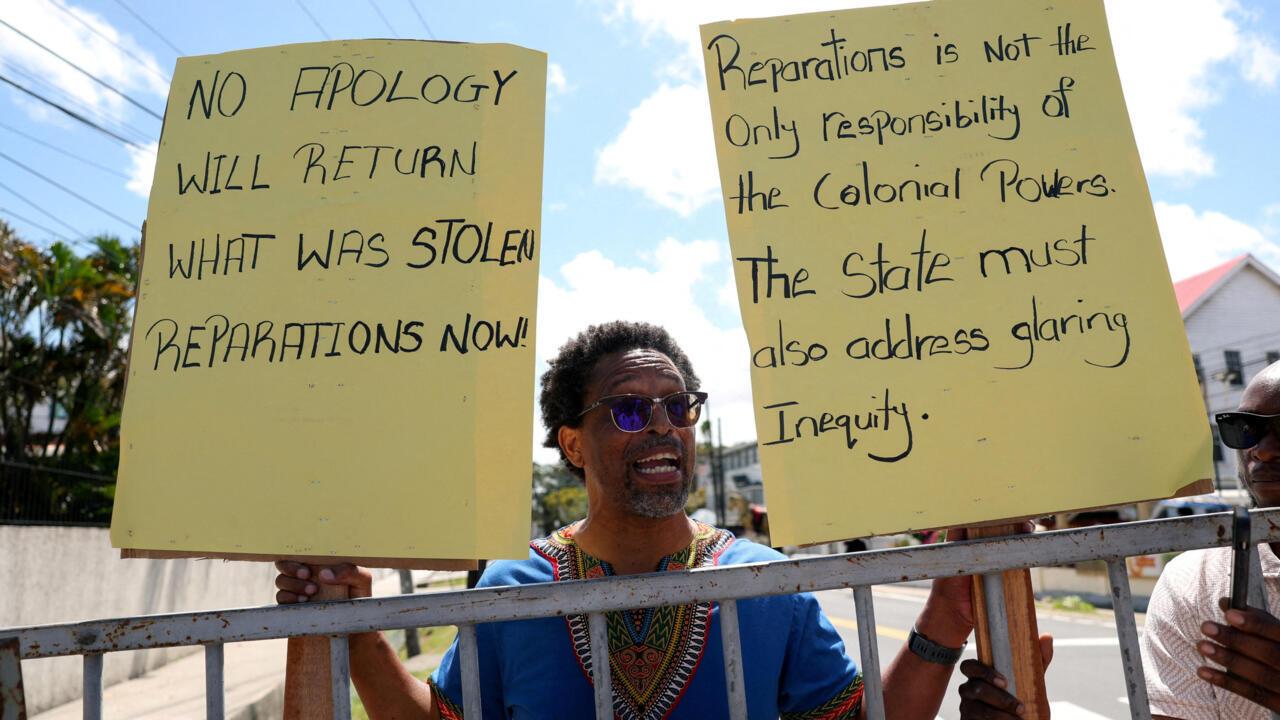
Let us begin with the ledger, because the British government never has. When Britain abolished slavery across its empire in 1833, it did not send a single shilling to the people who had been bought, branded, and worked to death. It sent the money to the men who owned them. Parliament borrowed vast sums to pay the planters, and British taxpayers carried that debt for generations. The loan was not fully repaid until 2015. The enslaved received nothing. Their descendants are still waiting.
Between 10 and 15 million Africans were taken across the Atlantic over four centuries. Mothers were separated from children on the coast of West Africa. Men were chained in the holds of ships and thrown overboard when they became inconvenient to insure. Women were raped on plantations that British capital financed. We are not describing an abstraction. We are describing the theft of human lives on a scale that shaped the modern Americas, and the wealth built on that theft still sits in London, Bristol, and Liverpool.
Now the Commonwealth has met in Antigua and Barbuda, 1 to 4 November 2026, and the communiqué speaks of "meaningful, truthful and respectful conversation towards forging a common future based on equity." Fine words. Words cost nothing. Yet we have been here before, and the record of the words is thin. The communiqué welcomed Britain's willingness to enter "a structured, time-bound, inclusive and good-faith dialogue" on the transatlantic trafficking of enslaved Africans. No timetable was announced. No date. No deliverable. A dialogue without a deadline is a waiting room.
King Charles III called the slave trade "a monstrous injustice" and spoke of "profound personal sorrow." We accept that the King's sorrow is real. But he stopped short of an apology, and he is politically neutral by constitutional design, which means the sorrow belongs to him and the power belongs to Downing Street. Prime Minister Andy Burnham said he was open to saying sorry. He also ruled out financial reparations. Foreign Secretary Ed Miliband called reparations "not feasible" in the same breath as saying there are "things we can work on co-operatively."
Ask yourself what that sentence means. Britain will talk, but will not pay. It will regret, but will not repair. The bill is not being rejected because it is unaffordable. Britain is the fifth-largest economy on earth by most measures, and it found the money to bail out its banks in 2008, to fund its wars, and to keep its own pension promises. The bill is being rejected because paying it would require admitting that the wealth of an empire was built on the bodies of Africans, and that the debt is owed to us.
Consider what has already happened in the halls of the United Nations. In March this year, the General Assembly adopted a resolution recognising the transatlantic slave trade and the enslavement of Africans as the "gravest crime against humanity." Ghana spearheaded that motion. Ghana has also backed Jamaica's petition to push the UK toward reparations. Accra understood what Westminster refuses to understand: this is not a sentimental matter. It is a matter of law, of record, and of justice that has been deferred for two centuries.
Reports suggest Britain could issue a formal apology next year, during its G20 presidency. Notice the timing. An apology scheduled to coincide with a moment of international prestige is not contrition. It is public relations. We have seen this playbook before, from Western capitals that lecture us about democracy while protecting their commercial interests on our continent. The same governments that demand transparency from African states hide behind closed doors when their own historical debts come due.
And we must be honest about our own house. Africans were not passive victims in this trade. Coastal kingdoms and coastal merchants raided their neighbours, sold prisoners, and grew rich on the coffle and the auction block. Some African rulers profited while their people were marched to the sea. Acknowledging this does not dilute British guilt. It sharpens our responsibility. The same pattern persists today when African elites sign away mineral rights, bury contracts in secrecy, and sell their citizens' futures to whoever pays the highest commission. The slave ship was the first extraction economy. Its heirs wear better suits now, and they are not all in London.
Look at the new scramble for Africa, which is aggressive and multipolar. China builds our railways and holds our debt. The UAE buys our ports and our farmland. Turkey sells us drones and sets up bases. Russia sends its mercenaries to guard gold mines in exchange for regime survival. Different actors, same extractive logic. Every one of them promises partnership and delivers dependency. Our answer cannot be to swap one master for another. Our answer must be institutions that no foreign power can buy.
So what must happen? First, the Commonwealth dialogue must have a binding timetable, published terms of reference, and an independent secretariat with the authority to report publicly on progress. Second, Britain must open its national archives on slave compensation, the Slave Registers, and the plantation ledgers in full, so that every descendant can trace what their ancestors were worth to the Crown. Third, any apology must be paired with concrete restitution: funding for education, public health, and African and Caribbean universities, delivered through transparent, audited channels rather than handed to governments with weak accountability.
Our own governments have work to do too. Ghana's leadership at the UN shows what a serious African state can achieve on the world stage. Botswana, which built one of the continent's most durable democracies on diamond revenues managed through transparent rules, shows what sound institutions can do with national wealth. Mauritius, which turned a plantation economy into an open, well-governed island economy, shows that the legacy of slavery is not destiny. Rwanda's economic reforms prove that discipline and reform can work, even as its military adventures in eastern Congo betray the very principle of sovereignty that African states rely on. Africa does not lack models. It lacks the will to demand the same standards from everyone, including itself.
Citizens have a role here. Demand that your parliament and your ministry of foreign affairs publish their position on reparations and the Commonwealth talks. Demand a timetable, not a photo opportunity. Support civil society groups documenting the trade and its descendants' claims. Hold your own leaders to account for every contract they sign with foreign partners, because a people who cannot see the terms of their own deals cannot claim justice from anyone.
Britain's politicians will tell you reparations are not feasible. We say the feasible thing has been avoided for two hundred years. The money went to the planters. The silence went to the victims. Africa and the Caribbean are done being polite about it. Put a date on the dialogue. Open the archives. Say the word "reparations" out loud in a Commons debate. And if Westminster still refuses, let it refuse in front of a world that is watching, because the record will outlast the speeches.
Based on reporting by RFI