general
Ethiopia's Border Politics Killed a Child and Drove 50,000 Into Kenya
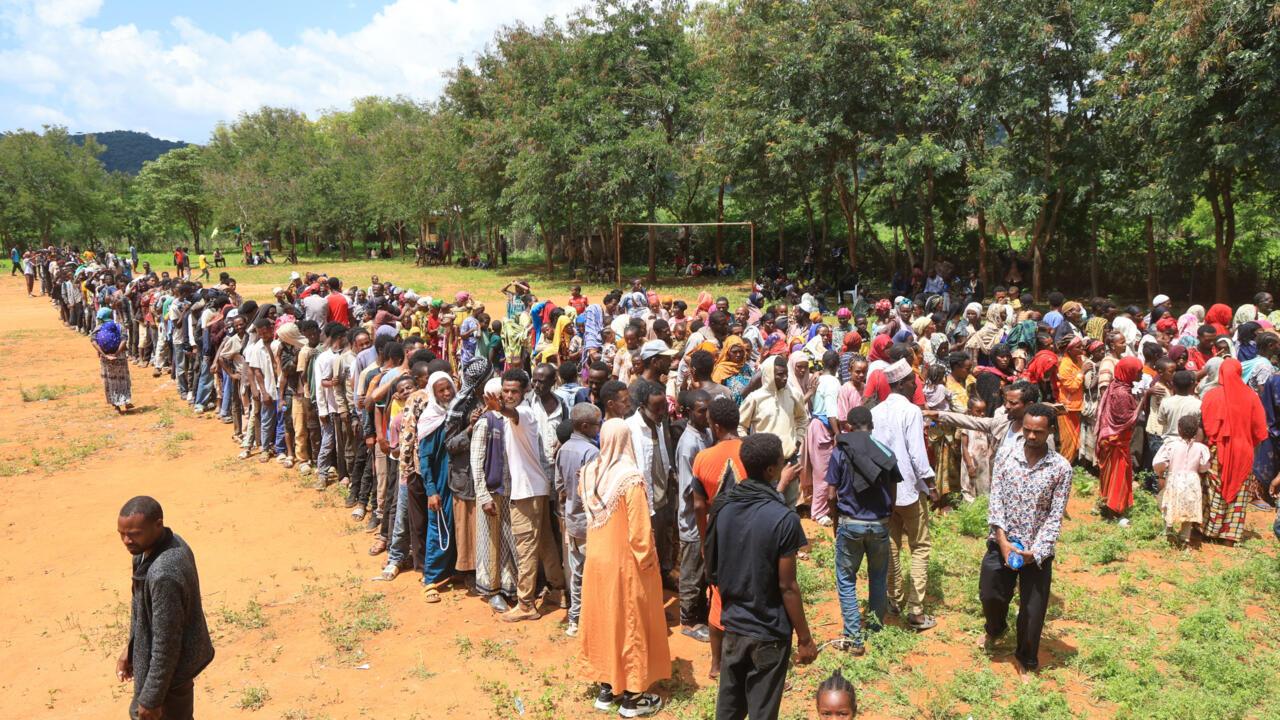
A thirteen-year-old girl is dead. She was a child, and her death began with a flag. On 18 October, a Somali flag was raised over an administrative office in Moyale, a town in southern Ethiopia that is jointly administered by the Oromia and Somali regions. Gunfire followed between local militias. A girl was killed. Then the violence spread across seven districts, leaving more than a dozen people dead and tens of thousands of families with nothing but the clothes on their backs.
Now about 50,000 people have crossed into the Kenyan side of Moyale. Mothers are sleeping on bare ground. Children are sharing one water container among a dozen relatives. Families who had little are now sheltering people who have even less. That is what the collapse of local order looks like. It does not arrive with tanks at the gate. It arrives with a flag, a rumour, a funeral, and a town that has run out of trust.
We need to ask the question our leaders keep avoiding. How did a land and administrative dispute that has been simmering for years reach the point where a child is shot and an entire town is emptied? The answer is not that Africans are incapable of managing difference. Africans have managed far more complicated fault lines. The answer is that disputes over land and control were left to fester, to be settled by armed men rather than by courts, commissions, and ballots.
The reporting from the International Organization for Migration, the Kenya Red Cross, and the UN refugee agency tells the same story from different angles. The Kenya Red Cross first counted 36,000 displaced people. The IOM later raised its estimate to 50,000, and it warns that the figure may climb further. No comprehensive official count exists yet. Read that sentence again. In 2026, with satellites overhead, mobile phones in every pocket, and humanitarian agencies on the ground, nobody can say with confidence how many people have fled a single town. That is not a technical failure to be shrugged off. It is a governance failure. When the state cannot count its displaced citizens, it cannot protect them, and it cannot be held accountable for what happened to them.
Consider what the IOM's Nomagugu Ncube actually described. Families facing serious shortages of food, water, and shelter. Host communities whose own supplies were already thin. Schools turned into temporary shelters, which means children who should be learning are now sleeping on classroom floors. Each of these is a human life put on hold by politicians who have decided that border questions are too dangerous to resolve through the law.
This is also a warning to Kenya, which now carries a burden it did not choose. Moyale sits on a frontier that has always been porous, where pastoralist communities, traders, and kin cross daily. When violence erupts on one side, it spills onto the other, and the people who pay are not the men who raised the flag or the men who led the militias. They are the grandmothers, the schoolchildren, and the traders who simply wanted to get home.
Some will say this is just the kind of local dispute that happens everywhere, and that Ethiopia's complexity makes easy judgments unfair. We reject that excuse. Complexity explains why a problem is hard. It never excuses a government from solving it. Ethiopia's federal framework was designed to give regional states authority and a voice, precisely so that questions of identity and administration could be handled through constitutional channels rather than through rifles. When those channels fail, the failure belongs to the people who run them.
Look at the countries across this continent that have done this work well. Botswana built a reputation for stability by keeping its institutions predictable, its courts independent, and its elections credible, and it has used those foundations to manage diversity and resource disputes without tearing itself apart. Mauritius has managed a multi-ethnic, multi-religious society for decades through inclusive governance and strong rule of law. Ghana has handed power back and forth through the ballot box, proving that losers can accept defeat when the referee is trusted. None of these countries is perfect. All of them understood that the surest way to stop a town from exploding is to give every community a court it trusts and a vote it can count.
So what must Ethiopia do? It must establish a transparent, independent boundary and administrative commission for Moyale with real enforcement power and public hearings, so that a disputed office is settled by evidence rather than by a flag. It must investigate the killing of that thirteen-year-old girl and prosecute whoever fired the shot, regardless of which clan, militia, or party they belong to. It must disarm local militias and bring them under the authority of the state, because a militia that answers to nobody will always find a reason to fight. And it must restore a functioning local judiciary that residents can reach without fear, because justice delivered at the end of a rifle is not justice at all.
The African Union and IGAD should not wait for the next body count. They should deploy a mediation team with a mandate to convene both regional administrations, local elders, women's groups, and youth leaders around one table, with a deadline and a written agreement. The United Nations and donor governments should fully fund the humanitarian appeal now, not after the next crisis forces their hand. Money for food, water, and shelter is not a favour to Ethiopia or Kenya. It is the minimum owed to people who fled violence they did not start.
And the rest of us have a role to play. Civil society groups in Addis Ababa, Nairobi, and across the region should demand that their governments publish the displacement numbers, the investigation findings, and the aid budgets, in full and on time. Journalists should follow the story past the first headlines. Private businesses with interests along the Moyale corridor should fund local reconciliation and insist that their trade routes not be held hostage by armed men.
Here is the demand we make, as Africans, to our leaders in Addis Ababa and Nairobi and to the bodies that claim to speak for this continent. Stop treating border towns as afterthoughts. Stop letting land disputes become killing fields. Count the displaced. Charge the killers. Fund the shelters. Build the courts. A thirteen-year-old girl did not die so that a flag could be argued over in silence. Her death should be the last one of its kind.
Based on reporting by RFI