security
Salva Kiir Is Marching South Sudan Toward a Rigged Vote
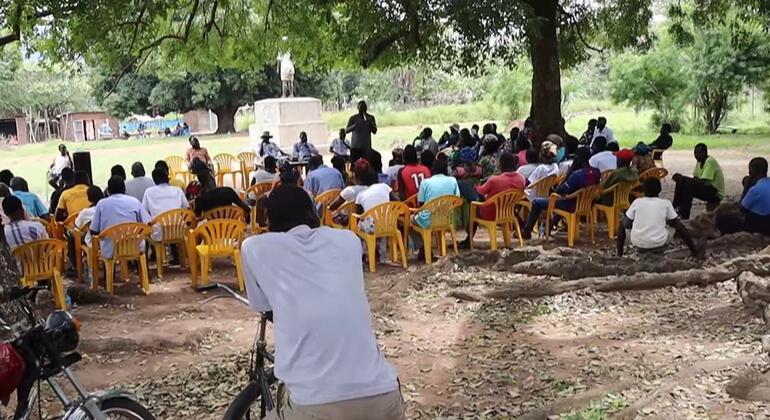
Six weeks. That is how long South Sudan has before its first national elections since independence in 2011. Fourteen years of promises, postponements and broken agreements have led to this moment, and the people who should be preparing for a vote are instead watching their country bleed.
Ask a mother in Jonglei what six weeks means. It means her children may not eat tomorrow. It means the road to the market could be the road where the next ambush happens. It means that when the ballot finally arrives, she will be asked to choose between men who have never once been asked to answer for what they have done with her country's money.
Let us start with what is already on the record. In August, three UN peacekeepers were killed in an ambush in Jonglei. Peacekeepers are not combatants in a war they chose. They are the people the international community sent to protect civilians, and they died in a state where fighting is again tearing through communities. The UN Security Council is meeting in New York this week, and ambassadors are expected to call for an inclusive process and credible polls. They should. But calls for "inclusive" elections are a hollow currency when the country's most prominent opposition figure, Riek Machar, has been detained and placed on trial in a case widely criticised by observers, and when the 2018 peace agreement that was supposed to end the last civil war has been hollowed out, clause by clause, by the very men who signed it.
Here is the uncomfortable arithmetic. Oil accounts for the overwhelming majority of South Sudan's government revenue, and nearly all of it is exported through pipelines that run through Sudan and onward to international markets. This is a country that earns billions in oil income, yet its citizens face some of the worst hunger on earth. Humanitarian agencies have repeatedly warned of famine conditions in parts of the country, while more than two million people remain internally displaced and millions more depend on food aid to survive. Where does the money go? Into security forces that are paid unevenly, into patronage networks, into accounts that no independent auditor has been allowed to examine with full transparency. A government that cannot pay its teachers and nurses has no shortage of money for weapons and villas.
Why does this matter beyond South Sudan's borders? Because the pattern is one we have seen across our continent. A ruling elite captures the state, uses ethnic mobilisation as a tool of control, postpones elections when the outcome is uncertain, and then presents the eventual vote as proof of legitimacy. The leaders know the playbook. The external powers that fund, arm, and quietly court them know it too. China buys the oil and the infrastructure contracts. Gulf states and Turkey compete for influence through security and investment deals that rarely come with questions about who benefits. Russia and others see opportunity in weak institutions and cash-hungry governments. Each of these actors speaks the language of partnership. Each of them, in practice, prizes access over accountability. This is the new scramble for Africa, and South Sudan's people are paying the price in hunger lines and graves.
We should be honest about the complexity. South Sudan is not a simple story of good and evil, and its leaders did not inherit a blank slate. The country was born into a brutal war and carried the scars of decades of conflict. But complexity is never an excuse for complicity. A government that refuses to publish its oil revenues, that detains its rivals and calls the result a legal process, and that schedules an election it has no intention of making free, has chosen its path. Nobody forced Juba to delay elections for over a decade.
So what must happen? First, the Security Council should stop treating South Sudan as a permanent emergency and start treating it as a governance crisis with clear conditions. Renewed sanctions and the arms embargo should be tied to measurable benchmarks: independent voter registration, the release of political prisoners or a fair and transparent trial process, unrestricted access for observers, and public disclosure of oil revenue flows. The African Union and IGAD must stop issuing communiqués that read like they were written in advance and start sending envoys with the mandate and the willingness to say no.
Second, look at who is getting it right. Botswana built one of the strongest records on the continent by managing its mineral wealth through transparent institutions, independent courts, and a professional civil service. Mauritius has shown that rule of law and open markets attract investment and reduce elite capture. Ghana completed a peaceful transfer of power in 2024 after a hard-fought election, and Senegal's 2024 vote proved that citizens who refuse to be silenced can force a sitting government to respect the constitution. None of these countries is perfect. All of them prove that better is possible. South Sudan can learn from them, starting with an independent electoral commission, a published and audited national budget, and a central bank that reports to the public rather than to the presidency.
Third, South Sudan's civil society, its churches, its women's groups, its young professionals in Juba and in the diaspora, must be given the space to organise without fear. Free markets need property rights and contract enforcement. Democracy needs a free press and a judiciary that rules against the powerful. Those are not Western luxuries. They are the minimum conditions for a government to be accountable to the people who pay its bills.
Now the question that matters most. Who will answer for the ambush that killed three peacekeepers and the famine that is killing children? Who will answer for the oil money that never reaches the clinic? Who will answer for an election scheduled for a country where the main opposition leader is on trial?
We, as Africans, have to refuse to be spectators. Demand that our governments and the African Union insist on credible conditions before any election is recognised. Demand that the Security Council convert its sympathy into enforceable benchmarks. Demand that every company and foreign government doing business in South Sudan publish what it pays and to whom. And demand, loudly, that the people of South Sudan be allowed to choose their leaders in a vote they can trust.
Six weeks is not much time. But it is enough time for the world to decide whether it will validate another hollow election or stand with the mothers in Jonglei who simply want their children to live.
Based on reporting by UN-NEWS