spotlight
China Bankrolled Niger's Coup Makers and Is Now Paying the Price
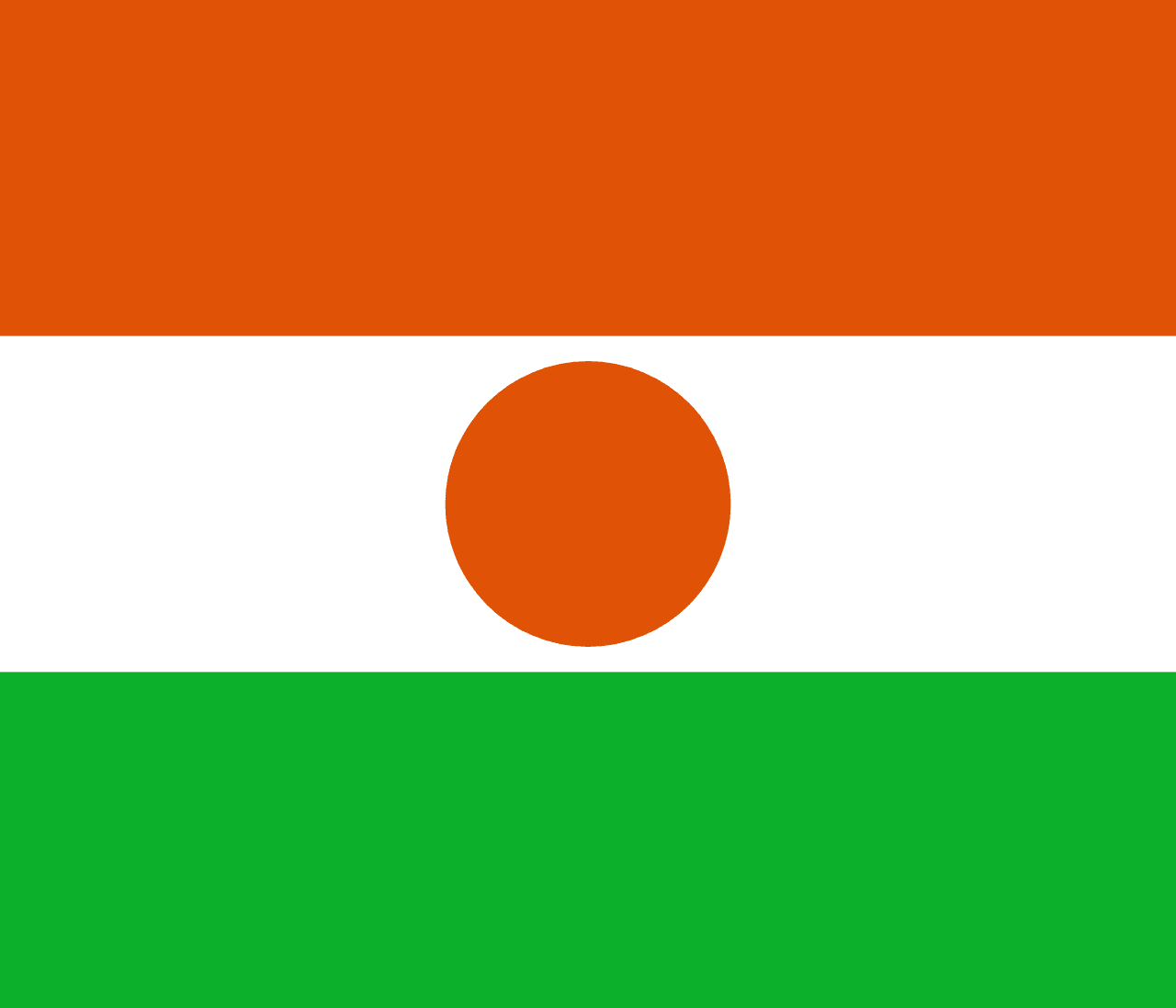
How many times must a coup be rewarded before it stops being called a coup? In Niger, the answer has been: long enough for a foreign power to write a $400 million check to the men who overthrew an elected president, and long enough for those men to start treating that power's citizens as bargaining chips. Beijing made its bet on a military junta. The junta is now making the bill come due.
In July 2023, General Abdourahamane Tchiani seized power from President Mohamed Bazoum, a democratically elected leader who has been held in detention ever since. Bazoum's government was China's partner. Within months, China shifted its loyalty to the men with the guns. It became the junta's leading international backer, extending a $400 million bailout at the very moment the African Union and ECOWAS were trying to isolate the regime. Every naira and every franc of that money sent a message to every ambitious colonel on the continent: the coup pays, and the neighbors will look away.
Consider what the junta has done since then. In March 2025, it expelled three senior executives of the China National Petroleum Corporation. Earlier, it had shut down a Chinese-owned hotel in Niamey, citing "discriminatory practices and administrative violations." In May 2025, it ordered CNPC and its Soraz refinery to suspend the work permits of expatriate staff with more than four years of service. The same regime that demanded Beijing's embrace now demands back taxes, equal pay scales, more local executives, and all subcontracting to local firms. These demands were not negotiated before an independent arbiter. They were issued by a military government that rules by decree. That is not investment policy. It is extortion dressed in the language of sovereignty.
The numbers tell the rest of the story. China's Agadem-Sèmè pipeline stretches 2,000 kilometres from the isolated southeast of Niger to the Atlantic port of Sèmè in Benin. It cost roughly $5 billion and began operating in 2024 after more than a decade of work. Today, it has been attacked by the Front patriotique de libération, which has spilled oil and halted operations, and the FPL has explicitly called on Beijing to end its dealings with the junta. Chinese workers, who came to build a road to the sea, now live under the threat of kidnapping and ambush. Meanwhile, deaths linked to militant Islamist groups rose 66 percent after the coup. The country is on track to record around 1,400 such fatalities in 2025, nearly triple the figure for 2022. Militants now hold territory along the roads into Niamey, and the capital is increasingly cut off from its own hinterland.
We should be clear about who pays for this. It is not the generals in their air-conditioned compounds. It is the Nigerien farmer whose village sits on a road controlled by armed groups. It is the mother in Niamey who cannot get fuel for a hospital generator. It is the soldier sent into an ambush with inadequate equipment because the treasury was emptied by a regime that prefers imported weapons to salaries. China has also become a supplier to these juntas. NORINCO, its state arms maker, delivered at least ten shipments of weaponry to Niger, Burkina Faso, and Mali across 2023 and 2024, including drones, armoured vehicles, and instructors. When a government takes power by force and Beijing arms it, Beijing becomes a party to the violence, whatever its diplomats say about non-interference.
And the debts are piling up. Niger has missed four debt payments to international lenders and is now in default on $519 million. The junta has also revoked the laws that required transparent accounting of its defence sector. Think about that. A regime borrowing heavily from foreign lenders has removed the very oversight that would tell its own citizens where the money goes. Any investor who looks at that balance sheet and still sees opportunity is not doing business. They are gambling with other people's money.
China's own doctrine should give Beijing pause. Its officials speak of "sovereign authority" and "stability maintenance," but stability for whom? A regime-centric stability that protects a junta from its own population is not stability at all. It is a pressure cooker with a government-issued lid. Shanghai's Commission of Commerce, to its credit, warned in May 2025 that Chinese state firms in Africa face a dangerous political environment, and it advised employees to avoid political comment and stay neutral. That advice is sensible. But it comes too late for the executives already expelled and the workers already in harm's way. Neutrality is not possible when your chief financier is also the junta's chief lobbyist on the world stage.
This is not a Chinese problem alone. This is an African problem, because the African Union's credibility is on the line. FOCAC membership is supposed to be reserved for AU members in good standing. Yet Beijing welcomed the juntas of Niger, Burkina Faso, and Mali to the Ninth Forum in September 2024, showed them around NORINCO factories, and sat Tchiani down with Xi Jinping. Every time a major power treats a suspended regime as a normal partner, the AU's norm against unconstitutional change is weakened. We have spent decades building that norm. We cannot allow it to be sold for a pipeline deal.
So what must change? The answer begins with democracy, and it is not complicated. Niger must return to constitutional rule, with Bazoum released and a credible electoral timetable set by independent institutions, not by generals who promised a transition and keep extending it. Africa does not lack examples of how it can be done. Senegal's 2024 elections saw an incumbent accept defeat after courts and citizens pushed back against an attempt to postpone the vote. Ghana has handed power peacefully between rival parties multiple times. Botswana and Mauritius have built the rule of law and independent judiciaries that attract long-term investment precisely because they make contracts enforceable. These are not foreign prescriptions. They are our own success stories.
Investors, including Chinese ones, need the same things every serious business needs: independent courts, binding arbitration, transparent public finances, and predictable rules. The AfCFTA and regional commercial courts should be strengthened so that disputes are settled by judges, not decrees. ECOWAS must stop treating coups as internal affairs and start applying real costs: targeted sanctions on junta leaders and their financial networks, and the swift suspension of any government that seizes power by force. Civil society and the private sector across West Africa should insist, loudly, that contracts signed under constitutional governments be honoured, and that no junta can sign away a nation's future in a closed-door session.
Finally, the citizens of Niger and the wider Sahel must be heard. A government that answers to no election cannot be held to account by a ballot box, but it can be held to account by a free press, by independent unions, by lawyers who take on cases against arbitrary decrees, and by ordinary people who refuse to be silenced. Ask your representatives where they stand on coups. Ask your business leaders whether they would invest in a country where the constitution has been burned. Ask Beijing and every other capital whether their values stop at the edge of a profitable contract.
We are told that stability is the price of development. The truth is the reverse. There is no development without the rule of law, and no rule of law where soldiers rule by decree. Niger is showing the world what happens when a junta is handed money instead of a mandate. The pipeline is leaking, the militants are advancing, the debts are unpaid, and the people are paying the price. We refuse to accept that this is the best Africa can do. Demand elections. Demand the release of Mohamed Bazoum. Demand that the AU and ECOWAS enforce their own rules. The coup makers counted on the world being too distracted or too greedy to notice. Prove them wrong.
Based on reporting by ACSS