general
Russia Is Luring Africa's Young Men Into Its Ukraine Slaughter
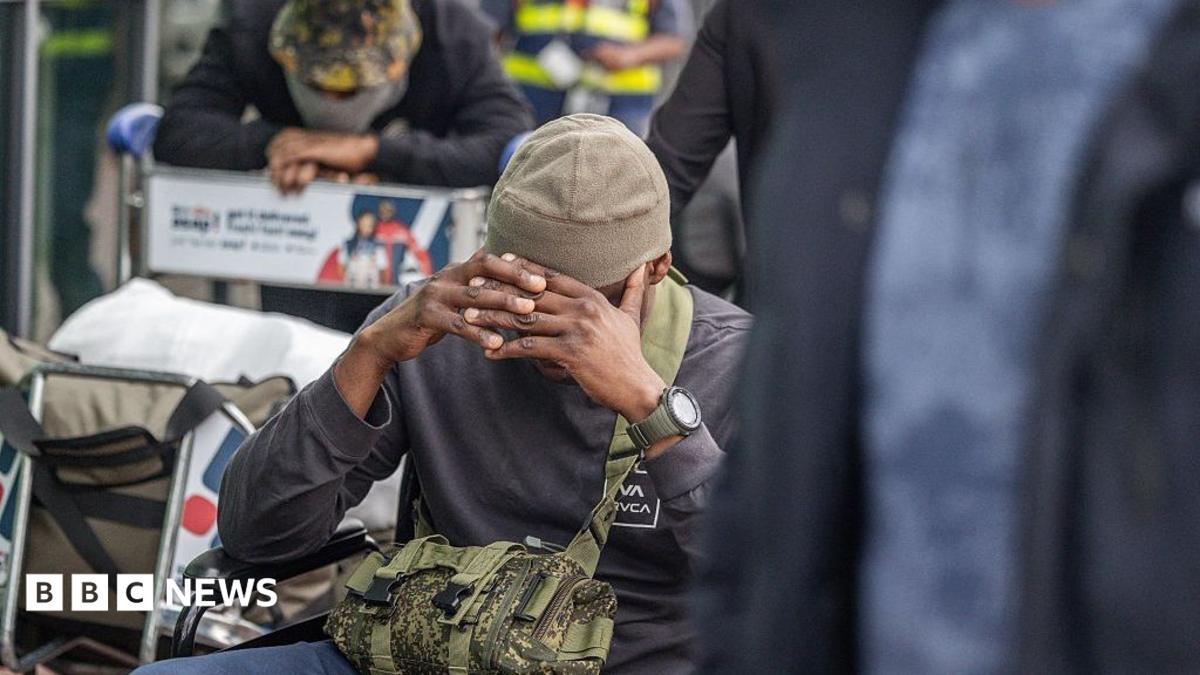
Nine young men. Aged between 20 and 26. Zimbabweans, caught in and around Johannesburg as they prepared to board flights out of South Africa. Police have not said which side they were headed to fight for. They have not named the agents who sold them the trip. What they have said is enough to make any African parent go cold: these young men were allegedly trying to reach a battlefield in Ukraine, a war most of them had no stake in, for reasons that almost certainly had more to do with desperation than conviction.
We have seen this movie before. We have seen it in Nairobi, in Accra, in Harare, in Pretoria. A job advert promises security guard work in Moscow or a logistics post in the Gulf. A recruiter offers a passport, a salary in dollars, a future. Then the plane lands, the passport disappears, and the recruit finds himself in a uniform on the Donbas front with a rifle he was never trained to use. Some of these men are told the truth too late. Others are told nothing at all.
Let us put the numbers on the table, because the numbers are where the lies collapse. A Ukrainian intelligence assessment earlier this year estimated that more than 1,700 Africans from 36 countries had been recruited to fight for Russia. That figure should stop us cold. Thirty-six countries. Seventeen hundred human beings, many of them young, many of them poor, many of them now dead or trapped behind enemy lines. Kenya's government estimated that 252 of its citizens had been illegally conscripted into the Russian military. Zimbabwe announced that 15 of its nationals had been killed after being recruited, with more than 60 still trapped on the frontlines. Sixty young Zimbabweans, alive but imprisoned by a war they did not choose, waiting for a rescue that may never come.
Consider what those figures mean for real households. A mother in Mutare or Bulawayo who gets a phone call that her son has been killed in a country she cannot find on a map. A father in Nairobi who sells his land to pay for a lawyer to chase a recruitment agency that has already vanished. Multiply that grief across thirty-six nations and you begin to understand what Africa is quietly paying for a war that is not ours.
South Africa has been forced to act, and to its credit it has acted. The government secured the return of 17 South Africans who had been tricked into joining the fighting. In December last year, authorities arrested five people, including a journalist, for allegedly recruiting others. Now nine Zimbabweans have been charged under the Regulation of Foreign Military Assistance Act, a law that outlaws mercenary activity without government permission. Interpol and several international police agencies were involved, which tells us the suspects allegedly broke laws in their home countries too. Good. Prosecute every link in this chain: the trafficker, the travel agent, the corrupt official who stamped the forged papers, and the foreign bureaucrat who looked away.
But let us be clear about the uncomfortable truth that the official communiqués politely avoid. Russia is the main beneficiary of this traffic in human beings. Moscow is fighting a war of aggression in Ukraine, a sovereign European state it invaded in 2022, and it is short of bodies. Africa's unemployed youth, with their broken economies and their thin prospects, are a convenient supply line. Russia does not need to conscript a single Russian mother's son when it can dangle a fat salary in front of a 22-year-old in Harare.
And Ukraine is not blameless in the broader recruitment picture. Kyiv has also been recruiting foreign nationals, including Africans, to fill its own depleted ranks. Defending yourself against an invader does not give you license to trade in the bodies of foreign youths, nor to lure them into combat without a clear understanding of what they are signing up for. Every government recruiting African men into a foreign war, whatever its cause, owes those men the truth, a contract, and a way home. We will hold Kyiv to that standard as firmly as we hold Moscow to its own.
Here is the deeper pattern. Africa has been a battlefield for other people's wars for more than a century, and the continent's elites have often been the ones who opened the gates. Cold War proxy armies, mercenary contracts sold to the highest bidder, foreign militias feeding on weak states from Libya to the Sahel. Today the actors have changed, but the logic has not. Outside powers come to Africa seeking soldiers, resources, votes at the United Nations, and access to ports and minerals. They do not ask what happens to the young men they use up. They do not count the coffins. They count only the strategic gain.
We, the people of this continent, have every right to demand better from our own leaders. Why are young Zimbabweans so desperate that a dangerous contract abroad looks like the best option on the table? Because the economy at home has failed them. Because unemployment among young people in parts of southern Africa runs at levels that would shame any government that claims to care. A generation is being told to wait, endure, and be patient, while the people in power enrich themselves. When a 22-year-old chooses a battlefield over his own country, the country has failed him first.
The way out is not complicated, though it demands courage. Botswana built its prosperity on stable institutions, transparent management of diamond revenues, and an independent judiciary that protects property and contracts. Mauritius turned a sugar island into a services and finance hub by investing in education and open trade. Those are the building blocks of a future that keeps young people home. Zimbabwe, South Africa, and every other state in the region must put the same foundations in place: enforceable labour law, real protections against fraudulent recruitment agencies, public registries of licensed overseas employers, and fast-track consular support so that no citizen is left stranded abroad without a voice.
Regional bodies have a role too. The African Union and the Southern African Development Community should adopt a binding protocol on the recruitment of African nationals into foreign armed forces, with shared intelligence, extradition for recruiters, and automatic repatriation for anyone trafficked into combat. The United Nations should report, by name and by country, the states and agencies that facilitate this trade. Civil society groups, journalists, and diaspora communities must keep documenting the cases, because silence is the recruiter's best friend.
So here is what we demand. From the governments of Zimbabwe and South Africa: prosecute the traffickers, publish their names, and bring the nine men's cases to a fair hearing with full consular support for their families. From the African Union: convene an emergency session on foreign military recruitment and give it teeth. From Moscow and Kyiv alike: stop targeting African youth as cannon fodder and open your recruitment records to independent investigators. From every young African reading this: never sign a contract you have not read in full, never surrender your passport to a stranger, and never believe a recruiter who promises easy money in a distant war.
Nine young men were stopped at an airport. Fifteen were already dead. Sixty more are still waiting. Their names should not disappear into a press release. They are our sons, our brothers, our neighbours. Let us refuse to be a continent that exports its youth to die for someone else's empire.
Based on reporting by BBC