acss-digest
Sisi's Regime Is Jailing Egypt's Last Free Journalists
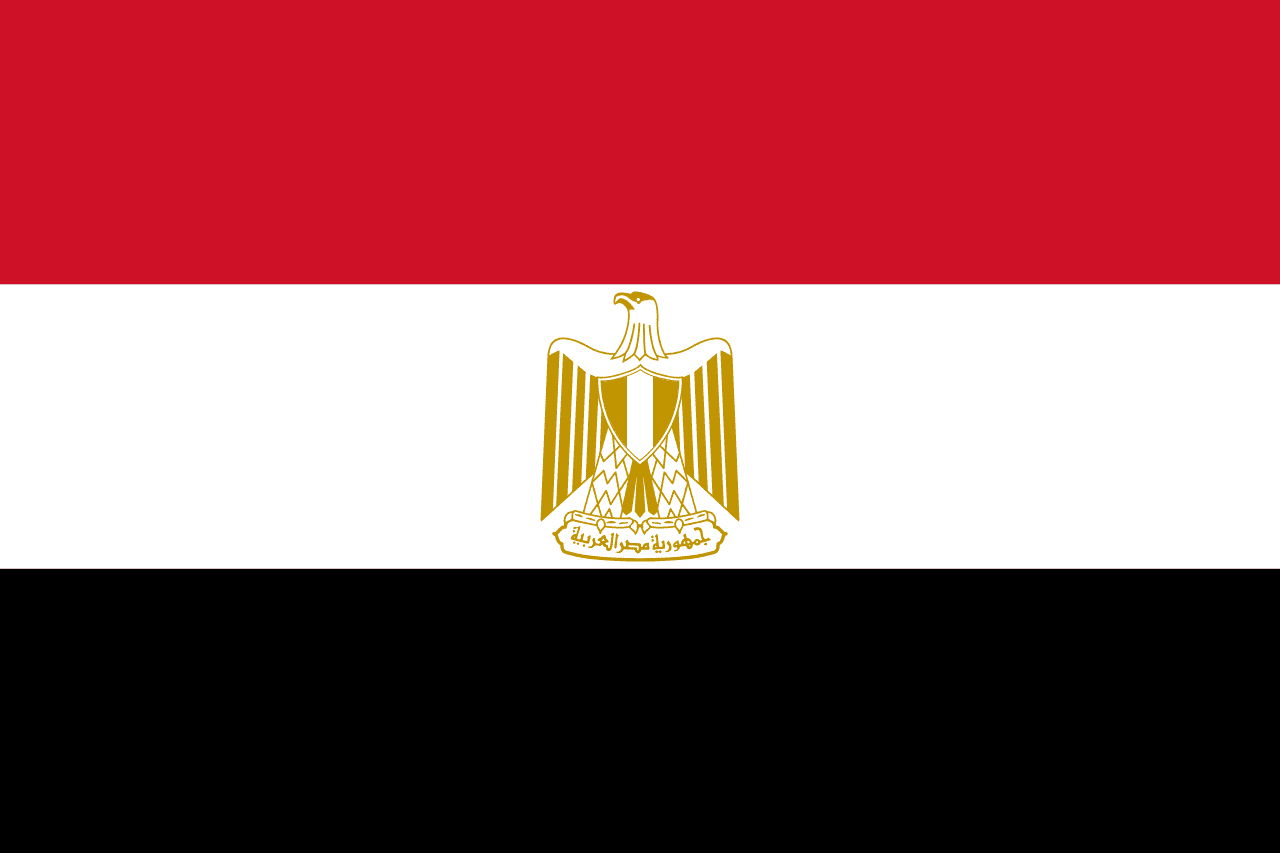
Count them. Twenty-six of Egypt's most prominent journalists are behind bars right now. Not suspected terrorists. Not men with guns. Reporters, editors, and fact-checkers whose only weapon was the truth.
This week, the Egyptian state detained the entire staff of Matsadaash, a fact-checking platform. It ordered the closure of Mada Masr, one of the last independent news outlets still standing in the country. And it informed Mada Masr's chief, Lina Attalah, that a court had already handed her a one-year prison sentence, issued in absentia, while she was not present to defend herself. Attalah now faces jail time in court. Her crime is journalism.
Ask yourself what kind of government fears a fact-checker. Ask what kind of state needs to imprison the people who verify its claims. The answer is a government that knows its story cannot survive scrutiny.
Let us be precise about what is happening, because the regime counts on Egyptians being too exhausted to look closely. Over more than a decade, the space for dissent in Egypt has been shut down almost entirely. Independent newsrooms have been raided, financially strangled, and pushed into exile or silence. Those who remain are harassed through prosecutions designed to be slow, expensive, and humiliating. A one-year sentence handed down in absentia is not a legal technicality. It is a warning to every journalist in Cairo, Alexandria, and Asyut: this could be you next.
Attalah has described a belief spreading through Egypt's leadership that silencing the media is the solution to the country's problems. That belief is not just cruel. It is stupid. Silencing journalists does not fix an economy that has lurched from one IMF arrangement to the next. It does not reduce inflation that has crushed ordinary Egyptians' purchasing power. It does not create jobs for the millions of young people entering a labour market with no room for them. It only guarantees that when things break, nobody will be there to report why, and nobody will be held responsible.
Consider what the regime is actually protecting. Not the nation. Not the public. It is protecting a system in which decisions about megaprojects, military contracts, and state-owned enterprises escape the light. When a fact-checker is jailed, the lie is not defeated. The lie simply wins by default.
And here is the part that should make every African uncomfortable. Egypt's rulers have learned that they can do this with little consequence. The world's capitals speak of Cairo as a "haven of stability" in a turbulent region, as Attalah herself has noted, with conflict raging along its borders and across the Red Sea. Investors, creditors, and strategic partners have poured money into the country on the assumption that the status quo will hold. Stability has become a commodity, bought and sold, while the people who make stability real, the journalists who hold power accountable, are locked away.
Attalah's warning deserves to be read twice. Investing in power and the status quo, she argues, is the wrong bet. She is right. A country where a free press is criminalised is a country where corruption grows unchecked, where bad policy festers without correction, and where anger has nowhere to go except underground. Stability built on silence is not stability. It is a pressure cooker with the valve welded shut.
We have seen this movie across our continent. Ethiopia's crackdowns on journalists did not prevent the bloodshed of its recent conflicts. Zimbabwe's suppression of the press under Mugabe did not save the economy from collapse. Every time an African government has chosen to imprison its truth-tellers rather than answer their questions, the same result follows: the citizens pay, and the rulers eventually fall or dig in deeper. The lesson is written in the ruins of too many states.
So what must happen?
First, the Egyptian government must drop the charges against the Matsadaash team and all journalists currently detained for their reporting. It must cancel the in-absentia sentence against Lina Attalah and end the closure order against Mada Masr. These are not favours to be granted. They are obligations under the African Charter on Human and Peoples' Rights, which Egypt has ratified, and which guarantees freedom of expression and access to information. Cairo signed up to these promises. It is time it kept them.
Second, Egypt's regional and international partners must stop treating press repression as a footnote to strategic cooperation. The African Union has a Commission on Human and Peoples' Rights and a Charter on Democracy, Elections and Governance. Those instruments mean nothing if they are invoked only when it is convenient. Western governments that lecture the continent about democracy while signing defence and investment deals with Cairo must be asked, loudly and repeatedly, whether their values have a price tag.
Third, Egyptian civil society, lawyers, and business leaders who understand that a country cannot grow on fear must organise. Independent media need a legal framework that protects them, transparent funding rules that do not criminalise foreign support for journalism, and courts willing to rule against the state. Strong institutions are not a luxury. They are the foundation of any economy that hopes to attract honest investment rather than opportunistic capital.
Africa is not short of examples showing that a better way exists. Botswana has built one of the continent's most durable records of market-friendly growth, with institutions that have survived decades of governance tests, and a press that can criticise the government without being disappeared. Mauritius shows that a small nation can attract global investment through transparency, the rule of law, and independent oversight. Senegal, in 2024, demonstrated that an incumbent who loses an election can accept defeat, and that a peaceful transfer of power strengthens rather than weakens a country's standing. Ghana's media, for all its frustrations, has remained a vigorous check on its government. These nations did not become stable by silencing their people. They became stable by letting their people speak.
Egypt has the human talent, the history, and the geography to be a continental leader. It has a young population hungry for opportunity and a long tradition of intellectual and journalistic excellence. What it lacks is a government willing to trust its own citizens with the truth.
So here is what we demand. We demand that Egypt release the journalists it has jailed and end the prosecutions that criminalise reporting. We demand that the African Union speak with a clear voice on press freedom in member states, not with the whisper it reserves for its more powerful members. We demand that international partners tie their investments to verifiable progress on civil liberties, because money that buys silence is money that buys future crises.
And we demand something from ourselves. Share the reporting. Read the independent outlets that are still breathing. Support the fact-checkers, because when Matsadaash's staff are behind bars, the lies travel faster and the truth travels slower. Speak up in your WhatsApp groups, your universities, your workplaces, and your parliaments.
Lina Attalah is facing jail for doing her job. Twenty-five of her colleagues are sitting in cells for the same reason. The question is not whether Egypt's press will survive this assault. The question is whether Egyptians, and Africans everywhere, will let it die in silence while their governments call it stability.
We refuse. And so should you.
Based on reporting by ACSS-EMAIL