acss-digest
The ANC Lost Johannesburg Because It Could Not Keep the Taps Running
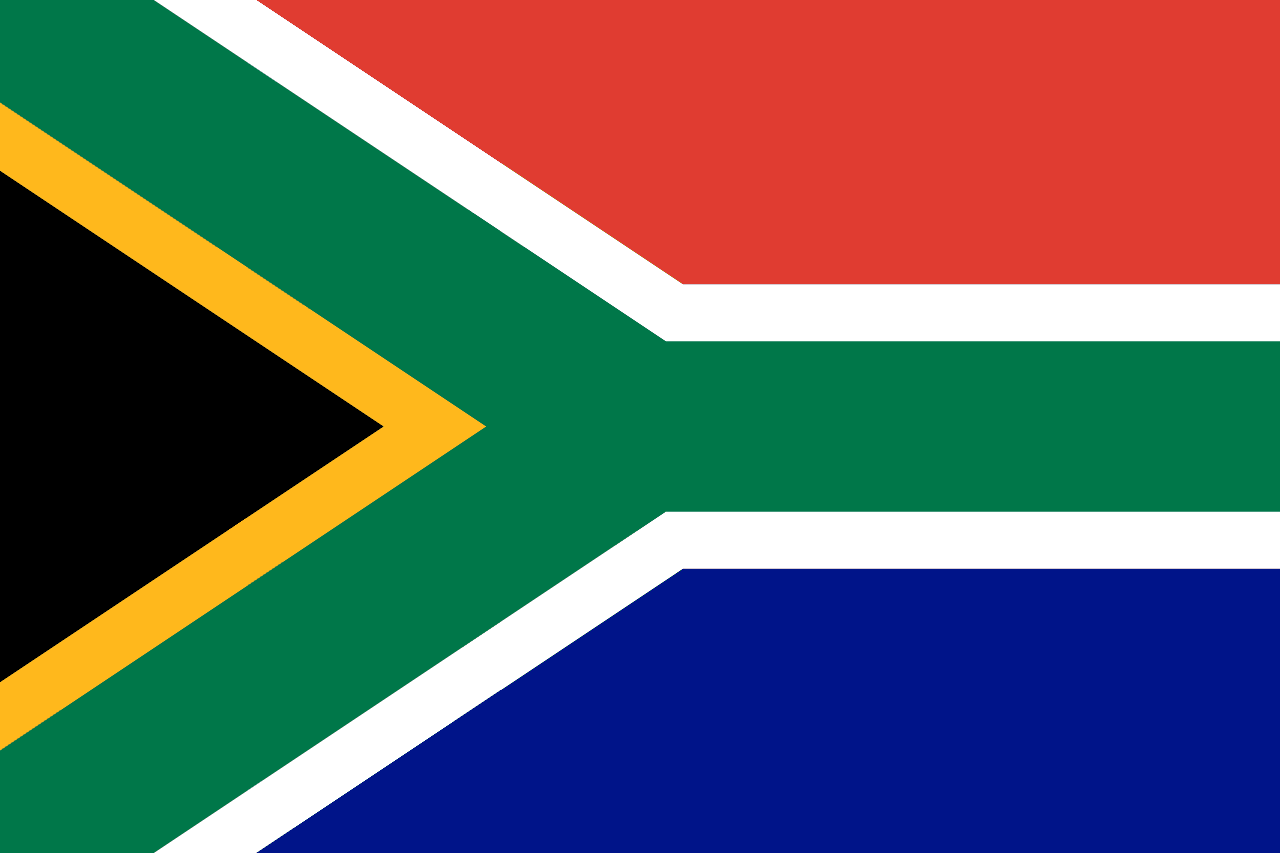
South Africans went to the polls this week and told the party of Nelson Mandela something it has never heard from the ballot box before: you have failed us, and we are no longer waiting for you to fix it.
The African National Congress won 31 percent of the vote in the local government elections, its worst result since democracy arrived in 1994. In 1999 and 2004, it commanded close to 70 percent. Today it is a party that cannot win a majority in the cities where most of us live, work and raise our children. The Democratic Alliance took 25 percent nationally and pushed the ANC out of first place in Johannesburg, Tshwane (Pretoria) and Ekurhuleni, the industrial east Rand where generations of workers built the country's economy. The DA kept Cape Town. The ANC remains the largest party by total share, but the trajectory is no longer ambiguous.
Ask yourself what these voters were rejecting. It was not apartheid. It was not Mandela's legacy. It was the tap that runs dry for days in Soweto and Alexandra. It was the electricity that switches off for hours and the sewage that spills into the streets of townships where people were promised dignity. Water and electricity are not luxuries that a liberation movement can treat as aspirations. They are the minimum a government owes the people who elected it. When a municipality cannot deliver clean water to a mother boiling a pot for her children, the failure is not abstract. It is a child with diarrhoea and a family that will never trust the state again.
The numbers tell a story the ANC's leadership has spent years refusing to read. Eskom, the state power utility, endured some of the worst load-shedding in its history, with the country sitting in the highest stages of rolling blackouts for long stretches of 2023. Municipal water systems in Johannesburg and Ekurhuleni have suffered repeated collapses, with aging pipes, unpaid bills, and maintenance budgets diverted into patronage networks. The Zondo Commission, which spent years hearing testimony on state capture, documented how public institutions were looted by politically connected networks operating under the ANC's watch. That report was not an opposition pamphlet. It was the state's own inquiry into how its own house was robbed.
Let us be precise about what this means. Revvmark does not celebrate the DA as a saviour. Its record in opposition-run municipalities has been uneven, and voters should hold it to the same standard they applied to the ANC. But a party that can be judged by its results is a party that can be replaced, and that is the entire point of democracy. The ANC once argued that it alone could be trusted with the liberation struggle's legacy. South Africans have now concluded that legacy cannot be used as a permanent alibi for incompetence. A liberation movement that stops delivering becomes just another party, and voters are treating it that way.
There is a broader lesson for the continent. Across Africa, ruling parties that won independence or freedom from authoritarian rule have grown comfortable with power. They confuse historical credit with present entitlement. They treat the state as a source of jobs for loyalists rather than a machine that must deliver for citizens. South Africa's voters have shown what happens when that comfort turns into contempt. Nigeria, Angola, Mozambique and Zimbabwe should be paying attention. So should every African who believes that voting once in a generation is enough to keep rulers honest.
Here is the question that matters now. What should South Africa's leaders do with this verdict? The answer is not another round of commissions, slogans, or blame directed at apartheid. It is a reform agenda that treats service delivery as the test of legitimacy. Municipalities must publish audited accounts for water, electricity and maintenance spending in plain language, so that every ward can see where its money goes. Procurement must be opened to competitive tender with independent oversight, and any official who awards a contract to a relative or party donor must face prosecution, not a transfer. Cadre deployment, the practice of filling public posts with party loyalists rather than qualified professionals, must end. Appointments should be made on merit and reviewed by independent panels.
South Africa also needs to unlock the private sector where the state has failed. Independent power producers and rooftop solar should be allowed to feed the grid without bureaucratic strangulation. Municipalities should be encouraged to bring in private operators for water distribution and metering under transparent contracts with strict performance penalties. Property rights must be defended so that businesses and households can invest in their own infrastructure without fear of arbitrary expropriation. Botswana built one of the most respected economies in Africa on a foundation of clear rules, stable institutions and prudent management of its diamond wealth. Mauritius has long ranked among the continent's best places to do business because it protects contracts and punishes corruption. Rwanda's economic performance is real, but it has been built on a political system that crushes dissent and invades its neighbour. South Africa does not need to copy the worst of any model. It needs to combine open markets with independent courts and a free press, which is exactly what the Constitution promised in 1996.
Civil society has a role too. Citizen monitoring groups, community water committees and independent journalists must be given space to expose failures without intimidation. Parliament's oversight committees must stop acting as extensions of the executive and start subpoenaing officials who ignore their obligations. The courts must continue to rule against unlawful state action, and the government must comply with those rulings without hedging.
To the ANC, the message is blunt. Your founders risked their lives for the vote, and you have now watched voters use it to take your cities away. You can respond with arrogance, or you can respond by fixing the pumps, the power lines and the procurement offices. Choose quickly, because the people in Soweto, Alexandra and Tembisa are not interested in your anniversaries.
To the DA, the message is equally clear. Johannesburg and Tshwane are not prizes. They are obligations. Win them by delivering, or lose them the same way the ANC did.
And to every South African reading this, the demand is simple. Ask your councillor for the audited maintenance budget for your ward. Ask your mayor why your water failed last month and what will be fixed by next quarter. Show up at council meetings, file the complaints, record the outages, and vote with the same clarity you showed this week. Democracy does not survive on memory alone. It survives when citizens refuse to accept excuses. Our grandparents did not fight for the vote so that we could endure dry taps in a country with the resources to provide clean water to every home. Hold them to account, and do not stop.
Based on reporting by ACSS-EMAIL