think-tank
Kagame's War Has Driven 1.25 Million Congolese Into Exile
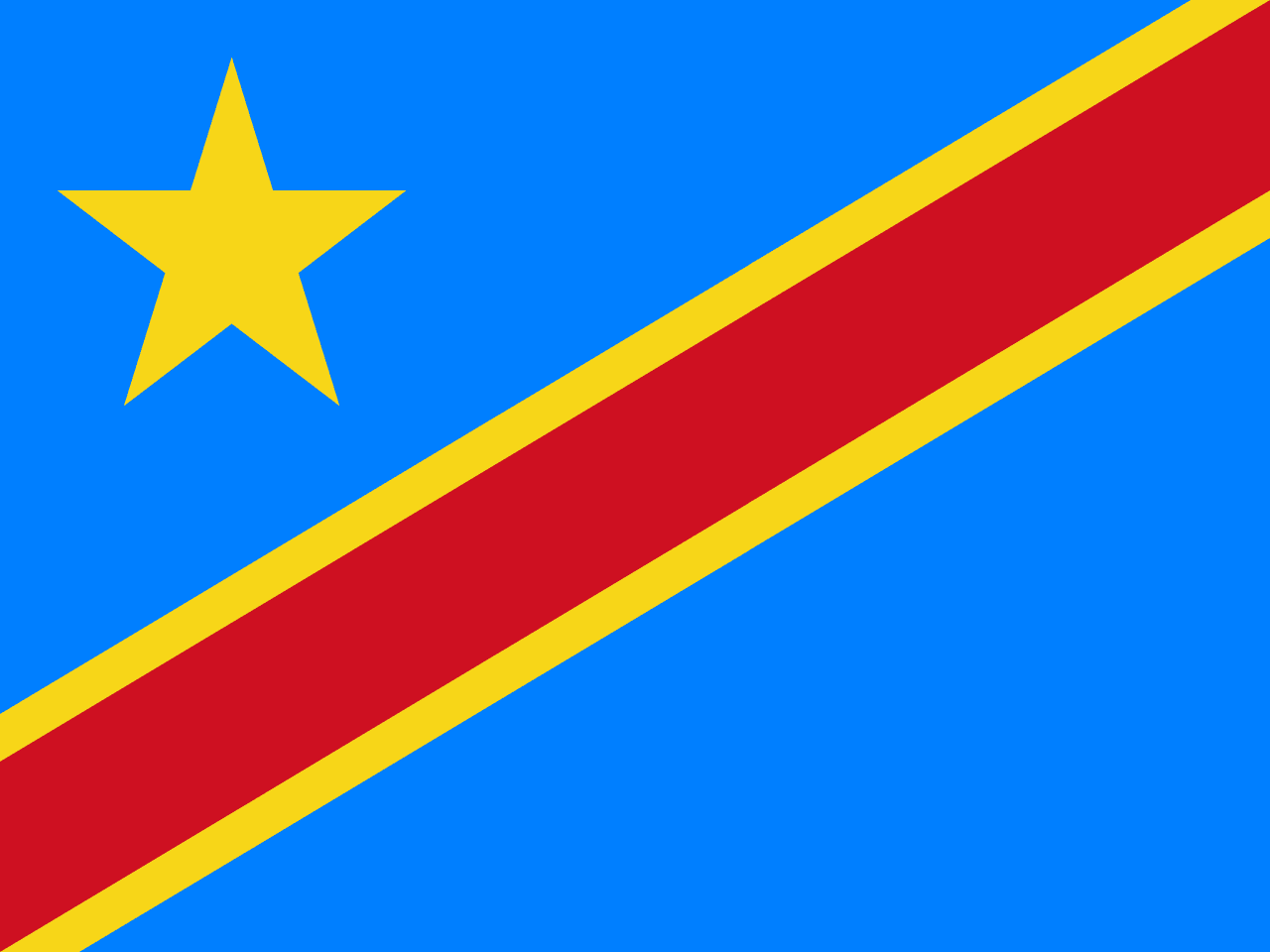
Count the people. In June 2026, the UN refugee agency recorded 1.25 million Congolese refugees and asylum seekers. Eighty per cent of them sit in the countries next to the DRC, in tents and overcrowded camps, far from the homes they fled. Not one of them chose exile for a holiday. They ran from guns, from bombs, and from a war that a neighbouring government started and continues to feed.
Let us be precise about who did this. The Rwandan Defence Force has deployed full combat units inside eastern Congo, with UN experts and open-source investigators estimating 14,000 to 18,000 Rwandan troops, roughly 40 to 50 per cent of Rwanda's army. M23 supplies the bodies and the political cover. This is the Russian playbook in Ukraine: a sovereign state sends its regular army across a border, hides behind a separatist proxy, and dares the world to call it what it is. We call it what it is. This is a war of aggression. This is Kagame's war, and its refugees are the bill that Congo's people are being forced to pay.
Since M23 seized Goma and Bukavu in early 2025, more than 245,000 new arrivals have been registered in neighbouring countries between January 2025 and April 2026. Burundi alone has received about 142,000, most of them after the fall of Bukavu in February 2025 and Uvira in December 2025. Uganda has registered over 236,000 Congolese arrivals since 2022, on top of 139,500 South Sudanese refugees. These are not statistics. They are mothers who walked for days carrying infants, teenagers who lost their schools, and farmers who watched their fields become battlefields.
The people who are supposed to protect them are failing. The international response has been gutted. In February, UNHCR reported that only 20 per cent of the US$35 million it needed for lifesaving assistance in Burundi had arrived. In January, the International Rescue Committee warned that Uganda's refugee health programme had secured just 6 per cent of its 2026 funding, forcing cuts to health services for more than one million refugees. Think about that. A million people, many of them children, are losing medical care because donor capitals decided that a Central African war was someone else's problem.
Then there is the cruelty inside the camps and along the borders. The UN Group of Experts, in its reporting including S/2025/446 and S/2026/466, has documented armed groups recruiting from refugee populations in Rwanda and Uganda. M23 targets Rwandan refugees on suspicion of links to the FDLR or to Wazalendo, the community militias fighting it. Several have been forcibly transferred back to Rwanda, including through interference with UNHCR's screening process. When M23 took Goma, it dismantled internally displaced persons camps and pushed hundreds of thousands of civilians out into the open. That is not governance. That is expulsion dressed up as order.
Meanwhile, the neighbours are closing the gates. Burundi's Interior Minister announced in October that people coming from or transiting through M23-controlled areas would not be allowed in. Uganda, citing Ebola, has moved to return Congolese travellers deemed non-essential, a policy that cuts against its proud open-door tradition and could strip refugees of protection they are entitled to. In Burundi, Congolese refugees face tighter encampment, restricted movement, and detention by police and Imbonerakure youth militia before being sent back to remote sites. Banyamulenge refugees are watched as suspected collaborators. Some refugees in Rwanda, who are generally granted access to national services, have been met with excessive force when they protested their conditions in the camps.
Ask yourself what kind of continent this has become when the people fleeing a war are treated as the threat. The ones bleeding are the displaced, not the generals.
Some will say the region is simply too complicated. They will point to the 1994 genocide against the Tutsi, to the decades of Congolese wars, and to Burundi's own internal violence. Yes, the history is tragic and layered. But complexity is not a licence for silence. The genocide's survivors deserve protection, not to be turned into instruments of a new conquest. Congolese Tutsi deserve citizenship rights as Congolese, not to be suspected of disloyalty every time a rebel army moves. And Congolese Hutu, Nande, Hunde, and every other community deserve to stop being sacrificed to a war that none of them asked for. The truth is simpler than the apologists want it to be: an armed occupation creates refugees, and an occupier who refuses to withdraw keeps creating them.
Africa has better models. Botswana built one of the continent's most prosperous states on strong institutions, predictable property rights, and an accountable civil service. Mauritius showed that a small island with no natural resources could become a diversified economy through rule of law and open markets. Senegal, after years of political tension, proved that peaceful transfers of power can happen through the ballot box. Rwanda's economic management is often praised, and that praise deserves a footnote the world keeps skipping: no development model justifies sending an army to loot and occupy a neighbour. Good governance cannot be a costume worn for foreign investors while soldiers operate abroad.
So here is what must happen. The African Union's Peace and Security Council must stop issuing communiqués and start naming the Rwandan Defence Force as an invading army, demanding its withdrawal under a timetable with consequences. The UN Security Council must impose targeted sanctions on M23 leadership and on Rwandan officers directing the operation, and it must mandate independent monitoring of every returned refugee, every screening interview, and every border crossing. Donors must fund the refugee response in full, starting with health care in Uganda and protection in Burundi, because a cut of 80 per cent in lifesaving aid is not an accounting error. It is a death sentence written in spreadsheets. Host governments must reopen their borders to people fleeing violence and stop using disease scares and militia checkpoints to push them back.
And you, reader, have a role. Write to your parliamentarians. Demand that your government name the invasion for what it is. Ask your telecom company, your university, and your church where they stand on the Rwandan occupation of Congo, and whether their supply chains touch the minerals being extracted under the guns. Share this story until the 1.25 million refugees are no longer a number that disappears from the news by Friday. Every Congolese family waiting in a camp for a safe way home is owed more than our silence. They are owed our anger, our evidence, and our refusal to look away.
Based on reporting by ISS